Sign up with Google
 Sign in with Zoho

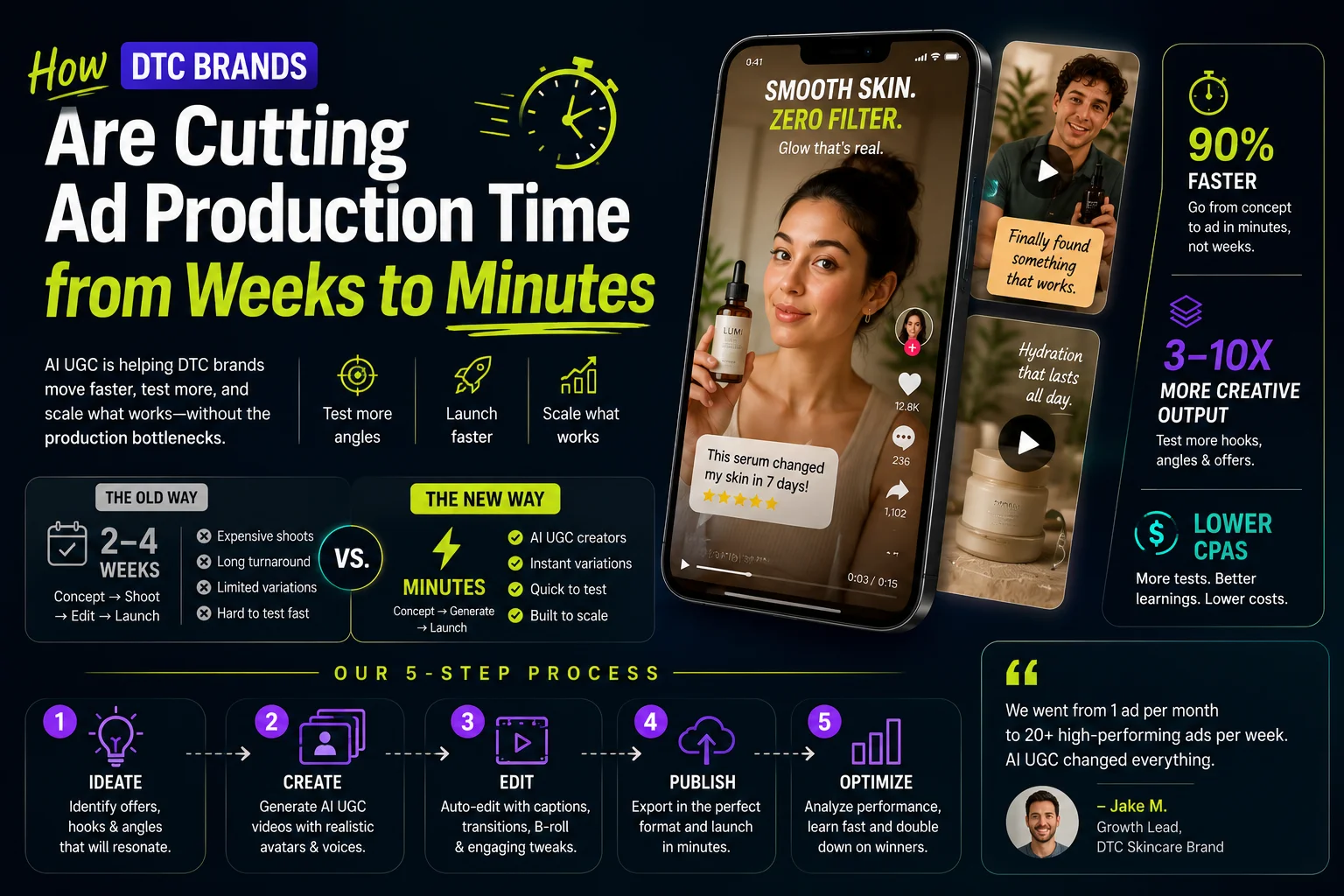
A few years ago, the timeline from "we have an idea for a new ad" to "the ad is live and collecting data" was measured in weeks for most DTC brands. That timeline has compressed dramatically for brands that have restructured how they produce creative and the change is less about a single tool and more about rethinking which parts of the old process were actually necessary.
The old timeline, step by step
The traditional path looked roughly like this: write a creative brief (a day or two), find and book a suitable creator (several days, depending on availability), film (a day, plus scheduling), receive and review footage (a few more days), request revisions (another round), and finally get a finished, exportable asset into the ad account. Three weeks was a realistic average for a single new concept, even at brands with reasonably efficient production processes.
What actually got compressed
The biggest single compression came from removing the scheduling dependency entirely no longer needing to coordinate with an external creator's availability, no longer waiting on footage delivery, no longer running a back-and-forth revision cycle over email or shared drives. Generating a video directly from a product URL, prompt, or template collapses what used to be five sequential steps into effectively one.
Why this isn't just about speed for its own sake
The point of a faster production cycle isn't simply "doing things quickly" it's that it changes what's possible with a testing program. A brand that can produce and launch five structurally different concepts in an afternoon can run a genuinely rigorous testing cycle every week. A brand still working on a three-week production cycle can realistically only test a fraction of that, which means slower learning about what actually works.
What this looks like in practice
Brands making this shift typically keep a small number of real creator-filmed hero ads for their most trust-dependent messaging, while using an AI UGC video generator for the bulk of their structural testing the hooks, angles, and formats they're actively trying to validate before committing to a bigger production investment.
What hasn't gotten faster, and shouldn't
The part of the process that still takes real time and should is deciding what's actually worth testing in the first place. Compressing production speed doesn't compress the thinking behind a good creative hypothesis; it just means that once the thinking is done, turning it into a testable asset no longer requires weeks of waiting.
The takeaway
The shift from weeks to minutes in ad production isn't primarily about a specific piece of software it's about removing the scheduling and coordination dependencies that made the old process slow by default. Brands that have made this shift aren't just producing ads faster; they're running fundamentally more rigorous testing programs as a direct result.