Sign up with Google
 Sign in with Zoho
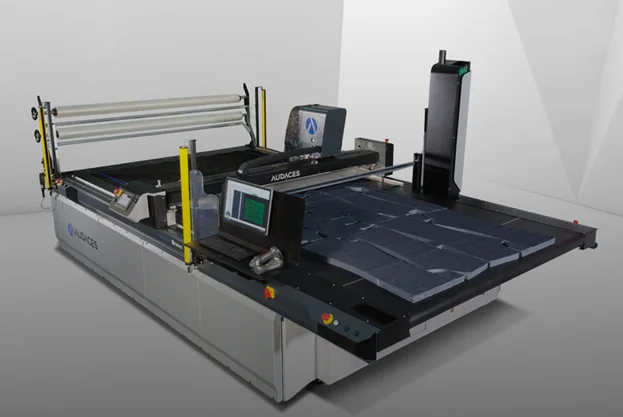
Modern laundry facilities and garment manufacturing businesses must deliver consistent finishing quality while managing labour, energy consumption, and production deadlines. Whether a business processes hotel linen, hospital textiles, uniforms, or tailored garments, the ironing and finishing stage plays an important role in the final product quality.
Choosing the right Industrial Ironing Machines can help businesses streamline operations, improve the appearance of finished textiles, and handle growing production volumes. However, selecting suitable equipment requires more than comparing machine prices. Businesses must consider fabric types, daily workload, available utilities, floor space, operator skills, and long-term maintenance requirements.
This guide explains the main types of industrial ironing equipment, the factors businesses should consider before purchasing, and how integrated garment and laundry solutions can support efficient production.
Understanding Industrial Ironing Machines
Industrial ironing equipment is designed to finish garments and textiles at a scale that would be difficult to achieve through conventional household ironing equipment. Depending on the application, these machines use controlled heat, pressure, steam, vacuum, or rotating rollers to remove wrinkles and produce a consistent finish.
Common applications include:
- Commercial laundries serving hotels, restaurants, and healthcare facilities.
- Garment factories manufacturing shirts, trousers, jackets, and uniforms.
- Dry-cleaning establishments processing customer garments.
- Institutional laundries handling large quantities of linen.
- Textile finishing facilities requiring repeatable quality across production batches.
The most suitable machine depends on the materials being processed and the required finishing result. Flat linen generally requires different equipment from structured garments such as jackets and coats.
Types of Industrial Ironing Equipment
Understanding the differences between equipment categories helps businesses develop a finishing system that matches their operational needs.
1. Flatwork Ironers and Roller Ironing Machines
Flatwork ironers are commonly used to finish large, relatively flat textile items, including bed sheets, pillowcases, tablecloths, and other linen products.
These machines feed textiles through heated rollers or comparable pressing mechanisms. Depending on the configuration, the equipment can iron and partially dry suitable linen in a continuous process. Some systems can also be connected to folding and stacking equipment.
Businesses should assess roller dimensions, working width, heating capacity, processing speed, and the moisture content of incoming linen before selecting a model.
2. Garment Pressing Machines
Garment pressing equipment is designed for shaped garments that require more precise finishing than flat textiles. Applications include shirts, trousers, jackets, coats, and formalwear.
Pressing machines use suitable combinations of heat, steam, pressure, and vacuum to improve garment appearance. The right configuration depends on garment construction, fabric sensitivity, and the desired finish.
For businesses handling structured clothing, specialised pressing equipment can help maintain consistent results while reducing repetitive manual work.
3. Vacuum Ironing Tables
Vacuum ironing tables support garment finishing by drawing moisture and steam away from the fabric through the table surface. Depending on the model, blowing functions can also help lift delicate fabrics and improve finishing results.
These tables are useful for tailoring units, garment production facilities, and finishing departments that require control over smaller garment sections, seams, collars, sleeves, and other detailed areas.
4. Specialised Jacket Finishing Equipment
Jackets and coats often require additional attention because of their linings, shoulder structures, lapels, and shaped construction. Conventional flat pressing alone may not provide the required finish.
Specialised equipment can help shape garments and improve consistency during finishing. Businesses evaluating equipment or working with Jacket Project Consultants should consider the types of jackets produced, production volume, fabric characteristics, and the level of automation required.
A suitable setup can help standardise finishing procedures and reduce dependence on repeated manual adjustments.
Five Factors to Consider Before Buying Industrial Ironing Machines
Purchasing industrial equipment is a long-term operational decision. Evaluating the following factors can help businesses select a practical solution.
1. Production Capacity and Daily Workload
Start by calculating the number of garments or kilograms of linen processed each day. Consider peak-season demand, operating hours, and expected business growth.
A small laundry processing limited quantities of clothing may benefit from a different configuration than a large hotel laundry handling thousands of linen items.
Compare the manufacturer's stated production capacity with the output achievable using your actual fabrics, operators, and workflow. Published capacity figures should not be treated as guaranteed real-world output.
2. Fabric Types and Finishing Requirements
Different fabrics respond differently to heat, pressure, and moisture. Cotton sheets, synthetic blends, delicate materials, and structured garments may require different operating settings or equipment.
Before purchasing, identify the most common fabrics and the quality standards your customers expect. Ask the supplier about temperature control, pressure adjustment, steam requirements, and suitable operating procedures for each application.
3. Energy Consumption and Utility Requirements
Industrial finishing equipment can consume substantial amounts of electricity, steam, or other heating resources, depending on its design.
Evaluate the available power supply, boiler capacity, heating method, ventilation, and expected operating hours. Where possible, compare energy consumption using the same production assumptions rather than relying on headline efficiency claims.
Correct equipment sizing, routine maintenance, and appropriate operating settings can all contribute to more efficient resource use.
4. Automation, Safety, and Ease of Operation
Automation can improve consistency and reduce repetitive handling. Features such as programmable controls, adjustable settings, automatic feed systems, and integrated folding may be useful for high-volume operations.
However, additional automation should match the business's actual requirements. Staff training, accessible emergency stops, appropriate guarding, and clear operating procedures remain essential.
Ask suppliers about installation, commissioning, operator training, and the availability of replacement parts.
5. Maintenance and After-Sales Support
Equipment downtime can disrupt production schedules and affect customer service. Before committing to a purchase, clarify warranty terms, maintenance schedules, spare-parts availability, and technical support arrangements.
Inspect the components that require routine attention, including belts, rollers, padding, steam connections, and control systems, where applicable.
A well-maintained machine is more likely to deliver reliable performance over its service life.
Integrating Ironing Equipment into a Complete Laundry Workflow
Ironing performance depends partly on what happens before and after the finishing stage. A well-planned laundry workflow connects washing, extraction, drying, ironing, folding, inspection, and dispatch.
For example, linen that enters an ironer with unsuitable moisture levels may require additional processing or produce inconsistent results. Similarly, a high-capacity ironer will not achieve its potential if upstream washing and drying equipment cannot supply linen at a sufficient rate.
Businesses should therefore evaluate the complete production line rather than selecting each machine in isolation.
An integrated setup can help reduce unnecessary material handling, balance workloads between departments, and improve production planning. Where volumes justify it, automated feeding, folding, and stacking systems may further simplify operations.
Commercial laundry operators should also assess the needs of self-service and attended laundry facilities. A Coin Laundry Machine offering is part of the wider equipment landscape for businesses serving customers who wash their own clothes, while industrial ironing and finishing systems are relevant when a facility also processes flat linen or offers garment-finishing services.
The equipment mix should reflect the services the business intends to provide.
Why Professional Equipment Planning Matters
Industrial ironing equipment should be selected according to the specific demands of the operation, not simply because a machine has a high production rating or a low initial price.
Professional equipment planning helps businesses assess production capacity, fabric compatibility, utility requirements, installation space, and workflow integration before investing.
Manufacturers and equipment suppliers can assist with identifying suitable machine configurations, understanding technical specifications, and planning installation requirements. Businesses should request detailed specifications and confirm that proposed equipment meets their operational and safety requirements.
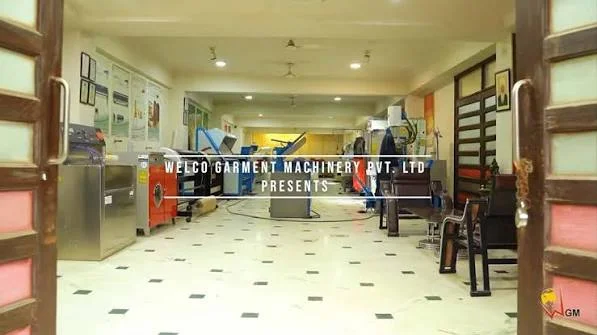
Welco Garment Machinery Pvt. Ltd. provides equipment solutions for garment finishing, commercial and industrial laundry, and related textile applications. Businesses exploring equipment options can review the available range on the Welco Garment Machinery website.
Frequently Asked Questions
What are industrial ironing machines used for?
Industrial ironing machines are used to finish garments and textiles in commercial laundries, garment factories, hotels, hospitals, dry-cleaning establishments, and other facilities that require consistent results at higher production volumes.
What is the difference between a flatwork ironer and a garment press?
A flatwork ironer is primarily designed for relatively flat items such as bed sheets and tablecloths. A garment press is intended for shaped clothing and uses appropriate pressing methods to finish specific garment sections or complete garments.
How can businesses choose the right ironing machine?
Businesses should assess daily production volume, fabric types, required finish quality, available utilities, floor space, operator requirements, maintenance needs, and the equipment's compatibility with the wider production line.
Can industrial ironing equipment reduce labour requirements?
Suitable equipment can reduce repetitive manual work and improve processing consistency. The actual labour savings depend on production volume, machine configuration, automation, operator training, and how well the equipment integrates with the existing workflow.
Why is after-sales support important when purchasing industrial equipment?
Timely technical assistance, replacement parts, preventive maintenance, and operator training can help minimise downtime and maintain consistent production. These factors should be considered alongside the initial purchase price.
Conclusion
Selecting the right industrial ironing equipment is an important step towards improving garment presentation, textile quality, and production efficiency. By evaluating capacity, fabric compatibility, energy requirements, automation, maintenance, and workflow integration, businesses can make better-informed investment decisions.
From flatwork ironers for large linen volumes to specialised garment presses for structured clothing, the best solution is the one that meets the facility's actual production needs and supports dependable long-term operation.
For businesses planning to upgrade their finishing department or establish a new laundry facility, exploring the equipment range available from Welco Garment Machinery Pvt. Ltd. is a useful starting point for evaluating suitable industrial and commercial solutions.