Sign up with Google
 Sign in with Zoho

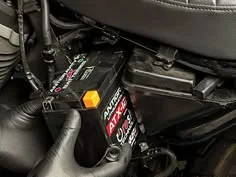
Powersports machinery and modern motorcycles operate under physical and electrical conditions that are far more punishing than those found in passenger cars. While a modern saloon houses its battery within an insulated engine bay or luggage compartment, a motorcycle battery is packaged tightly inside the motorcycle frame. It sits directly above or adjacent to an internal combustion engine, exposed to high mechanical vibrations, road shocks, and severe thermal swings.
Despite these severe mechanical constraints, the electrical duties required of a two-wheeler battery have increased considerably. Today, high-performance sports motorcycles, adventure tourers, and urban scooters are equipped with multi-sensor engine control units, electronic throttle management, digital dashboard displays, and anti-lock braking systems. When the starting circuit fails, push-starting a modern motorcycle with fuel injection and an electronic immobiliser is often impossible.
Understanding the internal electrochemistry, mechanical construction, and preventative maintenance strategies necessary for motorcycle power units is critical for both daily commuters and seasonal enthusiasts. Selecting appropriate battery technology ensures dependable ignition and protects expensive onboard control modules from electrical damage.
High-Frequency Mechanical Shock and Plate Fatigue
The most destructive physical force acting upon a powersports battery is sustained chassis vibration. Motorcycles lack the large sprung mass and soft suspension compliance of multi-track passenger vehicles. As a motorcycle navigates uneven tarmac, cattle stops, or gravel tracks, severe vibrational energy transfers directly through the frame into the battery casing.
In traditional flooded batteries, liquid sulphuric acid moves freely around the internal lead plates. Sustained high-frequency vibration causes the active lead dioxide paste to shake loose from the lead grid framework. Over time, this shed material settles at the bottom of the casing, forming a conductive sludge layer. When this sediment touches the lower edges of the plates, it causes an internal short circuit, resulting in a dead cell and instant electrical failure.
Furthermore, severe vibration places mechanical stress on internal busbars that join individual battery cells in series. Under continuous resonance, thin busbars develop hairline fractures that create high electrical resistance. When the rider presses the starter button, this weakened connection can fracture completely, leaving the rider stranded without warning.
Selecting the best motorbike battery nz ensures that riders obtain units constructed with advanced Absorbent Glass Mat (AGM) architecture. In an AGM battery, liquid electrolyte is completely absorbed within micro-porous glass fibre mats packed tightly between positive and negative plates. This compressed sandwich construction immobilises the active material, preventing plate shedding and offering exceptional resistance to physical shock.
High Power Density in Compact Dimensions
Motorcycle designers are constantly challenged to minimise overall vehicle weight while lowering the centre of gravity. As a result, the physical envelope allocated for electrical storage is tightly constrained. A motorcycle battery may measure only a fraction of the size of a standard passenger car battery, yet it must deliver a high burst of starting current.
Starting a motorcycle engine requires surprising electrical torque. Many high-displacement twin-cylinder or single-cylinder engines feature large piston bores and high compression ratios. Overcoming this mechanical resistance during the first revolution requires significant instantaneous power from the starter motor, often demanding between 150 and 350 cold cranking amperes from a compact casing.
To achieve such high output within small dimensions, battery engineers use ultra-thin, high-purity lead plates to maximise active surface area. However, thinner plates are inherently more susceptible to corrosion and mechanical warping if the battery is repeatedly subjected to deep discharges. Balancing high cranking capacity with long-term durability requires strict quality control in grid alloy casting and plate manufacture.
Parasitic Discharge and the Physics of Seasonal Storage
One of the leading causes of early motorcycle battery failure is seasonal inactivity combined with parasitic electrical draw. Unlike commuter cars driven daily, many recreational and adventure motorcycles remain parked in garages during inclement weather or winter months. During these dormant periods, modern electronic accessories continue drawing power.
Digital instruments, engine control module memories, anti-theft tracking systems, and electronic keyless fobs draw continuous parasitic current from the battery. Even a tiny drain of 5 to 10 milliamperes will extract between 3.6 and 7.2 amp-hours from the battery over thirty days. In a motorcycle battery rated at only 10 to 14 amp-hours of total capacity, this steady drain pulls cell voltage down into destructive territory within a few weeks.
When a lead-acid battery remains in a discharged state, soft lead sulphate crystals form on the active plates. If the battery is not recharged promptly, these crystals grow, harden, and transform into a permanent crystalline structure. This process, known as irreversible sulphation, drastically increases internal electrical resistance and reduces active chemical capacity. A sulphated battery may show normal surface voltage on a multimeter but will instantly collapse under the heavy load of the starter motor.
Intelligent Multi-Stage Maintenance Protocols
Preventing irreversible sulphation during seasonal storage requires a disciplined maintenance approach. Disconnecting the negative battery terminal during extended downtime isolates the battery from parasitic vehicle loads. However, even when disconnected, all lead-acid batteries suffer from internal self-discharge, losing approximately one to two percent of their charge per week at moderate temperatures.
To maintain optimal cell chemistry, owners should connect an intelligent micro-processor-controlled maintenance charger. Unlike crude automotive chargers that apply a high, unregulated voltage that boils away electrolyte, modern smart maintenance units utilise multi-stage charging algorithms. These controllers monitor battery voltage and internal resistance, applying a controlled absorption cycle before transitioning to a gentle float mode.
Intelligent float charging maintains the battery at approximately 13.5 to 13.8 volts, counteracting natural self-discharge without generating excess heat or gas. Some advanced maintenance chargers also incorporate automated desulphation stages, which send high-frequency electrical pulses to dissolve soft sulphate deposits before they harden permanently into the grid matrix.
Terminal Integrity and Charging Circuit Inspection
Electrical reliability depends equally on the health of external connections and the vehicle charging circuit. Loose or corroded battery terminals represent a common source of intermittent electrical faults on motorcycles. Engine vibration can cause terminal retaining bolts to back out, creating a loose connection that generates high electrical resistance and arcing.
Riders should inspect terminal connections at every scheduled service interval. Terminals should be cleaned of lead oxidation using a brass wire brush and tightened firmly to manufacturer torque specifications. Applying a light coating of non-conductive dielectric grease or petroleum jelly over the completed connection shields raw lead surfaces from moisture and atmospheric oxygen, preventing corrosive buildup.
Additionally, riders should monitor stator and regulator-rectifier performance. Motorcycle charging systems rely on a permanent-magnet stator that produces alternating current, which a regulator-rectifier converts to direct current. If the regulator fails, it may either undercharge the battery, leaving it flat, or overcharge the battery above 15 volts, boiling the electrolyte and destroying the AGM fleece mats. Testing system voltage while revving the engine confirms that charging voltage remains safely regulated between 13.8 and 14.4 volts.
For vehicle enthusiasts who maintain private passenger cars alongside two-wheelers, securing dependable cheap car batteries nz ensures reliable daily commuting and proven manufacturing quality across all automotive platforms. Sourcing quality power storage and maintaining disciplined diagnostic habits guarantees reliable ignition, whether touring alpine passes on a motorcycle or commuting across city streets.