Sign up with Google
 Sign in with Zoho

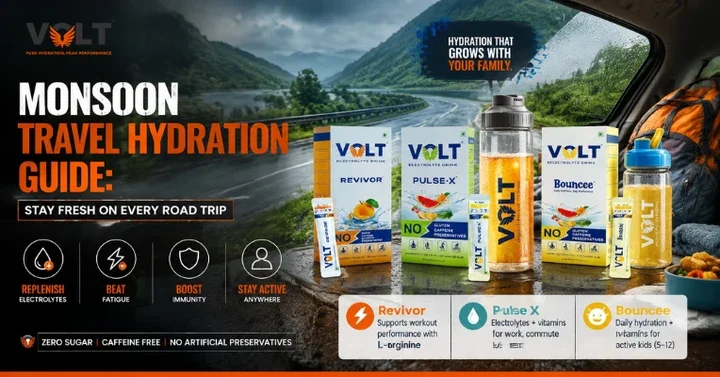
Monsoon season has a way of pulling people out of their homes and onto the road. Grey skies, cooler air, and green hillsides make it one of the most tempting times of year for a drive — whether it’s a short weekend escape or a longer trip across a few states. But there’s one part of trip planning that quietly gets skipped almost every time: hydration.
The Monsoon Hydration Myth
Most people link dehydration to summer heat, so when the temperature drops during the rains, water intake drops right along with it. That’s the mistake. Humidity — not heat — is the real culprit in the monsoon. High moisture in the air makes it harder for the body to cool itself efficiently, which means you can be sweating and losing fluids even on a cloudy, “cool” day without realizing it.
Add in a full day of driving, walking around a hill station, or trekking to a waterfall, and the fluid loss adds up fast — even if you never feel like you’re overheating.
What Dehydration Looks Like on the Road
It doesn’t always show up as obvious thirst. On a trip, dehydration is more likely to sneak in as:
- A dull headache you blame on the drive
- Sudden tiredness despite a full night’s sleep
- Trouble focusing on the road
- Muscle cramps after a long stretch of walking
- A short temper or low mood for no clear reason
These are easy to write off as “just travel fatigue,” but they’re often your body asking for fluids.
Building Hydration Into the Itinerary, Not Just the Packing List
A few habits make a real difference on long monsoon drives:
Hydrate before you leave home. Starting the trip already low on fluids means you’re playing catch-up all day.
Sip, don’t gulp. Small amounts every 20–30 minutes are absorbed better than one large bottle finished in a rush at a fuel stop.
Let food do some of the work. Watermelon, oranges, cucumber, and coconut water all carry a high water content and travel well in a cooler bag.
Build breaks into the route, not just the schedule. A five-minute stretch every couple of hours, paired with a proper drink of water, does more for alertness than another cup of roadside chai.
Don’t let tea and coffee stand in for water. They’re fine as part of the trip, but they aren’t a hydration strategy on their own.
Where Electrolytes Fit In
Plain water covers most of what the body needs, but on longer, more active days — think trekking, sightseeing on foot, or hours of driving in humid weather — the body also loses sodium and potassium through sweat. This is where electrolyte drinks earn their place in a travel bag: they help restore what water alone doesn’t replace, supporting steadier energy and better focus for the rest of the day.
For travellers who want that support without the sugar crash that comes with soft drinks, low-sugar electrolyte options (like those from brands such as Volt Drinks have become a popular middle ground — hydration support that doesn’t leave you feeling sluggish an hour later.
A Simple Monsoon Travel Hydration Kit
Before the next road trip, it’s worth packing a small hydration kit alongside the usual raincoat and umbrella:
- A reusable water bottle
- A few electrolyte sachets
- Fresh, water-rich fruit
- A small cooler bag for longer drives
- A thermos for warm drinks, kept separate from your water intake
The Takeaway
Monsoon road trips are some of the most rewarding trips of the year — but comfort on the road depends on more than good playlists and a full tank of fuel. Treating hydration as part of the plan, not an afterthought, is what keeps a long drive feeling like an adventure instead of a slog.







.webp)