Sign up with Google
 Sign in with Zoho
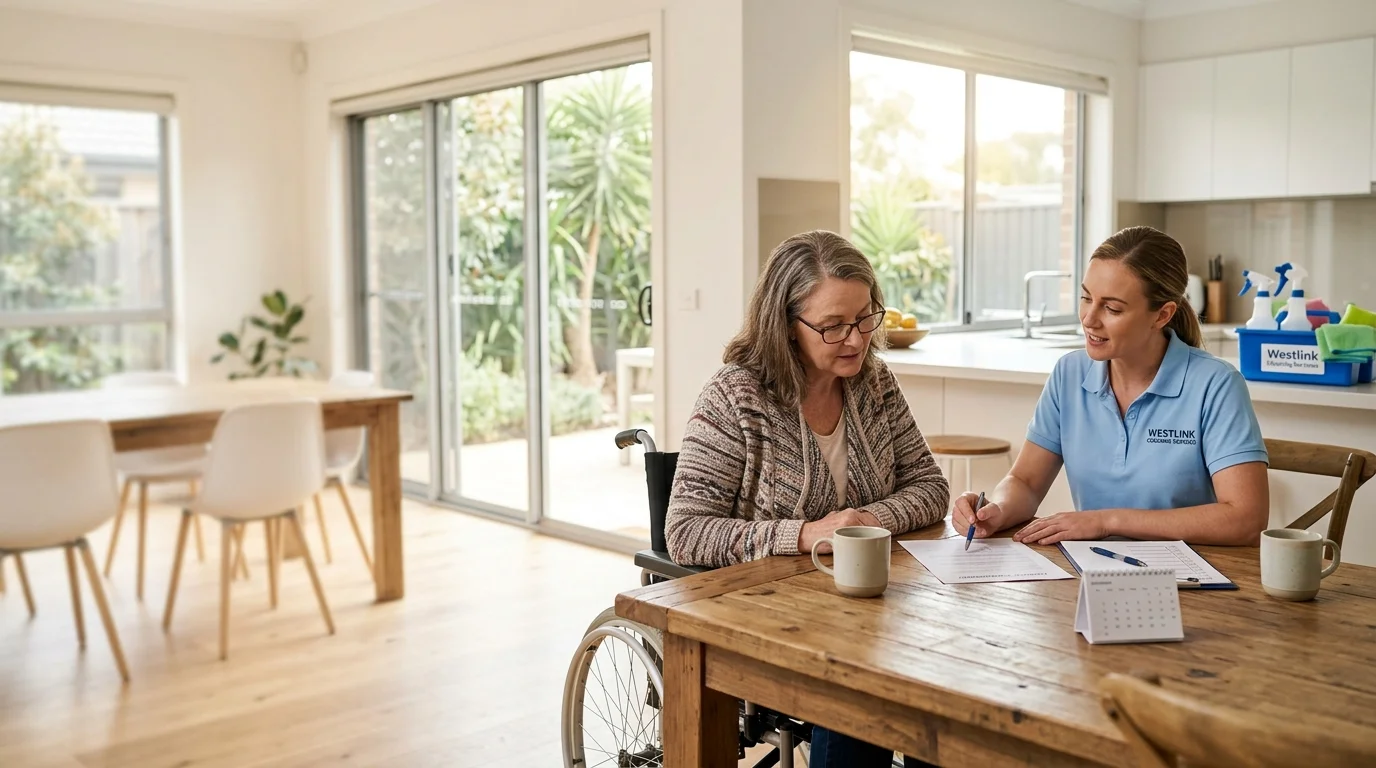
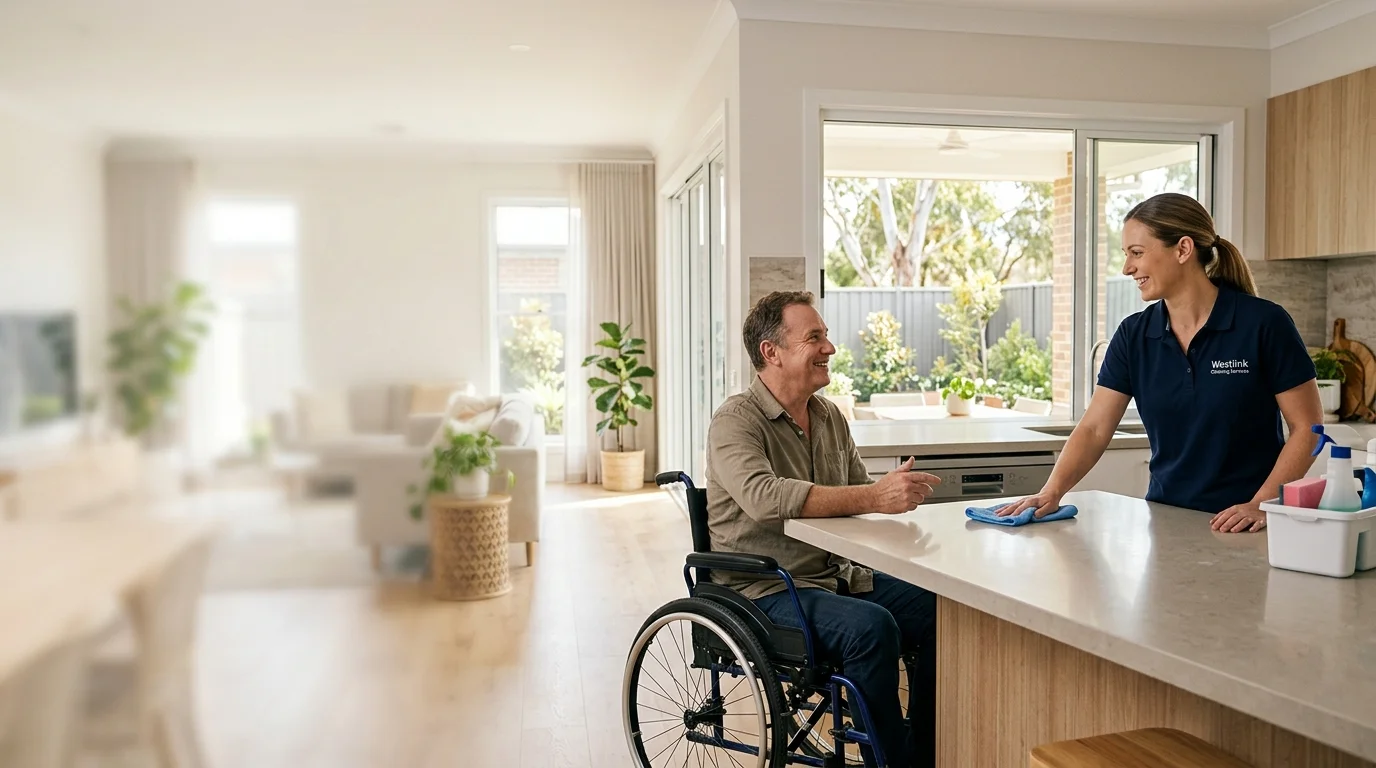
Maintaining a clean and hygienic home requires regular attention to floors, bathrooms, kitchens and shared living spaces. For people experiencing disability-related mobility restrictions, fatigue or functional limitations, completing essential household cleaning activities independently may be difficult.
An NDIS house cleaning checklist helps participants identify domestic tasks requiring assistance, organise suitable cleaning routines and communicate expectations with service providers.
The National Disability Insurance Scheme (NDIS) recognises assistance with essential household tasks as a potential disability-related support. However, individual funding arrangements depend on the participant's needs, available plan funding and applicable NDIS requirements.
A practical checklist provides a starting point for planning household assistance without assuming every cleaning activity qualifies for NDIS funding.
What Does NDIS House Cleaning Support Include?
NDIS household cleaning support involves assistance with essential domestic activities a participant cannot complete because of disability-related limitations.
Cleaning assistance generally focuses on maintaining the home environment and supporting everyday living rather than providing optional commercial cleaning packages.
Relevant activities may include vacuuming, mopping, bathroom cleaning, kitchen surface maintenance and other necessary household cleaning responsibilities.
For example, a participant experiencing difficulty bending or standing for extended periods may require help cleaning floors and bathroom fixtures while independently managing lighter domestic activities.
The exact service scope depends on individual support requirements, relevant funding conditions and the agreement established with the cleaning provider.
A cleaning checklist helps distinguish necessary disability-related assistance from ordinary household preferences.
Essential NDIS House Cleaning Checklist
Cleaning requirements vary between households. The following checklist provides practical examples of domestic activities participants and providers can discuss when planning suitable assistance.
Inclusion on the checklist does not automatically make an activity eligible for NDIS funding.
1. Kitchen Cleaning Checklist
Kitchen areas require regular maintenance because food preparation, cooking and everyday household activities contribute to surface contamination and general mess.
Participants experiencing mobility or physical endurance difficulties may require assistance with tasks involving bending, lifting or prolonged standing.
Kitchen cleaning tasks:
- Wipe kitchen benchtops and accessible surfaces.
- Clean sinks and surrounding fixtures.
- Wipe stovetops and external appliance surfaces.
- Remove ordinary food residue from work areas.
- Clean accessible cupboard fronts where necessary.
- Sweep or vacuum kitchen floors.
- Mop suitable floor surfaces.
- Empty household rubbish bins and replace liners.
- Wipe frequently touched handles and switches where appropriate.
The cleaning schedule should reflect the participant's essential household needs.
Routine kitchen maintenance differs from specialist appliance restoration or extensive commercial deep cleaning. Additional services require separate consideration before using NDIS funding.
2. Bathroom and Toilet Cleaning Checklist
Bathroom cleaning often involves physically demanding movements, including bending, reaching and standing on wet surfaces.
Such activities may create difficulties for participants experiencing balance problems, restricted mobility or reduced physical endurance.
Bathroom cleaning tasks:
- Clean toilets and surrounding surfaces.
- Wipe bathroom sinks and taps.
- Clean shower surfaces and accessible fixtures.
- Remove ordinary soap residue from suitable surfaces.
- Wipe mirrors.
- Clean frequently touched bathroom surfaces.
- Sweep or vacuum appropriate floor areas.
- Mop bathroom floors using safe cleaning methods.
- Empty bathroom rubbish bins.
- Clean accessible bathroom storage surfaces where required.
Some participants require assistance with the entire bathroom, while others need support only with activities involving greater physical effort.
A clear checklist helps establish which tasks form part of the agreed cleaning service.
3. Bedroom Cleaning Checklist
Bedroom cleaning arrangements should respect personal privacy, independence and individual preferences.
Participants may prefer to manage certain activities independently while receiving assistance with physically demanding household tasks.
Bedroom cleaning tasks:
- Vacuum or sweep accessible bedroom floors.
- Mop suitable hard-floor surfaces.
- Dust accessible furniture.
- Wipe bedside tables and other relevant surfaces.
- Remove ordinary household rubbish.
- Change bed linen where assistance is required.
- Place used linen in the appropriate laundry area.
- Clean accessible mirrors.
- Maintain clear, accessible floor areas within the agreed service scope.
Personal belongings, private documents and sensitive household items should remain under the participant's direction.
Cleaning providers should agree on appropriate access and handling arrangements before completing bedroom tasks.
4. Living Room and Shared Area Checklist
Living rooms and shared household spaces often receive regular use, making floor maintenance and surface cleaning relevant domestic responsibilities.
Participants using mobility aids may also face practical difficulties reaching certain areas or moving around household furniture.
Living area cleaning tasks:
- Vacuum carpets and rugs where accessible.
- Sweep and mop suitable hard floors.
- Dust tables and accessible furniture.
- Wipe frequently used surfaces.
- Remove ordinary household rubbish.
- Clean accessible window ledges.
- Wipe suitable door handles and switches.
- Clean accessible surfaces around frequently used furniture.
- Maintain clear movement areas as agreed.
Cleaning arrangements in shared accommodation require consideration of ordinary household responsibilities.
NDIS funding does not automatically cover general cleaning obligations belonging to every household member.
Laundry and Related Household Support Tasks
Laundry assistance may be relevant when disability-related limitations affect washing, drying or handling clothing and linen.
Although laundry and house cleaning are related domestic activities, the proposed services still need to fit applicable NDIS funding requirements.
Laundry support checklist:
- Sort clothing and household linen where assistance is required.
- Load and unload washing machines.
- Transfer suitable items to a dryer or drying area.
- Hang washing where safe and appropriate.
- Fold clean clothing and linen.
- Change necessary bed linen.
- Place clean items in agreed storage locations.
Laundry support should reflect activities the participant cannot independently complete because of disability.
The provider and participant should clarify whether laundry forms part of the agreed household cleaning appointment or requires a separate service arrangement.
Daily, Weekly and Periodic Cleaning Checklist
Not every household activity requires the same cleaning frequency.
Some domestic responsibilities need regular attention, while others are performed less frequently.
A task-based schedule helps participants identify which activities require ongoing assistance and which remain manageable independently.
The table provides general household planning examples rather than an official NDIS cleaning schedule.
Participants are not automatically entitled to daily, weekly or fortnightly cleaning appointments.
Which Cleaning Tasks Are Not Automatically NDIS-Funded?
A household cleaning checklist may contain activities that fall outside a participant's approved funding arrangements.
The distinction between an essential disability-related support and an ordinary household expense requires consideration.
Examples requiring particular care include:
- Optional cleaning undertaken only for convenience.
- Decorative cleaning or home presentation services.
- Extensive end-of-lease cleaning unrelated to disability support needs.
- Specialist restoration or major property cleaning.
- Cleaning responsibilities unrelated to the participant's disability.
- Ordinary domestic services requested for other household members.
The service name alone does not determine eligibility.
For example, describing an appointment as a deep-cleaning service does not establish whether the individual activities qualify as NDIS supports.
Participants should identify the specific tasks involved and consider whether the proposed assistance meets relevant requirements before arranging funded services.
How to Customise an NDIS House Cleaning Checklist
An effective checklist reflects the participant's actual household circumstances rather than following an identical cleaning routine for every home.
Identify Difficult Household Activities
Begin with a practical review of daily domestic responsibilities.
Participants can identify tasks involving difficulty with balance, lifting, bending, reaching or sustained physical activity.
The assessment should distinguish between household activities completed independently and responsibilities requiring additional assistance.
Prioritise Essential Cleaning Requirements
Cleaning priorities often involve areas used for everyday personal activities.
For example, a participant may require assistance cleaning a bathroom and kitchen but remain comfortable maintaining accessible bedroom surfaces independently.
Prioritising essential activities helps make household support more focused.
Consider Individual Preferences
Participants retain choice and control over appropriate service arrangements.
Relevant preferences may include appointment times, communication methods, cleaning products, privacy requirements and the level of personal involvement in domestic activities.
Clear communication supports an agreed cleaning routine without unnecessarily reducing independence.
Review the Checklist Regularly
Household requirements may change as a participant's functional capacity, living circumstances or support arrangements change.
Reviewing the checklist helps identify unnecessary tasks, changing priorities and possible adjustments to service frequency.
Any change to funded assistance must remain consistent with applicable NDIS requirements and plan arrangements.
Understanding NDIS Funding for Household Cleaning
NDIS support arrangements consider disability-related needs, individual plan funding and relevant support rules.
Assistance with essential household tasks may fall within applicable Core supports, depending on the participant's plan.
However, the presence of household task funding does not mean every proposed cleaning service is automatically eligible.
Participants need to consider whether the cleaning assistance relates to disability-related functional limitations and meets relevant NDIS support requirements.
Reviewing Available Funding
Before establishing recurring cleaning appointments, participants should review their relevant support budget and existing commitments.
Other daily living services may draw on the same available funding.
A cleaning arrangement needs to remain affordable alongside the participant's broader support requirements.
Understanding Cleaning Service Costs
Cleaning charges depend on the provider, agreed service scope, appointment duration and applicable pricing conditions.
Current NDIS pricing schedules set maximum prices for relevant supports delivered to NDIA-managed and plan-managed participants. Self-managed arrangements offer different pricing flexibility.
Participants should clarify hourly charges, service duration, cancellation terms and any applicable additional fees before booking.
A checklist supports clearer cost discussions by identifying the work required during each appointment.
Choosing a Suitable NDIS Cleaning Provider
Selecting a cleaning provider involves reviewing practical service capabilities alongside the participant's individual preferences.
Household cleaning assistance should be organised around the participant's needs rather than a standard service package.
Relevant considerations include appointment availability, communication, cleaning methods, service costs and the provider's ability to accommodate agreed household requirements.
Cleaning requirements differ according to a participant's mobility, household environment and ability to manage everyday tasks. For Sydney residents seeking assistance with vacuuming, mopping, bathroom cleaning and other essential domestic activities, NDIS Cleaning Services Sydney provides information about available cleaning options. Participants can compare practical service arrangements with their individual support needs and applicable NDIS funding requirements.
Commercial cleaning information does not establish individual NDIS funding eligibility. Participants must separately consider applicable support rules and their own plan arrangements.
Questions to Ask Before Booking
A useful provider discussion may cover:
- Which checklist tasks are included in the cleaning appointment?
- How long will the agreed cleaning activities take?
- Are cleaning equipment and products supplied?
- Can appointments accommodate accessibility requirements?
- What charges and cancellation conditions apply?
- How will cleaning tasks and service expectations be documented?
- What payment and invoicing arrangements are available?
A written service agreement helps clarify responsibilities and reduce misunderstandings about household cleaning expectations.
The Role of Support Coordinators and Plan Managers
Some NDIS participants receive assistance from support coordinators or plan managers when organising everyday supports.
Support coordinators may help participants identify relevant service options, understand available plan information and communicate requirements to providers.
Plan managers assist with financial administration and eligible payments within applicable plan-managed arrangements.
Neither role independently grants additional NDIS funding or guarantees approval for a particular cleaning activity.
When eligibility remains uncertain, participants may seek clarification through an appropriate NDIS contact.
A completed household cleaning checklist provides practical information for discussions about required assistance, although the checklist itself does not establish funding approval.
Frequently Asked Questions
1. What cleaning tasks are included in an NDIS house cleaning checklist?
An NDIS house cleaning checklist generally covers essential domestic activities such as vacuuming, mopping, bathroom cleaning, kitchen surface maintenance and ordinary household rubbish removal. Relevant laundry tasks may also be considered. Individual funding depends on disability-related needs, applicable NDIS support requirements and plan arrangements.
2. Does the NDIS fund all tasks on a cleaning checklist?
No. Inclusion on a cleaning checklist does not automatically establish funding eligibility. NDIS funding depends on whether the proposed assistance qualifies as a disability-related support and fits the participant's individual funding arrangements.
3. How often should NDIS-funded house cleaning take place?
Cleaning frequency depends on the participant's household requirements, functional limitations and available funding. Weekly or fortnightly appointments may suit some participants, while other arrangements may be more appropriate. No universal cleaning schedule applies to every NDIS participant.
4. Can participants choose which household tasks a cleaner completes?
Participants can discuss cleaning priorities and preferences with a service provider. The agreed tasks must remain within the applicable service scope and funding requirements. Personal choice does not automatically make every requested domestic activity an eligible NDIS support.
5. Can a cleaning checklist help with NDIS funding discussions?
A cleaning checklist helps identify specific household activities affected by disability and explain practical assistance requirements. Support coordinators or relevant NDIS contacts may use the information during discussions about appropriate supports. However, a checklist does not replace individual plan requirements or funding decisions.
Conclusion
An NDIS house cleaning checklist provides a practical way to identify essential household tasks, organise cleaning priorities and communicate service expectations.
Kitchen maintenance, bathroom cleaning, floor care, bedroom cleaning and relevant laundry activities may form part of disability-related household assistance when applicable NDIS requirements are satisfied.
A personalised checklist helps participants maintain independence by distinguishing necessary assistance from tasks managed individually.
Reviewing available funding, confirming service arrangements and discussing household priorities supports informed decisions about ongoing cleaning assistance. Sydney participants considering local providers, including westlink cleaning services, can use their personalised checklist to discuss cleaning requirements, appointment schedules and service expectations.