Sign up with Google
 Sign in with Zoho
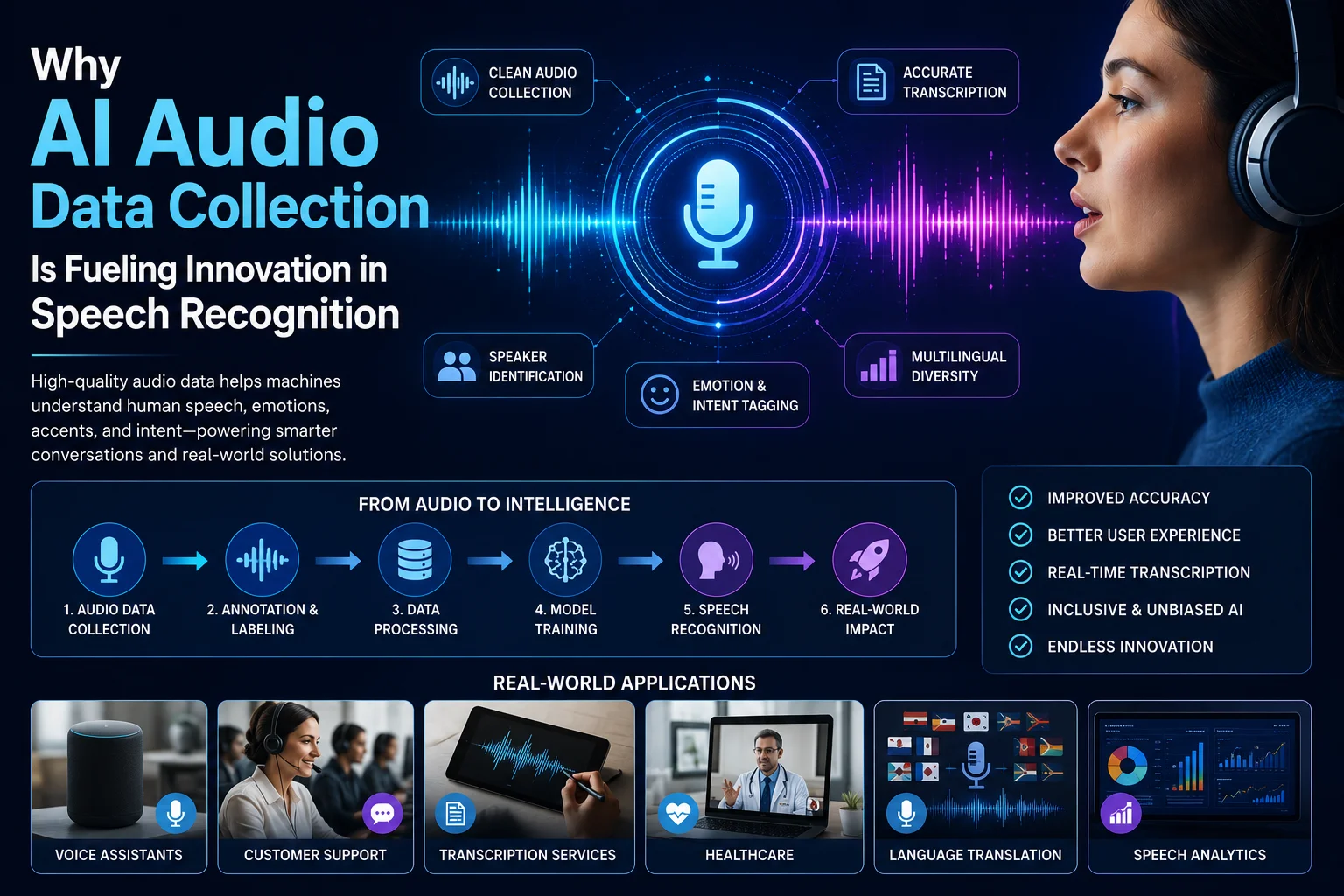
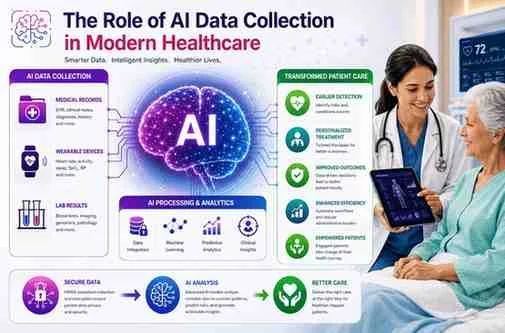
Artificial intelligence is rapidly transforming how U.S. businesses operate, from autonomous vehicles and healthcare to retail, finance, robotics, and customer service. But behind every reliable AI model is one essential foundation: high-quality training data.
Training Data Collection for AI is often one of the most time-consuming stages of AI development. Businesses need to collect large volumes of relevant, diverse, accurate, and properly structured data before their models can learn effectively. Manual collection can quickly become expensive and difficult to scale.
The good news is that automation can significantly streamline the process. By combining automated workflows, technology-enabled data capture, quality checks, and expert AI data collection services, organizations can build training datasets faster while maintaining quality.
What Is Training Data Collection for AI?
Training data collection for AI is the process of gathering real-world data that machine learning models use to learn patterns and perform specific tasks.
Depending on the AI application, training data may include:
- Images and photographs
- Video recordings
- Audio and speech
- Text and documents
- Sensor data
- Human activity data
- Product and retail images
- Medical images
- Environmental data
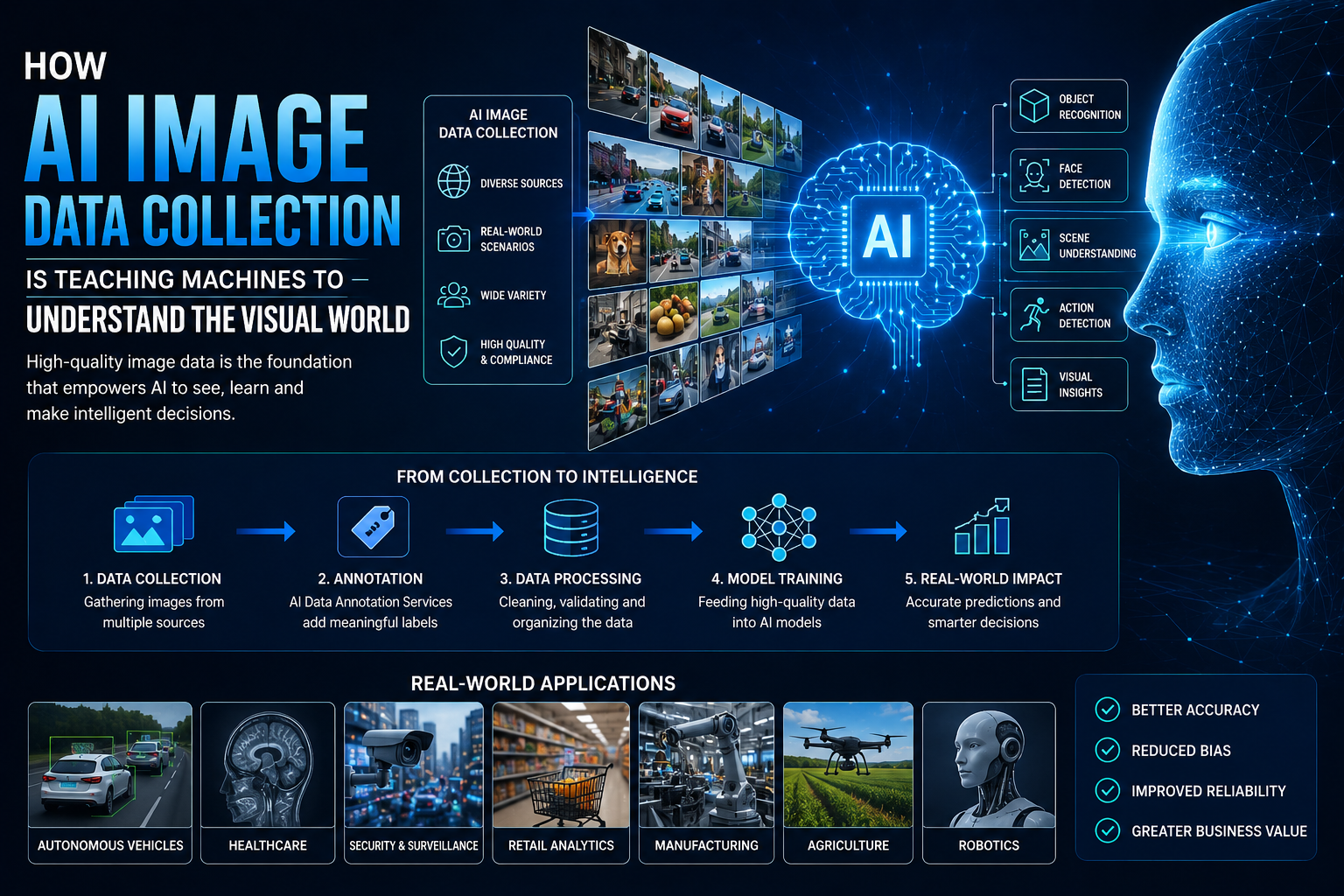
For example, a computer vision system designed to identify objects needs thousands or millions of representative images. A conversational AI application may require diverse text and speech datasets.
The objective is not simply to collect more data. The objective is to collect relevant, diverse, accurate, and representative data that supports the intended AI use case.
Why Automate AI Training Data Collection?
Traditional data collection can involve spreadsheets, manual uploads, disconnected teams, and repetitive quality-control tasks. As AI projects grow, these processes can create bottlenecks.
Automation helps businesses make the collection process more efficient.
An automated workflow can help organizations:
- Reduce repetitive manual work
- Collect data at greater scale
- Standardize collection procedures
- Organize datasets more efficiently
- Identify incomplete or inconsistent data
- Accelerate AI development
- Reduce operational costs
For U.S. companies working on large-scale AI initiatives, automation can make it easier to move from small pilot projects to production-ready AI systems.
How to Automate Training Data Collection for AI
1. Define Your Data Requirements
Start by identifying exactly what your AI model needs. Determine the data type, volume, geographic coverage, demographic requirements, file formats, and quality standards.
For example, a facial recognition model may require diverse facial images across different ages, lighting conditions, ethnic backgrounds, and environments.
Clear requirements prevent businesses from collecting large amounts of data that ultimately have little value.
2. Use Technology-Enabled Data Capture
The next step is to automate or streamline how information is captured.
Depending on the project, businesses can use digital collection platforms, mobile devices, cameras, sensors, automated workflows, and cloud-based systems.
For image and video AI projects, structured capture protocols can ensure that contributors collect the right information under defined conditions.
One Tech Solutions provides scalable AI training data collection covering image, video, sensor-based, document, environmental, and other specialized datasets.
3. Build Automated Quality Checks
Collecting data is only half the job. Poor-quality information can negatively affect model performance.
Automated quality-control workflows can flag issues such as:
- Blurry images
- Duplicate files
- Missing information
- Incorrect formats
- Incomplete submissions
- Inconsistent metadata
Combining automated checks with human quality assurance creates an additional layer of reliability before datasets enter the machine learning pipeline.
4. Prioritize Diversity and Representation
AI models need data that reflects the environments in which they will operate.
For businesses serving U.S. customers, this may mean collecting data representing different regions, demographics, environments, accents, devices, and real-world conditions.
A diverse dataset can help reduce gaps between training environments and real-world deployment.
One Tech Solutions supports demographic-controlled participant sourcing and globally distributed data collection for enterprise AI projects.
5. Automate Data Organization and Delivery
Once data has been collected and validated, automated workflows can help organize files, attach metadata, structure datasets, and prepare them for delivery.
A well-organized dataset makes it easier for AI teams to integrate training data into their machine learning pipelines.
Automation also supports repeatable data collection. Instead of rebuilding the process for every project, organizations can establish standardized workflows that can be scaled as requirements grow.
Benefits of Professional AI Data Collection Services
Building an automated data collection infrastructure internally is not always practical. It can require specialized technology, project management, participant recruitment, quality-control teams, and operational resources.
Working with an experienced AI data collection provider can simplify this process.
Professional services can provide:
- Scalable data collection
- Specialized image, video, audio, and text datasets
- Participant sourcing
- Quality assurance
- Metadata tagging
- Project management
- Secure data delivery
- Customized dataset creation
One Tech Solutions offers end-to-end AI data collection services, including participant sourcing, device-based capture, project management, quality assurance, and secure data delivery.
Industries Using Automated AI Data Collection
Automated and scalable Training Data Collection for AI can support organizations across multiple industries.
Automotive
Autonomous driving systems require extensive image, video, and sensor data representing roads, vehicles, pedestrians, weather, and traffic conditions.
Healthcare
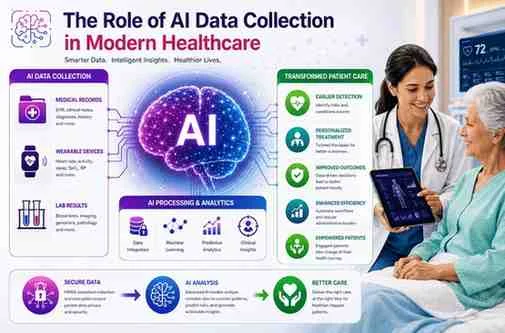
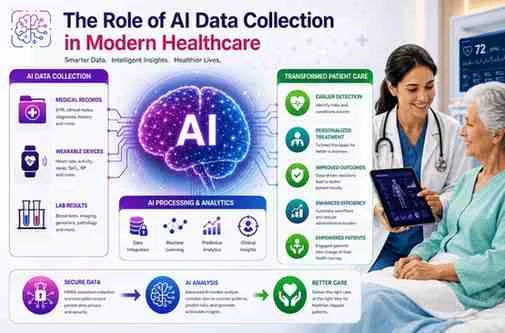
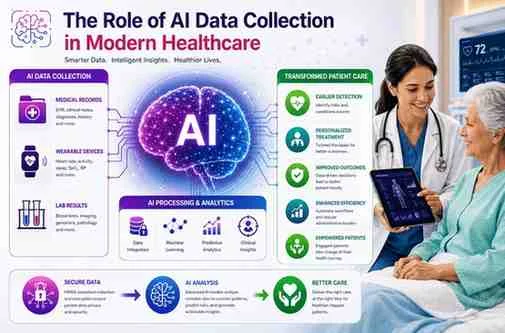
Medical AI applications depend on specialized datasets such as medical images and clinical information. Data collection must be carefully managed to meet project-specific requirements.
Retail and E-Commerce
Retailers can use product images, shelf images, customer behavior data, and other datasets to develop computer vision and analytics applications.
Robotics
Robotics systems require real-world visual, environmental, and sensor data to understand and interact with their surroundings.
Finance and Customer Service
Text, speech, and document datasets can help organizations develop NLP systems, virtual assistants, document-processing tools, and conversational AI.
Choose the Right AI Data Collection Partner
Successful AI automation starts with reliable data. When evaluating an AI data collection provider, businesses should consider scalability, dataset quality, collection expertise, security practices, geographic coverage, turnaround time, and customization capabilities.
The right partner should be able to understand your AI use case and build a collection strategy around your specific requirements rather than providing generic datasets.
Conclusion
Automating Training Data Collection for AI can help U.S. businesses accelerate AI development, reduce repetitive work, improve consistency, and scale their data operations.
However, automation should not come at the expense of data quality. The strongest approach combines technology-enabled collection, automated validation, diverse sourcing, expert quality assurance, and well-organized data delivery.
If your organization needs reliable, scalable datasets for computer vision, machine learning, NLP, robotics, healthcare, retail, or other AI applications, One Tech Solutions can help. Its AI data collection services are designed to support customized, large-scale training data requirements across industries and global markets.
Ready to accelerate your AI project? Contact One Tech Solutions to discuss your AI training data collection requirements and build a dataset tailored to your model.