Sign up with Google
 Sign in with Zoho

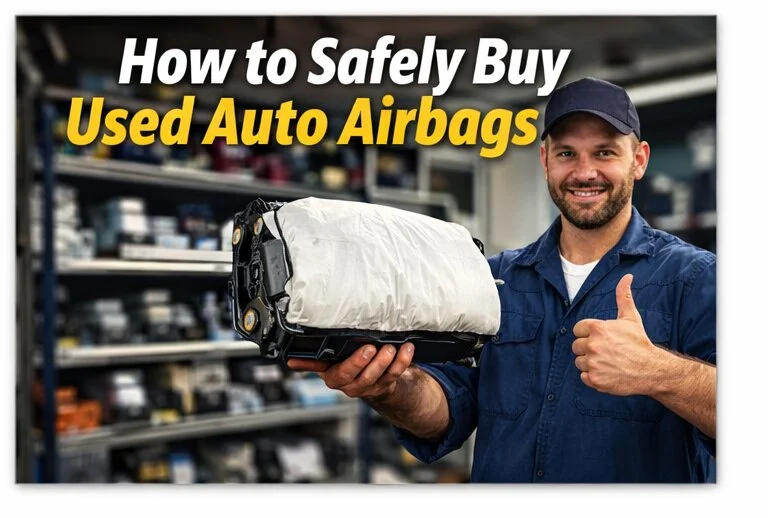
An accident can leave a vehicle with more problems than damaged body panels and broken headlights. If one or more airbags deploy, the owner also has to deal with replacing important components of the vehicle's safety system. Finding the right replacement can take time, especially when the vehicle is an older model or has a less common configuration.
This is where the market for used auto airbags becomes relevant. Original equipment manufacturer (OEM) airbags removed from other vehicles can be an option worth exploring. However, buying one requires more attention than simply matching a picture or finding a similar-looking part.
There are a few things every buyer should understand before making a decision.
Not Every Airbag Fits Every Vehicle
A common mistake is assuming that an airbag from the same manufacturer will fit another vehicle from that brand. Unfortunately, vehicle compatibility is not that simple.
Consider a Honda Civic. Two Civic models from different production years may have different steering wheel designs, dashboard layouts, electrical connections, or SRS configurations. Even when the airbags look almost identical, their part numbers and applications may differ.
The same issue comes up with SUVs and pickup trucks. A driver-side airbag for a Ford F-150 is not automatically interchangeable with one from another Ford model.
Before searching for a replacement, gather the following information:
- Vehicle year and model
- Trim level, where applicable
- Airbag position
- Original OEM part number
- Vehicle Identification Number (VIN)
Having these details available makes it much easier to narrow down the available options.
Why Buyers Look at Used OEM Airbags
The cost of repairing a vehicle after an accident can add up quickly. Between bodywork, replacement panels, electrical repairs, and mechanical work, owners often have several expenses to manage.
Naturally, they start comparing different replacement options.
Used OEM airbags attract attention because they are original factory components rather than generic parts advertised as universal replacements. Depending on the vehicle and application, the used market may also provide access to components that are difficult to find new.
For example, someone restoring a 2017 Mercedes-Benz C-Class may need a specific driver-side steering wheel airbag. Searching by the exact OEM part number can help identify an appropriate replacement rather than relying on appearance alone.
Price matters, but it should never be the deciding factor when purchasing a safety-related component. The component's history, condition, compatibility, and professional assessment are much more important.
Different Airbag Positions Require Different Checks
When people search for replacement airbags, they sometimes use the general term without knowing which specific component they need. Modern vehicles can have several airbags installed in different areas of the cabin.
Here are some common examples.
Steering wheel airbags
These are installed in the centre of the steering wheel and provide protection for the driver during certain collisions. The steering wheel design and vehicle configuration are important when checking compatibility.
Passenger dashboard airbags
Located inside the front dashboard, these airbags are intended to provide additional protection for the front passenger. Their shape, mounting arrangement, and vehicle application can vary.
Roof and curtain airbags
Side curtain airbags are installed along the roofline, usually extending down the side windows when deployed. Left-side and right-side applications should be checked carefully.
Knee airbags
These are generally positioned beneath the steering column or dashboard. Their location and application depend on the vehicle's original safety system.
Knowing the exact airbag position before contacting a supplier can save considerable time.
The Part Number Can Tell You More Than a Photograph
Online listings often include photographs of the actual component. These pictures are useful, but they should not be the only basis for choosing an airbag.
A part number provides a more specific reference. It helps buyers compare the replacement against the original component and investigate whether it belongs to the correct vehicle application.
Suppose a buyer needs a passenger-side airbag for a particular Toyota model. Two listings might show similar dashboard airbag assemblies. However, their OEM numbers could identify different applications.
This is why it is worth asking the seller for the original part number and checking it against the vehicle's specifications.
A VIN compatibility check can provide additional information, although final compatibility should still be confirmed using the manufacturer's parts and service information.
Questions Worth Asking Before Placing an Order
Not all online listings provide the same level of detail. Some sellers include useful photographs and application information, while others offer very little beyond a product name.
Rather than guessing, ask a few straightforward questions.
- Is this an original OEM component?
- Is the airbag listed as undeployed?
- What is the exact part number?
- Which vehicle years and models does it fit?
- Has the component been inspected for visible damage?
- What happens if the part does not match the vehicle?
- What return options are available?
A responsible supplier should be able to explain the information available about the product and its compatibility.
It is also important to remember that an undeployed appearance does not prove that an airbag is safe or functional. A visual inspection cannot establish its internal condition or guarantee future performance.
Do Not Overlook the Rest of the SRS System
Replacing a deployed airbag is not necessarily the end of the repair.
The Supplemental Restraint System (SRS) includes several interconnected components. Depending on the accident and vehicle, other parts may also require inspection or replacement.
These can include:
- SRS control modules
- Crash sensors
- Seat belt pretensioners
- Wiring and electrical connectors
- Other airbags affected by the collision
A replacement airbag alone cannot correct faults elsewhere in the system.
This is one reason professional repair is so important. A qualified automotive technician should follow the manufacturer's repair procedures, inspect related components, and use appropriate diagnostic equipment to assess the complete SRS system.
Airbags and their inflators should never be opened, modified, or tested using improvised methods.
Finding a Supplier That Understands OEM Compatibility
Searching for used auto airbags online can bring up plenty of listings, but the quality of product information varies.
A useful supplier does more than display a photograph and a price. Buyers should be able to find the airbag position, vehicle application, product condition, and relevant part information without having to guess.
For customers looking for original replacement options, Used Auto Airbags provides listings for cars, SUVs, and trucks across different manufacturers and model years. Its inventory includes driver-side, passenger-side, roof, curtain, and knee airbags.
Customers can also request assistance with VIN compatibility checks before ordering. This can be particularly helpful when two model years share a similar appearance but have different original equipment applications.
You can explore the available options at Used Auto Airbags.
A Careful Purchase Is Better Than a Quick Purchase
After an accident, most vehicle owners want to get their car repaired and back on the road as soon as possible. That is understandable, but rushing the selection of a replacement airbag can create more problems later.
Take time to identify the correct component, compare OEM part numbers, ask about its history, and confirm the application with a qualified professional.
Used OEM airbags may offer another sourcing option for people dealing with vehicle repairs. The important thing is to approach the purchase with the same care you would give any other safety-related decision.
A little research before ordering can make the process clearer and help avoid buying a component that was never suitable for the vehicle in the first place.