Sign up with Google
 Sign in with Zoho

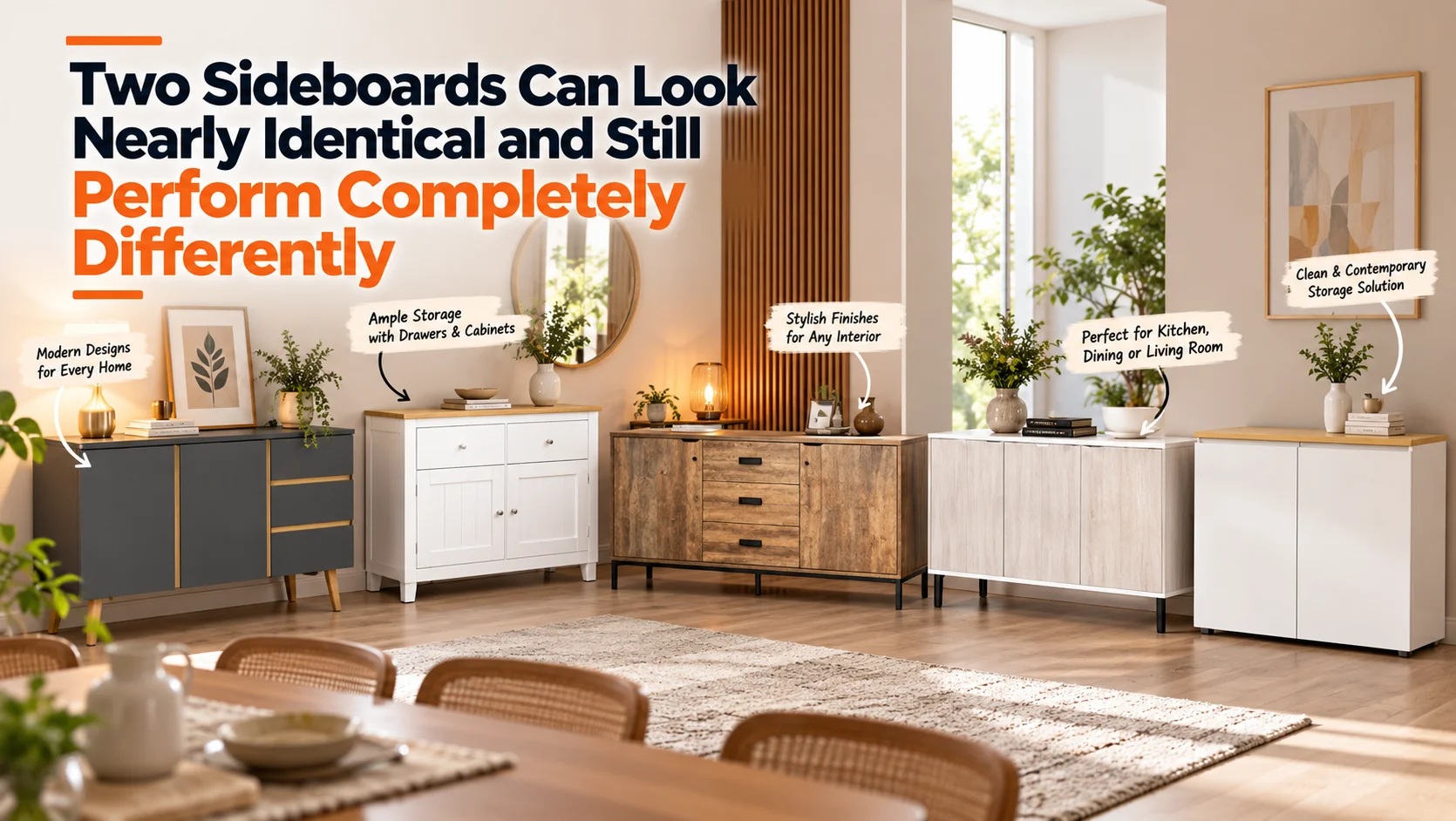
Two sideboards sit side by side in a showroom photo, same general shape, same rough size, same kind of doors and drawers up front. On paper they look like the same piece of furniture in two different colors. In the room a year later, one still closes smoothly and looks the same. The other has doors that stick and drawer fronts that have started to warp slightly. Nothing about that difference was visible in the photo.
Before choosing a kitchen sideboard based on how it looks in a listing photo, it's worth understanding what's actually different underneath two pieces that appear nearly the same.
Material Is Doing Most of the Work You Can't See in a Photo
A kitchen sideboard here generally comes in solid wood or engineered wood with a painted or veneer finish, and the difference between the two matters far more than the finish color does. Solid wood holds up to daily use, moisture, and years of opening and closing far better than an engineered equivalent, though it usually costs more and weighs more too.
A white kitchen sideboard and a natural wood one might use completely different materials underneath a similar overall shape, so it's worth checking what's actually listed on the specific product page rather than assuming based on the photo alone.
Drawers and Cabinets Aren't Interchangeable Storage
Most sideboards in this kind of range mix storage types rather than sticking to one. A sideboard with drawers and cabinets pairs smaller drawers, useful for cutlery or table linen, with larger cupboard sections for bulkier items that don't need individual compartments. A solid wood sideboard with drawers holds up differently over time than an engineered wood version doing the same job, particularly on drawer runners that see daily use.
The right mix really depends on what you're actually storing. A household with a lot of small kitchen items benefits from more drawers. One mostly storing bulkier serving pieces does better with more open cabinet space.
When a Highboard Makes More Sense Than a Standard Sideboard
For rooms with more wall height to spare, a highboard cabinet stretches storage upward instead of spreading it along the floor, often mixing glass-front shelving up top with closed cupboard space below. This works particularly well in narrower spots where a low, wide sideboard simply wouldn't fit, trading floor footprint for vertical storage instead.
Oak and Mango Wood Bring Genuinely Different Character
For a more natural, grain-forward look, an oak sideboard with drawers and a solid mango wood sideboard both bring visible wood texture rather than a painted or laminate finish. Mango wood in particular varies noticeably piece to piece, since each board keeps its own natural grain pattern, which means no two pieces end up looking quite identical even within the same product line.
RGB LED Sideboards: A Feature Piece, Not Just Storage
A small but distinct part of this range, an RGB LED sideboard builds coloured lighting directly into the cabinet, usually behind glass panels or along shelf edges, controlled by a remote or app. This leans more toward a feature piece meant to be noticed than a purely practical storage solution, worth considering specifically for a room where the sideboard is meant to stand out rather than blend in.
Credenza and Console Styles Add Flexibility Beyond the Dining Room
Alongside standard sideboards, a credenza cabinet covers low, long cabinet styles historically used for serving, which work equally well as an entryway console or a TV unit depending on where they actually end up placed. The shape gives more placement flexibility than a taller, narrower cabinet would.
Matching Kitchen Sideboard Storage to How You'll Actually Use It
A kitchen sideboard doesn't need to match every other piece in the room exactly. Picking based on how much closed versus open storage is genuinely needed, drawers for smaller items, cabinets for bulkier ones, tends to matter more day to day than matching finishes perfectly across every piece of furniture in the room.
Checking the material listed on the specific product page before buying is really the one step that prevents the identical-looking-but-different-performing problem entirely, since two sideboards that look nearly the same in a photo can be built from genuinely different materials underneath.


.webp)