Sign up with Google
 Sign in with Zoho

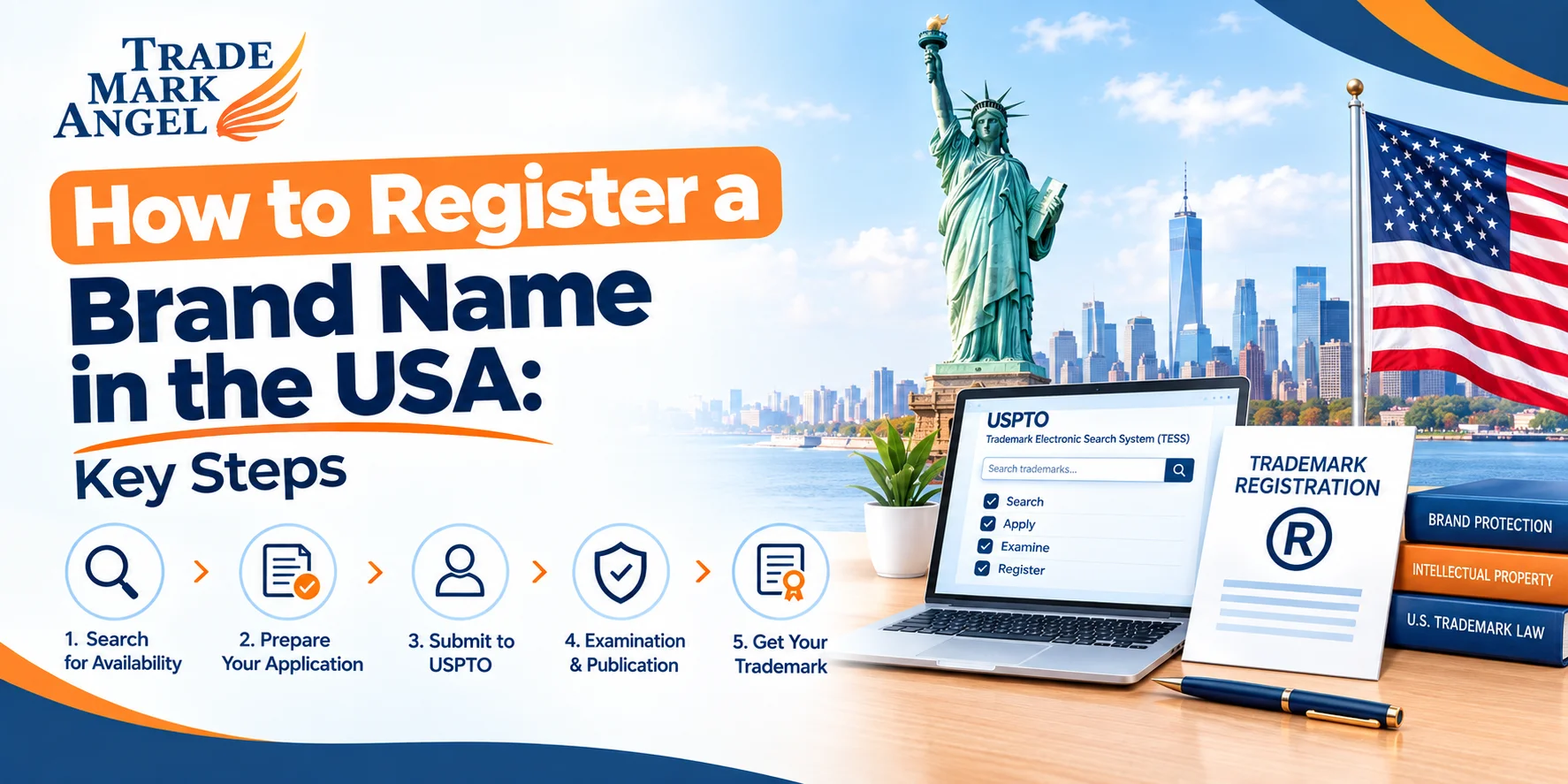
Registering a brand name in the USA isn't complicated once you know the steps. The US Patent and Trademark Office (USPTO) oversees the whole process, and it rewards people who prepare ahead of time rather than rush. Miss a step, and you're looking at delays or a flat-out refusal. Here's what goes into a solid application, from the first search to final approval.
Key Steps to Register a Brand Name in the USA
The brand registration process isn't mysterious, but it follows a set order. Skip ahead and you'll probably pay for it later.
Step 1: Search the USPTO Database First Before you file anything, search the USPTO's Trademark Search system, which replaced the older TESS tool. This is where you find out if someone's already using something close to your name. Many people skip this step, and it's one of the biggest reasons applications get turned down later. Spend the extra hour here. It's cheaper than starting over. You can work with Trademark Angel to run this search and avoid starting over.
Step 2: Pick the Right Filing Basis Every application needs a legal basis. Most small businesses use "use in commerce," which means the brand is already out there selling something. Others file under intent to use if they're planning to launch soon but haven't yet. Whichever applies to you changes what paperwork and proof you'll need to submit.
Step 3: File Your Application With the USPTO Most business owners register a brand name in the USA through the USPTO's online Trademark Center rather than filing on paper. The base filing fee is $350 per class, a figure the USPTO set when it updated its fee schedule. Filing electronically is faster and reduces errors that trigger extra review. Many owners hire a flat-fee filing service at this stage to avoid costly mistakes.
Step 4: Watch for Office Actions After you file, an examining attorney reviews everything and may send back what's called an office action. It's basically a formal note pointing out legal or procedural issues with your application. You'll usually have a few months to respond, and missing that window can kill the whole application.
Step 5: Reach Publication and Registration Once your application clears, it gets published in the Official Gazette, and there's a 30-day window where anyone can object if they think your mark conflicts with theirs. If no one objects, registration usually follows soon after. Once that mark is registered, it carries much more legal weight than one still under review.
Why Brand Name Registration Matters
A registered trademark does more than just look good on a certificate. It backs up your brand with real legal standing, the kind an unregistered name never gets. Here's what actually changes once it's official:
- Nationwide rights: your claim covers the whole country, not just your home state
- Legal leverage: you get standing to sue for infringement in federal court
- Marketplace protection: a registered mark can qualify for Amazon Brand Registry, which helps shut down counterfeit listings
- Public notice: that little ® symbol tells competitors the name's already spoken for
- Business value: a registered trademark becomes something you can license, sell, or point to when talking to investors
- Stronger deterrent: copycats tend to back off once they see a mark is federally registered
How Long Does It Take, and What Happens After Registration?
Patience matters here. From filing to registration, the process typically takes twelve months or more, depending on the examiner's workload and whether you receive an office action. Filing a complete, accurate application is the best way to keep things moving.
Registration isn't the finish line, either. To keep your trademark active, you'll need to file a declaration of continued use between the fifth and sixth year after registration, then renew every ten years. Miss those deadlines and the registration can be cancelled, even if you're still using the brand.
Common Mistakes to Avoid
- Choosing a generic or purely descriptive name: Names that simply describe your product are hard to protect. Distinctive or invented names usually fare better.
- Picking the wrong class: Your mark is registered only for the goods or services you list, so choose carefully.
- Ignoring similar-sounding marks: Examiners look at how a name sounds and what it means, not just how it's spelled.
- Letting your own use lapse: Registration doesn't replace actual use in commerce.
Avoiding these errors early saves money, time, and frustration down the road.
Filing a trademark takes some patience, but the protection sticks around for years once it's done. If the whole process sounds like more than you want to handle on your own, Trademark Angel offers flat-fee filing packages and has guided thousands of brand owners through registration, from the first search to approval.