Sign up with Google
 Sign in with Zoho
Walk into most leadership meetings today and you'll hear some version of the same anxious question: "How do we future-proof our business?" It's usually followed by talk of AI adoption, hybrid work policies, or the latest engagement survey scores. But here's the uncomfortable truth: most organisations are trying to solve a structural problem with tactical fixes.
The future of work isn't a technology issue. It's a human systems issue. And the organisations that will thrive aren't the ones with the flashiest tools. They're the ones that have deliberately built adaptable, resilient, and psychologically safe workplaces. That's where organisational development stops being a "nice to have" HR function and becomes a genuine competitive advantage.
This article explores what that actually looks like in practice, and why leaders who treat it as an afterthought are quietly setting themselves up for disruption.
Why "Business as Usual" No Longer Works
For decades, organisational structures were built for stability: clear hierarchies, fixed job descriptions, annual planning cycles. That model made sense when change happened slowly enough to plan around it.
It doesn't anymore.
Today's leaders are navigating simultaneous shifts: generational turnover, AI-driven role redesign, hybrid and distributed teams, and employees who expect purpose, not just a paycheque. The organisations struggling most aren't necessarily under-resourced; they're under-adapted. Their systems, culture, and leadership habits were built for a world that no longer exists.
A few signs this is happening inside your organisation:
- Decisions take longer than they should because roles and accountability are unclear
- High performers are leaving not for money, but for growth and meaning
- Change initiatives get announced with energy and quietly fizzle within months
- Middle managers are stretched thin, expected to lead transformation without the tools to do it
None of these are people problems. They're design problems, and they're exactly what organisational development exists to solve.
The Core Pillars of a Future-Ready Organisation
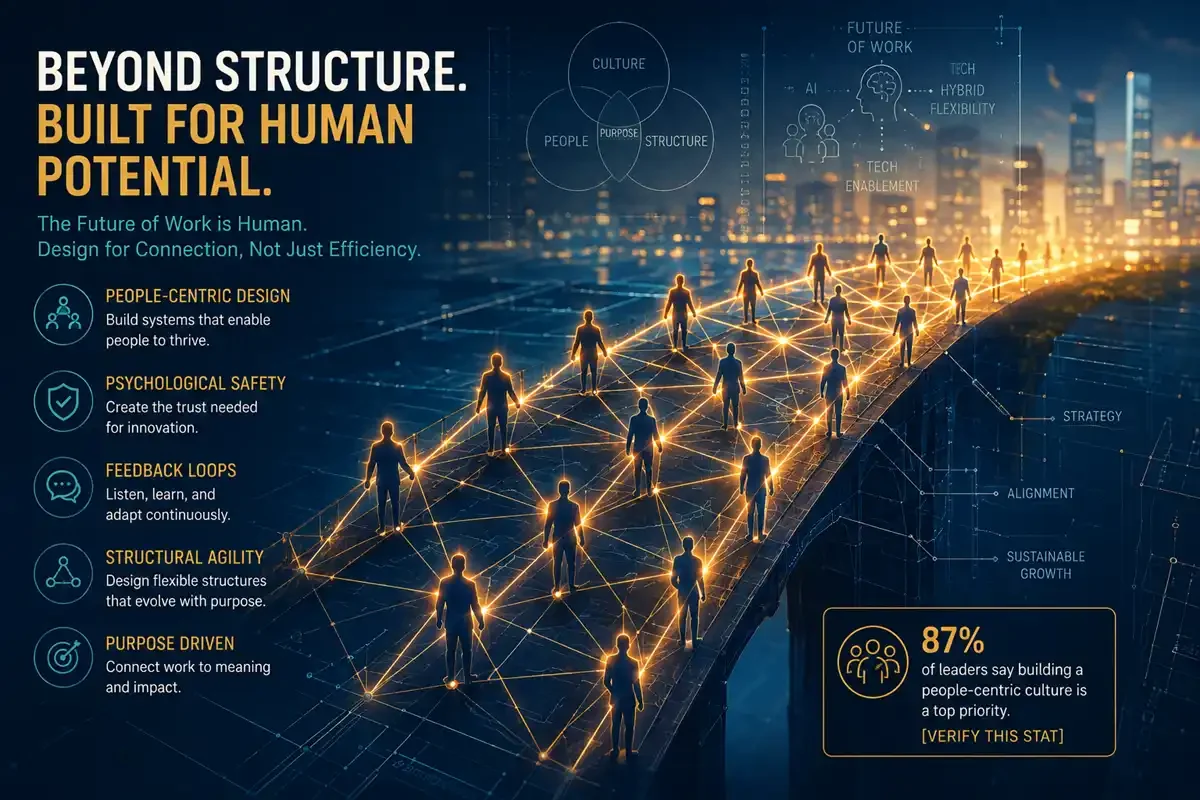
Organisational development isn't a single training programme or a one-off culture workshop. It's an ongoing, deliberate practice of aligning people, structure, and strategy so the business can evolve without losing its footing. Done well, it rests on four pillars:
1. Structural Agility Roles, teams, and decision-making processes need to flex as the business does. This means moving away from rigid job descriptions toward capability-based structures that allow people to pivot as priorities shift.
2. Leadership Capability Future-ready organisations don't just develop leaders for the role they hold today. They build leaders who can navigate ambiguity, coach rather than command, and hold space for change without losing team trust.
3. Cultural Coherence Culture isn't a poster in the breakroom. It's the sum of a thousand small decisions made daily. Development work here focuses on aligning stated values with lived behaviour, particularly under pressure, when culture is truly tested.
4. Continuous Learning Infrastructure Skills that matter today may be irrelevant in three years. Organisations need built-in mechanisms, not annual training calendars, for identifying emerging skill gaps and closing them quickly.
When these four pillars work together, they don't just improve engagement scores. They create organisations that can absorb disruption without falling apart, and that's the real definition of future-readiness.
Turning Insight Into Action: Building a Real Strategy
Understanding the pillars is one thing. Operationalising them is where most organisations stall. A genuinely effective organisational development strategy doesn't start with a training budget. It starts with an honest diagnosis of where the organisation is actually breaking down, followed by a phased plan to address root causes rather than symptoms.
This is where many leadership teams benefit from outside perspective. It's difficult to diagnose systemic issues from inside the system, since the very people trying to fix the culture are often shaped by it. Partnering with specialists who focus on organisational development strategy can help leaders move past guesswork and into a structured approach: assessing current capability, mapping the gap to future needs, and sequencing interventions so change actually sticks rather than fading after the first all-hands meeting.
A practical approach typically includes:
- Diagnostic assessment: understanding culture, structure, and leadership capability as they exist today, not as leadership assumes them to be
- Alignment workshops: getting senior stakeholders genuinely aligned on priorities before rolling anything out to the wider organisation
- Capability building: targeted leadership and team development tied directly to identified gaps
- Structural redesign: adjusting roles, reporting lines, or decision rights where the current setup is actively slowing the business down
- Embedding mechanisms: feedback loops, coaching cadences, and review points that keep the change alive well past the initial rollout
The organisations that get this right treat development work the same way they treat financial planning: ongoing, data-informed, and reviewed regularly, not a one-time event triggered by a crisis.
What This Looks Like in Practice
Consider a mid-sized company facing rising attrition among its high performers. The instinctive response is often a pay review or a new perks package. But when you dig deeper, the real issue is usually structural: unclear career pathways, managers who were promoted for technical skill but never trained to lead, or a culture where speaking up feels risky.
Addressing the actual problem might involve:
- Redesigning career frameworks so growth isn't limited to a narrow management track
- Investing in manager training focused on coaching conversations, not just performance reviews
- Creating structured feedback channels so issues surface before they become resignations
- Reviewing decision-making processes to remove unnecessary bottlenecks
None of this happens overnight, and none of it is glamorous. But it's the difference between an organisation that reacts to disruption and one that's already built to absorb it.
Conclusion: The Future Belongs to the Deliberately Built
The future of work will keep shifting. What's within your control is whether your organisation is reactive or resilient when it does. Organisations that invest deliberately in their structure, leadership, and culture don't just survive disruption. They use it as a catalyst for growth.
If your leadership team has been treating organisational development as a side project rather than a strategic priority, now is the moment to change that. The businesses that will lead their industries in five years are making these decisions today.
Ready to build an organisation that's genuinely prepared for what's next? Start with an honest conversation about where your current structure and culture are helping, or hindering, your growth.