Sign up with Google
 Sign in with Zoho

A CEO once told me his company had "amazing culture" — right before describing a leadership team that hadn't agreed on a decision in eighteen months, a sales floor that hadn't hit target in two years, and an HR director quietly building an exit plan. He wasn't lying. He genuinely believed it. That's usually the first sign someone needs a culture transformation conversation, not the absence of culture — the gap between what leadership believes the culture is and what's actually happening on the floor.
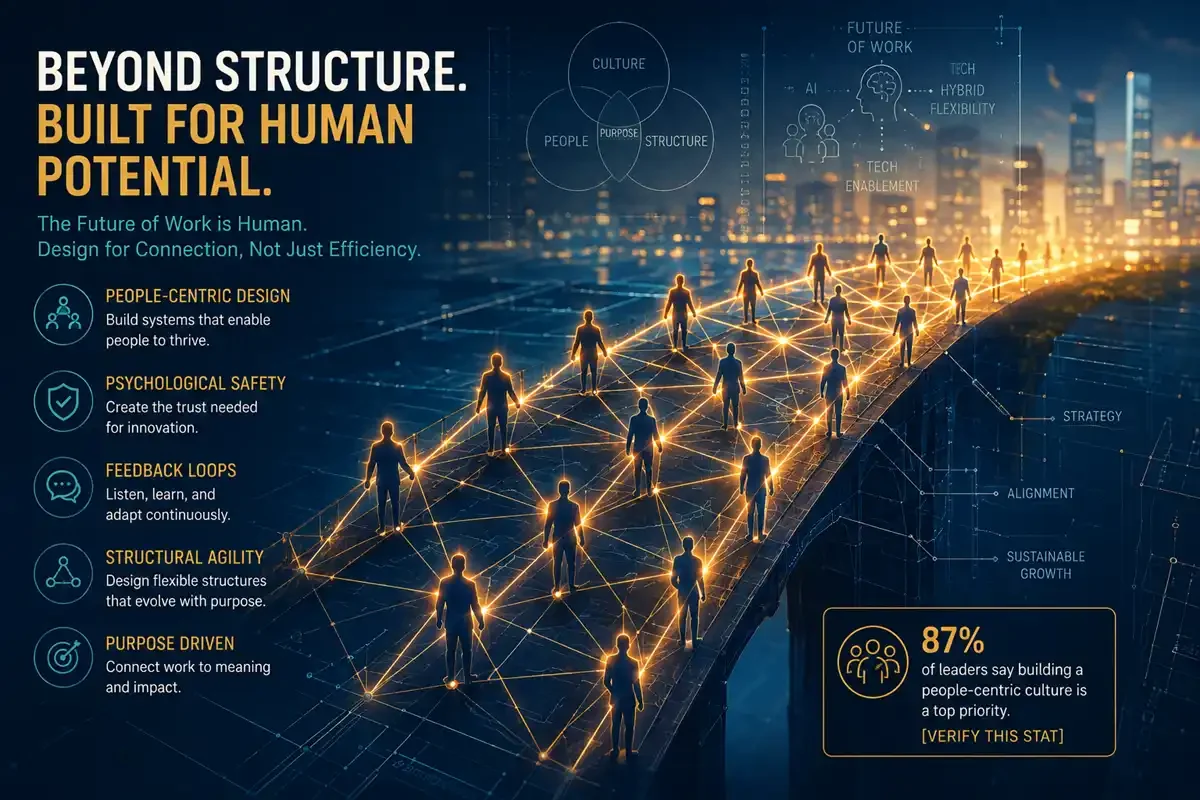
Culture transformation gets thrown around as a catch-all term for "things feel off, let's fix the vibe." It's more precise than that, and more demanding. It's the deliberate work of shifting the actual behaviors, norms, and unwritten rules that drive how people work — not the values poster in reception, but what genuinely gets rewarded, tolerated, and repeated day to day.
Culture Isn't What You Say. It's What Gets Repeated.
I tell every leadership team I work with the same thing: your culture is not your values statement. It's the pattern of behavior that survives contact with reality when nobody's watching and nothing's convenient.
If a manager publicly champions collaboration but privately rewards whoever hoards information and wins alone, the real culture is competitive, regardless of what's printed on the wall. Employees read the gap between stated and lived values faster than leadership ever notices it. And once that gap becomes visible, trust erodes quietly — long before it shows up in an engagement score.
This is precisely the dynamic Wiley's most recent Workplace Intelligence research picked up on. Despite most HR leaders heading into 2026 with cautious optimism, organizational culture improvement and employee engagement remain top challenges, with leaders specifically flagging a narrow window to convert that optimism into real, felt change before it slips away. That window doesn't stay open through good intentions alone. HR Dive
The Warning Signs Are Rarely Labeled "Culture"
Nobody comes to me and says, "I think we have a culture problem." They say turnover is up among their best people. They say decisions take too long. They say two regional offices can't agree on anything and they don't know why. They say the new leadership team they hired six months ago still hasn't gelled.
Culture issues almost always disguise themselves as something else first — a performance problem, a retention problem, a "communication" problem. By the time it's named as culture, it's usually been costing the business for a while.
One pattern I'd flag for any leader reading this: organizational change researchers at Prosci have documented what they call change saturation, where employees accumulate so many simultaneous change initiatives that they become disengaged and resistant by default. Their Best Practices research found a significant majority of organizations were near, at, or beyond that saturation point, and organizations past it consistently report weaker engagement. If your business has launched three "transformation" initiatives in two years and none of them stuck, that's not employee resistance — that's a clear signal the appetite for change has been exhausted by how change has been handled, not by the idea of change itself. Prosci
Mergers and Multicultural Teams Make the Gap Wider, Not Smaller
In the GCC specifically, I see culture transformation needs surface most sharply in two situations: mergers or acquisitions, and rapid scaling across multicultural teams.
When two organizations combine — a local family business acquiring a smaller regional player, say, or a multinational integrating a GCC subsidiary — the assumption is often that culture will simply blend. It doesn't. I've seen entrepreneurial, fast-moving teams absorbed into more hierarchical structures lose their best instincts within a year, simply because nobody deliberately decided which behaviors from each side were worth preserving.
Multicultural teams compound this. A leadership style that reads as confident and direct to one nationality on the team can read as abrasive or disrespectful to another. Without deliberate work on shared norms — not generic "diversity training," but real conversation about how this specific team wants to disagree, decide, and give feedback to each other — you end up with several parallel cultures operating under one roof, each one convinced the others are the problem.
What Actually Moves the Needle
The leadership teams I've seen succeed at culture transformation share one trait: they treat it as a leadership behavior problem before they treat it as a communications problem. New values frameworks and town halls don't shift culture if the senior team's own behavior under pressure hasn't changed.
This is where I lean heavily on tools like the EQi-2.0 with executive teams — not as a one-off assessment, but as an ongoing mirror. Leaders need to see, concretely, where their own emotional regulation, self-awareness, or empathy is either reinforcing the culture they want or quietly undermining it. I've watched a single senior leader's shift in how they handle disagreement in meetings change the tone of an entire department within a quarter, simply because everyone below them had been mirroring that behavior without realizing it.
If you've read my earlier piece on building leadership capability across the organisation, you'll know I think of this as inseparable from individual development — culture doesn't transform at the company level until enough individuals at the top transform how they lead.
Knowing When to Bring in Outside Eyes
Most leadership teams can sense something is wrong before they can name it precisely, and that's usually the right moment to get an outside perspective rather than waiting for the problem to become undeniable.
If any of this is sounding familiar in your own organisation, it's worth a conversation about what a structured approach to shifting culture could look like for your team — no commitment, just clarity on where you actually stand.