Sign up with Google
 Sign in with Zoho

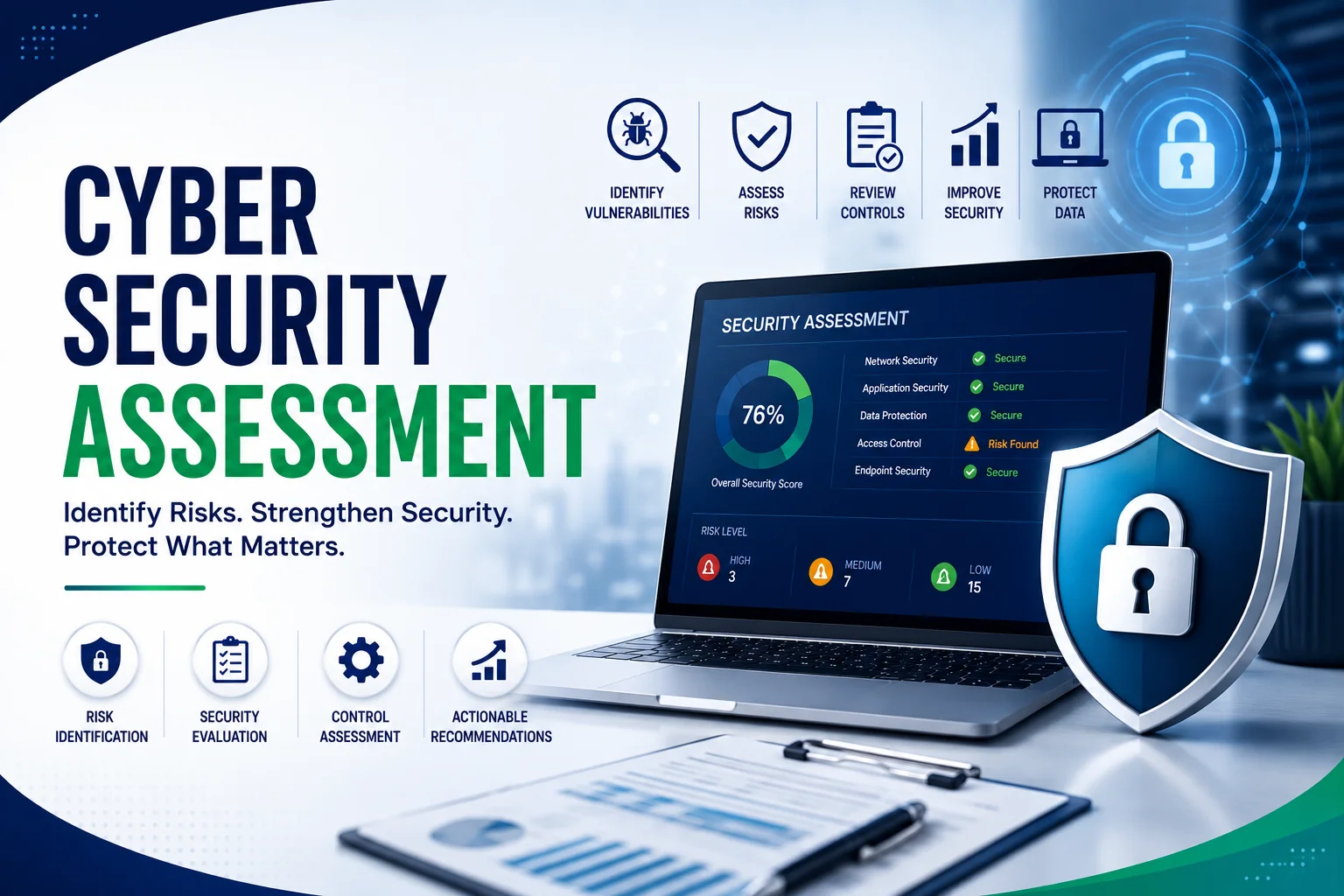
Cyber threats have become one of the biggest operational risks facing businesses today. Ransomware attacks, phishing emails, credential theft, and data breaches are affecting organisations of every size, not just large enterprises. As companies adopt cloud platforms, remote work, and connected business applications, their digital environments become more complex and difficult to secure.
Many organisations invest in antivirus software, firewalls, and cloud services, but these tools alone do not guarantee protection. Without a clear understanding of how systems are configured, who has access to critical data, and whether security controls are functioning effectively, businesses may still be exposed to significant cyber risks. This is why a cyber security assessment is considered an essential part of modern IT governance and risk management.
A cyber security assessment provides a structured review of an organisation’s technology environment, security controls, and operational practices to identify vulnerabilities before they can be exploited by attackers.
What Is a Cyber Security Assessment?
A cyber security assessment is a comprehensive evaluation of an organisation’s security posture. The purpose is to identify weaknesses, measure the effectiveness of existing controls, and provide practical recommendations for improving protection across networks, cloud services, endpoints, and business applications.
Unlike a simple vulnerability scan, a cyber security assessment examines both technical and procedural aspects of security. It typically includes:
- Network and firewall security reviews
- Cloud security configuration analysis
- User access and identity management
- Endpoint protection and device security
- Patch and vulnerability management
- Backup and disaster recovery readiness
- Email and collaboration security
- Security monitoring and incident response processes
- Policy and compliance reviews
The outcome is a clear picture of the organisation’s current security posture and a prioritised roadmap for reducing risk.
Why Businesses Need Regular Assessments?
Technology environments change constantly. New employees join the organisation, cloud applications are added, remote workers connect from different locations, and third-party integrations introduce additional exposure. Over time, these changes can create hidden security gaps that are difficult to detect during normal operations. Without regular assessments, businesses may unknowingly operate with:
- Outdated operating systems
- Weak password policies
- Excessive administrator privileges
- Inactive user accounts
- Unpatched software vulnerabilities
- Misconfigured cloud services
- Inconsistent backup procedures
- Limited visibility into suspicious activity
A cyber security assessment helps organisations identify these issues before they result in operational disruption, financial loss, or reputational damage.
Key Areas Reviewed During a Cyber Security Assessment
Identity and Access Management: Compromised user credentials remain one of the most common causes of security breaches. Assessments review authentication methods, multi-factor authentication deployment, privileged access controls, password policies, and user account lifecycle management to ensure only authorised individuals can access sensitive systems and data.
· Cloud Security: Businesses increasingly rely on Microsoft 365, Google Workspace, Azure, AWS, and other cloud platforms. A cyber security assessment examines tenant configurations, conditional access policies, data sharing settings, external collaboration controls, and cloud application permissions to identify misconfigurations that could expose business information.
· Endpoint and Device Protection: Laptops, desktops, mobile devices, and remote endpoints are frequent targets for attackers. Assessments verify antivirus and endpoint detection coverage, operating system updates, encryption status, device compliance policies, and remote access security controls.
· Backup and Disaster Recovery: Many organisations discover during an incident that their backups have never been tested. A cyber security assessment evaluates backup frequency, retention policies, recovery procedures, offsite storage, and restoration testing to confirm that critical systems and data can be recovered when needed.
· Network and Infrastructure Security: Firewall rules, network segmentation, wireless security, VPN configurations, and server hardening are reviewed to identify weaknesses that could allow unauthorised access or lateral movement within the environment.
Benefits of a Cyber Security Assessment
A well-executed cyber security assessment delivers benefits that extend beyond identifying technical vulnerabilities.
· Reduce the Risk of Cyber Attacks: By identifying weaknesses before attackers do, organisations can address vulnerabilities proactively and significantly reduce the likelihood of ransomware, phishing, and unauthorised access incidents.
· Improve Business Continuity: Assessments strengthen backup, recovery, and incident response capabilities, helping businesses recover more quickly from security events or operational disruptions.
· Support Compliance Requirements: Many industries must comply with security frameworks such as ISO 27001, NIST, CIS Controls, PCI DSS, HIPAA, GDPR, or regional privacy regulations. A cyber security assessment helps organisations understand where they meet these requirements and where improvements are needed.
· Increase Customer and Stakeholder Confidence: Demonstrating that security controls are regularly reviewed and improved can increase trust among customers, partners, investors, and regulators.
· Prioritise Security Investments: Rather than spending money on unnecessary tools, businesses can focus resources on the areas that present the greatest operational and security risk.
Common Findings in Real-World Assessments
Organisations are often surprised by the issues uncovered during a professional cyber security assessment. Some of the most common findings include:
- Multi-factor authentication enabled only for some users
- Former employee accounts that remain active
- Shared administrator accounts
- Unsupported operating systems still connected to the network
- Backups that have never been tested for restoration
- Inconsistent patch management across departments
- Excessive permissions in cloud collaboration platforms
- Lack of documented incident response procedures
- Insufficient monitoring of remote access activity
These issues may appear minor individually, but together they can create significant opportunities for attackers.
Cyber Security Assessments and Cyber Insurance
Cyber insurance providers are increasingly requiring evidence that organisations have implemented reasonable security controls before approving or renewing coverage. Insurers often ask about multi-factor authentication, backup testing, endpoint protection, patch management, and incident response planning.
Conducting a cyber security assessment before applying for cyber insurance can help businesses identify gaps that may affect eligibility, reduce delays during the underwriting process, and improve the likelihood of obtaining appropriate coverage.
How Often Should an Assessment Be Performed?
The frequency of a cyber security assessment depends on the organisation’s size, industry, and risk profile, but most businesses should conduct a formal assessment at least once per year. Additional assessments are recommended when:
- Migrating to a new cloud platform
- Implementing Microsoft 365 or other collaboration services
- Expanding remote or hybrid work arrangements
- Opening new office locations
- Introducing critical business applications
- Experiencing significant staff growth
- Preparing for compliance audits or cyber insurance renewals
- Responding to a security incident or near miss
Regular reviews help ensure security controls remain effective as the technology environment evolves.
Choosing the Right Assessment Partner
An effective cyber security assessment requires more than automated scanning tools. Experienced security professionals should be able to interpret findings in the context of business operations, compliance obligations, and operational priorities.
When selecting an assessment provider, businesses should look for:
- Experience with cloud and hybrid environments
- Knowledge of recognised security frameworks
- Practical remediation guidance
- Executive-level reporting for management teams
- Technical detail for IT administrators and engineers
- Ongoing support for implementing recommendations
The most valuable assessments provide actionable insights that can realistically be implemented, not just a long list of technical findings.
Final Thoughts
Cyber threats continue to evolve, and businesses can no longer rely on assumptions about their security posture. A cyber security assessment provides the visibility needed to understand how well networks, cloud services, endpoints, and operational processes are protected against modern threats.
By identifying vulnerabilities, strengthening access controls, improving backup and recovery readiness, and aligning security practices with recognised standards, organisations can reduce operational risk and build a more resilient technology environment.
For businesses that depend heavily on digital systems, customer data, and cloud-based collaboration, a cyber security assessment is not simply a technical exercise. It is a strategic investment in security, compliance, business continuity, and long-term organisational confidence.