Sign up with Google
 Sign in with Zoho

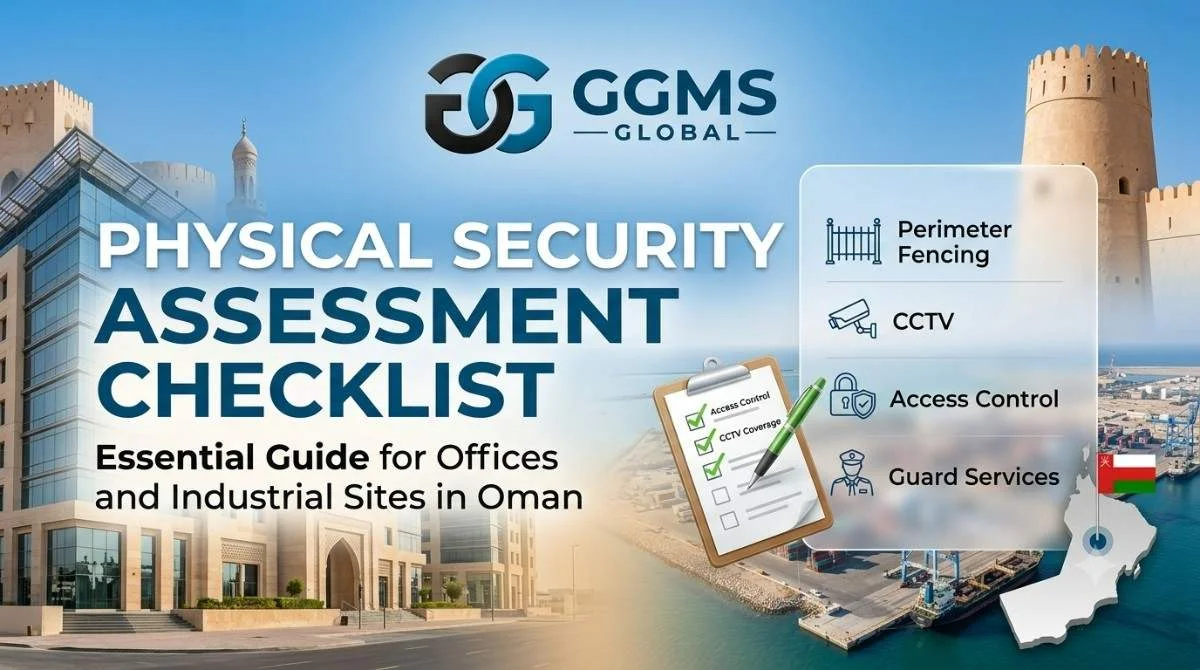
Introduction
Businesses need more than locked doors and security cameras to protect their employees, equipment, documents and facilities. A structured assessment helps identify weaknesses in entrances, restricted areas, perimeter protection and surveillance systems before they become serious security concerns. For organisations seeking physical security services in Oman, reviewing existing security controls is an important first step towards improving site safety.
GGMS Global IT Solutions provides physical security-related solutions, including CCTV surveillance, access control and biometric systems. Businesses looking for a physical security solution in Oman can benefit from an assessment-led approach that identifies risks, highlights gaps and helps prioritise practical improvements.
1. Check All Entrances and Exit Points
Entrances are among the most important areas to inspect during a physical security assessment. Main reception doors, employee entrances, emergency exits, loading bays and secondary access points should all be reviewed.
Entrance security checklist:
- Confirm that entry doors, locks and access devices work correctly.
- Check whether employee entrances are controlled and monitored.
- Inspect emergency exits to ensure they remain accessible and are not improperly obstructed.
- Verify that loading bays and delivery entrances have appropriate security controls.
- Identify doors that remain unlocked or open longer than necessary.
- Confirm that entry and exit procedures are understood by employees.
Offices may need stronger reception controls, while warehouses and industrial sites may require additional checks around loading areas and vehicle entrances. Security measures should match the site's layout, working hours and operational risks.
2. Inspect Restricted Rooms and Sensitive Areas
Server rooms, IT equipment rooms, document storage areas, control rooms and management offices may contain valuable equipment or sensitive information. Access should be limited to authorised personnel.
During the assessment, check whether restricted rooms have functioning locks, appropriate access permissions and clear responsibility for approving entry. Review whether access records are available where required.
Questions to ask:
- Who is authorised to enter each restricted area?
- Are permissions updated when employees change roles?
- Can visitors or contractors enter these rooms without supervision?
- Are keys, access cards and credentials controlled properly?
Businesses should avoid giving every employee unrestricted access. Assigning permissions according to job responsibilities helps reduce unauthorised entry and improves accountability.
3. Review Perimeter and External Areas
Perimeter security is particularly important for industrial facilities, warehouses, offices with outdoor equipment and sites operating outside normal business hours.
Inspect boundary walls, fencing, gates, parking areas, delivery zones and external storage locations. Look for damaged fencing, poorly secured gates, concealed access points and areas with insufficient lighting.
Perimeter assessment checklist:
- Inspect fences, walls and gates for visible damage.
- Check that vehicle entry points have appropriate controls.
- Identify poorly lit walkways, parking spaces and building entrances.
- Review access to outdoor equipment and storage areas.
- Check whether external security cameras cover important approach routes.
- Confirm that responsibility for reporting perimeter damage is clearly assigned.
In Oman, businesses should also consider site-specific environmental conditions, including dust and heat exposure, when checking the condition and reliability of outdoor security equipment.
4. Assess CCTV Coverage and Camera Performance
CCTV surveillance helps security teams monitor activity, investigate incidents and maintain visibility across important areas. However, installing cameras does not automatically guarantee effective coverage.
Review cameras at entrances, reception desks, corridors, parking areas, perimeter gates, loading bays and other critical locations. Check whether camera angles provide useful views without unnecessary blind spots.
CCTV assessment checklist:
- Confirm that important entry and exit points are covered.
- Identify blind spots around buildings and restricted areas.
- Check image clarity during daytime and nighttime conditions.
- Verify that recording, playback and storage functions work correctly.
- Review access to camera feeds and recorded footage.
- Check camera condition, connectivity and maintenance requirements.
- Confirm that retention and access practices follow applicable requirements.
Camera placement should support a defined security purpose. For example, a warehouse may prioritise loading bays and storage areas, while an office may focus on reception, entrances and restricted rooms.
5. Review Access Permissions and Credential Management
Access control systems help organisations manage who can enter particular areas and when. These systems may use access cards, PINs, biometric readers or other approved credentials.
Check whether permissions reflect current employee responsibilities and whether former employees' access has been removed. Review lost cards, shared credentials, temporary permissions and access granted to contractors.
Access control checklist:
- Review employee and contractor access permissions.
- Remove credentials that are no longer required.
- Confirm that restricted areas have appropriate permission levels.
- Check procedures for lost cards and compromised credentials.
- Review access logs where available.
- Confirm that access permissions are reviewed periodically.
For multi-site businesses, consistent access policies can make security management easier across offices, warehouses and industrial facilities.
6. Evaluate Visitor and Contractor Procedures
Visitors, delivery personnel and contractors need clear entry procedures that do not unnecessarily disrupt business operations.
Check whether reception staff verify visitor identities where appropriate, record visits, issue temporary passes and notify employees before allowing access. Contractors working in technical or restricted areas should receive access only to the locations required for their tasks.
A practical visitor process should include registration, host approval where needed, visible identification, appropriate supervision and confirmation that temporary access ends when the visit is complete.
7. Inspect Server Rooms and Equipment Rooms
Server rooms, network cabinets and equipment rooms often support essential business operations. Unauthorised access, poor housekeeping or unsuitable environmental conditions can create security and operational risks.
Check physical locks, access permissions, cabinet security, cable organisation, equipment placement and visible signs of damage. Review whether cooling, ventilation, power protection and environmental monitoring are suitable for the installed equipment.
Where appropriate, assess whether CCTV or access logs can help investigate unauthorised entry. Security controls should protect equipment without interfering with emergency access, maintenance or essential operations.
8. Prioritise Improvements After the Assessment
An assessment is most useful when it produces a clear, actionable improvement plan. Not every security gap requires the same level of urgency.
Organise findings according to their potential impact, likelihood of exploitation, operational consequences and the effort needed to address them.
A practical prioritisation framework:
- High priority: Unsecured restricted rooms, uncontrolled access to critical equipment, failed essential cameras or serious perimeter weaknesses. Address these promptly.
- Medium priority: Incomplete access reviews, inconsistent visitor records, CCTV blind spots in important areas or inadequate monitoring of delivery zones.
- Low priority: Documentation improvements, routine maintenance scheduling and non-critical coverage enhancements.
For each finding, document the location, identified weakness, recommended action, responsible person and target completion date. Reassess completed improvements to confirm that the original issue has been addressed.
Strengthen Site Security with GGMS Global
A well-planned physical security assessment helps businesses understand where protection is working and where improvements are needed. GGMS Global IT Solutions supports businesses in Oman with physical security-related capabilities, including CCTV surveillance, access control and biometric systems.
Whether you manage an office, warehouse or industrial facility, GGMS Global can help you evaluate your security requirements and identify suitable improvements based on your site's needs.
Visit GGMS Global to learn more or book an appointment to discuss your physical security requirements.
Frequently Asked Questions
1. What should I check during a physical security assessment at my office?
Start with entrances, emergency exits, restricted rooms, CCTV coverage, access permissions, visitor procedures and equipment rooms. Also inspect external areas and document any security gaps that require attention.
2. How often should a business conduct a physical security assessment?
The frequency depends on the site's risks, size and operational requirements. Many businesses benefit from a scheduled annual review, with additional assessments after major changes, security incidents, renovations or changes to access arrangements.
3. Why is CCTV alone not enough to secure an industrial site?
CCTV helps monitor activity, but it cannot replace effective locks, controlled entry, appropriate access permissions, visitor management and perimeter protection. Combining these measures provides a more comprehensive approach to site security.
4. How can GGMS Global help improve physical security in Oman?
GGMS Global IT Solutions offers physical security-related capabilities such as CCTV surveillance, access control and biometric systems. Businesses can discuss their requirements with the team to identify suitable improvements for their offices or industrial facilities.