Sign up with Google
 Sign in with Zoho

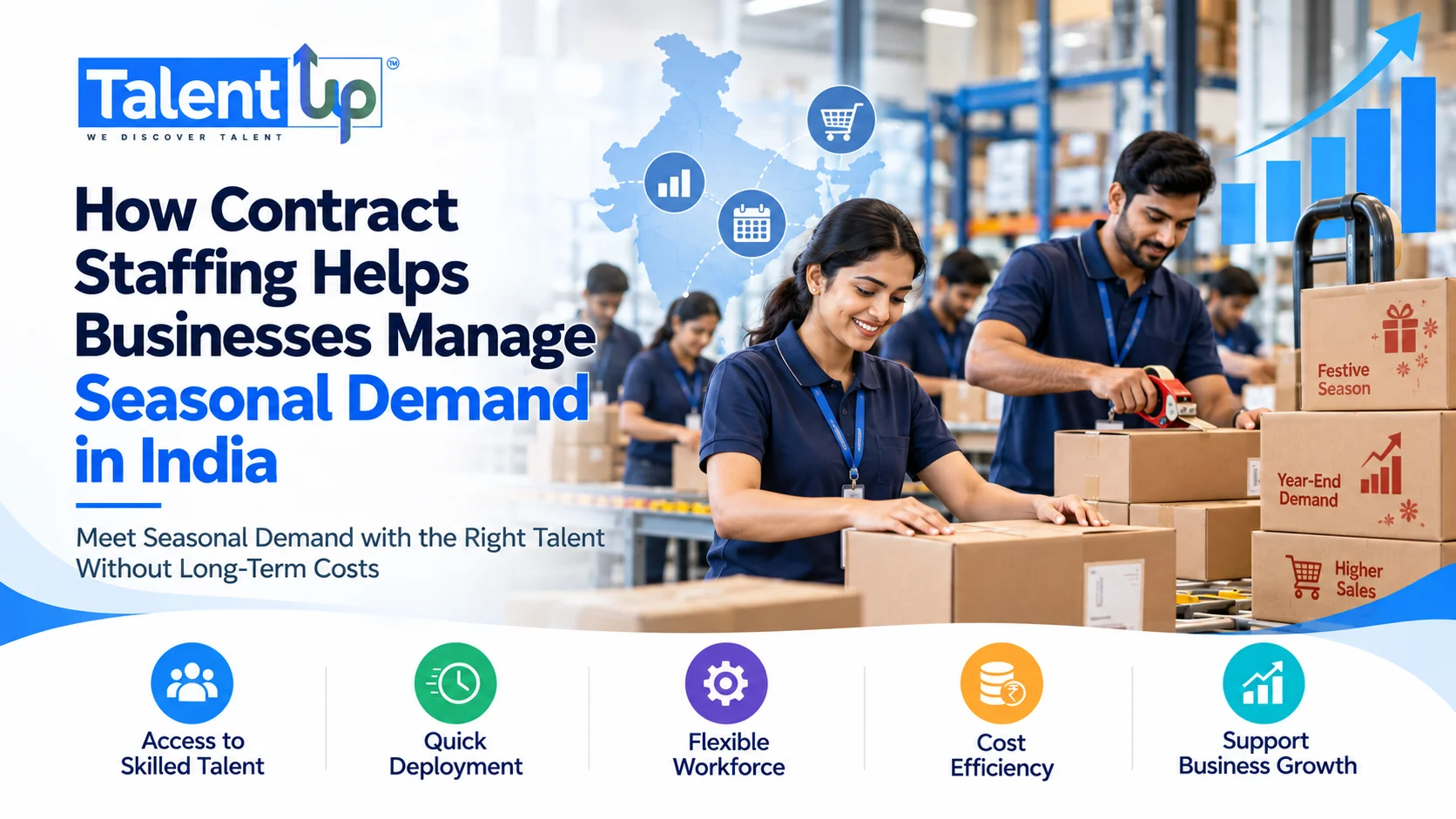
Seasonal demand creates a recurring dilemma for many businesses. Festive sales, year-end processing cycles, or harvest-linked production runs all require additional workforce capacity for a defined period, but expanding permanent headcount to meet these temporary peaks often leads to overstaffing once the season ends. The best contract staffing services in India offer a practical way out of this dilemma, allowing businesses to meet seasonal demand without the long-term cost burden of permanent expansion.
This article looks at how businesses can manage seasonal hiring demand effectively through contract staffing, the planning steps involved, and how to avoid common pitfalls that come with seasonal workforce management.
Why Seasonal Demand Creates a Staffing Challenge
Businesses across retail, e-commerce, manufacturing, and financial services regularly experience predictable but temporary spikes in workload. Festive shopping seasons can multiply order volumes several times over for a matter of weeks, while year-end financial processing can create similar surges in back-office functions.
Expanding permanent headcount to meet these peaks means carrying that cost structure, including salaries, benefits, and statutory contributions, throughout the rest of the year when demand returns to normal levels. This mismatch between temporary need and permanent cost is exactly what makes seasonal hiring through contract staffing such a practical alternative.
How Contract Staffing Solves the Seasonal Demand Problem
Matching Workforce Cost to Actual Demand
Temporary staffing allows businesses to bring in exactly the workforce capacity needed for the peak period and release that capacity once demand normalises, aligning costs closely with actual business activity.
Faster Deployment for Time-Sensitive Peaks
Seasonal peaks often have hard deadlines, a festive sale date or a financial year-end, that cannot be missed. Best contract staffing services in India with strong bench strength can deploy additional workforce quickly enough to meet these fixed timelines.
Reduced Administrative Burden
Managing a large temporary workforce internally, including payroll and compliance for a short period, creates significant administrative strain. Staffing partners absorb this burden, handling statutory obligations regardless of how short the engagement period is.
Avoiding Post-Season Layoffs
Expanding permanent headcount for a season and then reducing it afterward often involves layoffs, which carry both financial and reputational costs. Contract arrangements avoid this entirely, since the engagement is understood as temporary from the outset.
Planning for Seasonal Hiring in Advance
Analyse Historical Demand Patterns
Businesses with several years of seasonal data should analyse past demand spikes to forecast the scale and timing of workforce needs more accurately for the coming season.
Engage the Staffing Partner Early
Waiting until the season is imminent significantly limits a staffing partner's ability to source quality candidates. Sharing forecasts several months in advance, where possible, allows partners to prepare talent pools proactively.
Define Role Requirements Clearly
Seasonal roles should have clearly defined skill requirements and expected duration communicated to the staffing partner, helping ensure candidates presented are genuinely suited to the short-term nature of the engagement.
Prepare Standardised Onboarding
Given the compressed timelines typical of seasonal hiring, having a standardised, efficient onboarding process ready in advance helps new contract hires become productive quickly.
Managing Workforce Flexibility During the Season
Workforce flexibility does not end once seasonal staff are deployed. Businesses should build in mechanisms to adjust headcount further if actual demand differs from forecasts, whether that means bringing in additional contract staff quickly or scaling back if demand falls short of projections.
Maintaining open communication with the staffing partner throughout the season allows for these adjustments to happen smoothly, rather than being managed reactively under pressure.
Industries That Rely Heavily on Seasonal Contract Staffing
- E-commerce and Retail: Festive sale periods drive some of the sharpest seasonal demand spikes for warehouse, delivery, and customer support roles.
- Manufacturing: Certain sectors experience order volume surges tied to specific times of year, requiring temporary production line support.
- BFSI: Financial year-end processing often requires additional back-office and support staff for a defined period.
- Agriculture-Linked Processing: Harvest seasons create predictable, short-term workforce needs for processing and logistics functions.
Avoiding Common Seasonal Staffing Mistakes
- Starting the hiring process too late: This limits candidate availability and increases the risk of missing key seasonal deadlines.
- Underestimating onboarding time: Even short-term roles benefit from proper orientation, and skipping this often results in lower productivity during the critical peak period.
- Failing to plan for the transition back to normal staffing levels: Businesses should have a clear plan for winding down seasonal contract arrangements smoothly once the peak period ends.
- Not reviewing performance data after the season: Analysing what worked and what did not helps refine planning for the following year's seasonal cycle.
Conclusion
Seasonal demand does not have to force a choice between missing revenue opportunities and carrying unnecessary permanent headcount year-round. The best contract staffing services in India give businesses a structured way to scale up quickly for predictable peaks and scale back down just as smoothly once the season ends.
Businesses preparing for their next seasonal cycle should look at contract staffing companies in India with strong bench strength and a track record of fast, reliable seasonal deployment. TalentUp, with its established staffing and facility management capabilities, is a relevant example of the kind of partner businesses turn to when managing seasonal workforce demand without expanding permanent headcount.