Sign up with Google
 Sign in with Zoho

Introduction
Businesses today rely heavily on digital information to manage their operations. From customer databases and financial records to cloud applications and internal systems, data is essential for maintaining daily business activities.
However, unexpected incidents such as hardware failures, cyberattacks, accidental file deletion and system outages can interrupt these operations.
Having backup copies of important information is important, but businesses also need to understand how much data they can afford to lose and how quickly their systems should be restored.
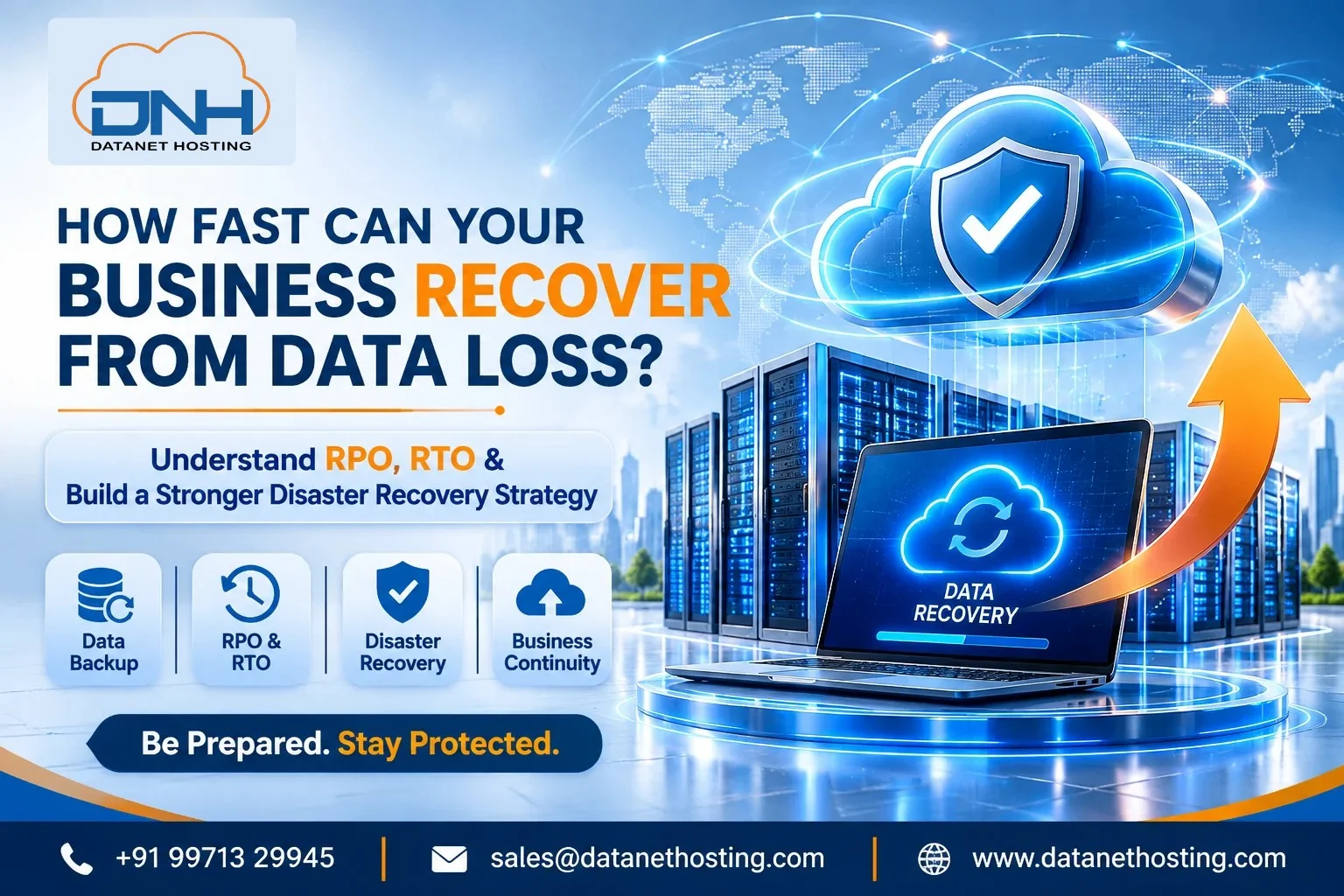
This is where Recovery Point Objective (RPO) and Recovery Time Objective (RTO) become important. These two measurements help organisations develop practical data protection and disaster recovery strategies.
Understanding Recovery Point Objective (RPO)
Recovery Point Objective, or RPO, defines the maximum amount of data loss an organisation is prepared to accept following an unexpected disruption.
It helps businesses determine how frequently their important information should be backed up.
For example, consider an organisation that performs data backups every four hours. If a system failure occurs, the organisation may lose the information created after its most recent successful backup.
In this situation, the potential data loss could be up to four hours.
Businesses that manage sensitive customer information, financial transactions or frequently updated databases may require shorter RPO targets.
Understanding Recovery Time Objective (RTO)
Recovery Time Objective, commonly known as RTO, refers to the target time required to restore affected systems and resume business operations after an incident.
For example, if an organisation establishes an RTO of three hours, its recovery plan aims to restore the affected services within that timeframe.
Achieving a recovery target depends on several factors, including backup availability, infrastructure capacity, restoration procedures and technical resources.
A clearly defined RTO helps IT teams understand which systems need immediate attention during an outage.
RPO vs RTO: What Is the Difference?
Although both concepts are important for business continuity, they address different recovery requirements.
RPO measures acceptable data loss. It helps determine how far back an organisation may need to recover its information.
RTO measures acceptable downtime. It establishes the target time for restoring systems and services.
For example, an online business might have an RPO of one hour and an RTO of two hours.
This means the organisation aims to limit data loss to approximately one hour and restore affected operations within two hours.
These targets should be determined according to the importance of each application and the organisation's operational requirements.
Why Should Businesses Define RPO and RTO?
Establishing recovery objectives helps businesses prepare for disruptions instead of making decisions during an emergency.
Here are some important reasons why organisations should consider them.
1. Better Backup Planning
RPO helps organisations determine suitable backup intervals. Critical systems may require more frequent backups, while less frequently updated information may follow a different schedule.
2. Reduced Operational Disruption
RTO gives IT teams a clear recovery target. This helps them plan restoration activities and prioritise essential business applications.
3. Improved Disaster Recovery Preparedness
A disaster recovery plan should explain how systems, applications and data will be restored following a major incident. Recovery objectives provide measurable targets for this planning.
4. Protection of Business-Critical Information
Not all business data has the same level of importance. Financial systems, customer databases and transaction platforms may require stronger protection and faster recovery arrangements.
5. Better Business Continuity
Clearly defined recovery requirements help organisations prepare for unexpected events and maintain essential operations wherever possible.
How Can Businesses Improve Their Backup and Recovery Strategy?
Defining RPO and RTO is only the beginning. Organisations also need to establish processes and technologies that support their recovery requirements.
Some useful practices include:
Identify Critical Workloads: List the applications, databases, servers and files that are essential to daily operations.
Set Realistic Recovery Targets: Establish separate RPO and RTO objectives according to workload importance and business needs.
Schedule Regular Backups: Choose backup frequency based on how frequently information changes and how much data loss is acceptable.
Protect Backup Copies: Use appropriate access controls, separate backup storage and immutable backup options where suitable.
Test Recovery Procedures: Regularly test file and application restoration to confirm that backups are usable.
Review the Strategy: Reassess recovery requirements whenever business operations, applications or infrastructure change.
These practices can help businesses build a more organised approach to data protection.
The Role of Backup Technology in Disaster Recovery
Backup technology plays an important role in helping organisations meet their recovery objectives.
Solutions such as Veeam provide data protection capabilities for supported workloads across virtual, physical and cloud environments.
Depending on the selected solution and configuration, businesses can use backup technologies to create protected data copies, restore files and workloads, manage backup operations and support disaster recovery planning.
However, purchasing backup software alone does not guarantee that an organisation will meet its RPO or RTO targets.
Backup frequency, storage performance, network capacity, infrastructure design and regular recovery testing all influence actual recovery results.
Businesses should evaluate these factors before selecting a backup and recovery solution.
Learn More About RPO, RTO and Veeam Backup
Understanding recovery objectives can help organisations make better decisions about backup frequency, system restoration and business continuity.
For a more detailed explanation of how RPO and RTO work together with modern backup technologies, explore our related guide: Understanding RPO and RTO: How Businesses Can Improve Data Backup and Recovery.
Conclusion
Unexpected data loss and system downtime can create serious challenges for businesses. A reliable data protection strategy should therefore include more than simply creating backup copies.
RPO helps organisations understand how much data they can afford to lose, while RTO establishes how quickly critical systems should be restored.
By defining realistic recovery objectives, selecting suitable backup technologies and testing restoration procedures regularly, businesses can improve their preparedness for unexpected disruptions.
The real value of a backup strategy is not just having a copy of your data. It is knowing how effectively you can recover when something goes wrong.