Sign up with Google
 Sign in with Zoho

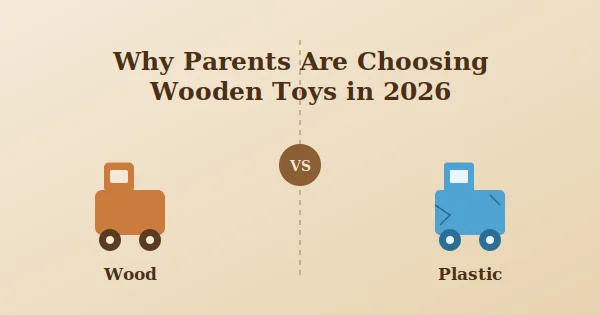
Walk into any nursery or playroom today and you'll notice a quiet shift happening. Bright plastic toys that once dominated toy chests are slowly being replaced by something simpler: wood. Parents aren't just chasing a trend — they're rethinking what actually belongs in their child's hands.
The Problem With Plastic
Plastic toys are cheap, colorful, and everywhere. But they come with trade-offs many parents are only now paying attention to. Plastic toys crack easily, end up in landfills within a year or two, and some cheaper imports have raised long-standing concerns about the chemicals used in their manufacturing. For parents trying to create a safer, calmer home environment, that's reason enough to look for alternatives.
Why Wood Wins for Everyday Play
Wooden toys solve several of these problems at once:
- Durability. A well-made wooden toy can survive being dropped, chewed, thrown, and rediscovered years later — often getting passed down to younger siblings or even the next generation.
- Safety. Solid wood finished with natural, food-safe oils avoids the harsh chemical coatings sometimes found in low-cost plastic alternatives, which matters most for babies who put everything in their mouths.
- Simplicity. Without flashing lights or built-in sounds, wooden toys encourage kids to use their own imagination instead of passively reacting to a toy's programmed responses.
- Aesthetic. Wooden toys tend to look good left out — which is a small but real win for parents tired of a playroom that looks like a plastic toy store exploded.
Personalization Makes It Even More Meaningful
One trend picking up steam alongside the shift to wood is personalization. Instead of a generic toy truck or set of blocks, parents and gift-givers are choosing pieces engraved with a child's name, birth date, or a short message. It turns an everyday toy into a keepsake — something that gets kept in a memory box years after the child has outgrown it, rather than donated or thrown away.
This is especially popular for:
- Baby shower and newborn gifts
- Nursery decor, like name blocks
- First birthday and milestone gifts
- Wedding guest books, using engraved wooden blocks instead of a traditional paper book
What to Look for When Buying
If you're considering making the switch, a few things are worth checking before you buy:
- Solid wood, not wood composite or MDF. Composite materials often use adhesives that aren't ideal for teething toys.
- Natural or food-safe finishes. Look for beeswax, mineral oil, or other non-toxic finishes rather than generic "non-toxic" claims with no detail.
- Small-batch or handmade production. Toys made in smaller runs tend to get more attention to sanding, edges, and finish quality than mass-produced items.
- Personalization options, if you want the gift to double as a keepsake.
Final Thoughts
The move toward wooden toys isn't about nostalgia — it's a practical response to real concerns about safety, waste, and quality. For parents building a playroom (or shopping for someone else's), handmade wooden toys offer something plastic simply can't: something built to last, and something that means a little more.
Shops like Wooden Toy Tinkerings specialize in exactly this — small-batch, handmade wooden toys with personalization options for cars, trucks, trains, blocks, and baby gifts — worth a look if you're gift-shopping this season.