Sign up with Google
 Sign in with Zoho

Communication is the foundation of human interaction. But for millions of Deaf and hard-of-hearing individuals, language barriers often stand between them and the hearing world. While American Sign Language (ASL) serves as a rich and expressive visual language, most hearing individuals do not understand it. This gap has long created challenges in education, employment, healthcare, and daily life.
Enter the ASL Translator—a bridge between two worlds. Whether in the form of skilled human interpreters or advanced AI-driven digital tools, ASL translators enable seamless communication between signers and non-signers. They’re transforming accessibility, inclusion, and understanding in ways that were unimaginable just a few decades ago.
This article dives deep into what ASL translators are, how they work, their importance, and how technology is shaping the future of communication.
What Is an ASL Translator?
An ASL Translator (or interpreter) is a person or technology that converts spoken or written English into American Sign Language, and in some cases, ASL back into English or speech.
There are two main types of ASL translators:
- Human ASL Translators (Interpreters): Professionals fluent in both English and ASL who interpret conversations in real time—face-to-face or via video.
- Digital ASL Translators (AI-Based Tools): Software applications or web tools that use artificial intelligence, computer vision, and natural language processing to translate text, speech, or gestures into ASL.
Both forms serve the same purpose: to ensure equal communication access between Deaf and hearing individuals.
Understanding American Sign Language (ASL)
Before exploring translation technology, it’s important to understand the language itself.
American Sign Language (ASL) is a complete, natural language used by the Deaf community in the United States and parts of Canada. It’s not derived from English; it has its own grammar, syntax, and structure.
For example:
- English: “I am going to the store.”
- ASL: “STORE I GO.”
This difference means translating between English and ASL isn’t a simple word-for-word task. Translators must understand linguistic nuances, expressions, and visual grammar to ensure accuracy.
Key Features of ASL:
- Handshapes: Each hand configuration has specific meanings.
- Movements: The direction and motion of signs add context.
- Facial expressions: Indicate tone, emotion, and grammatical cues.
- Spatial grammar: The space around the signer represents relationships and concepts.
- Body posture: Adds depth and meaning to communication.
These visual and spatial features make ASL both beautiful and complex—perfect for human expression, but challenging for machines to interpret.
Types of ASL Translators
1. Human ASL Translators
Human interpreters are certified professionals trained to interpret both spoken English and ASL accurately and sensitively. They play crucial roles in various fields:
a. Education
They assist Deaf students in classrooms, translating lectures, discussions, and questions in real time. Without them, Deaf students could be left out of important learning opportunities.
b. Healthcare
ASL interpreters help patients and doctors communicate clearly, ensuring proper diagnosis, treatment, and consent.
c. Legal Settings
In courtrooms and police stations, interpreters guarantee Deaf individuals have full access to justice and fair treatment.
d. Workplaces
They enable Deaf employees to participate in meetings, interviews, and team collaborations effectively.
e. Public Events
From political speeches to concerts, human ASL translators make events inclusive for all attendees.
Advantages of Human Translators:
- Culturally sensitive and emotionally aware.
- Can interpret tone, emotion, and nuance.
- Flexible and adaptive in dynamic settings.
Limitations:
- Availability and scheduling challenges.
- Costly for long or multiple sessions.
- Fatigue can affect accuracy over time.
2. Digital ASL Translators
With advancements in AI and computer vision, digital ASL translators are now capable of interpreting sign language through software and devices. These tools help fill gaps when human interpreters are unavailable or unaffordable.
a. Text-to-ASL Translators
These tools convert written English into animated ASL signs using avatars or pre-recorded video clips. Example: Type a sentence, and an avatar performs the corresponding signs.
b. Speech-to-ASL Translators
These systems take spoken English as input and display ASL translations visually.
c. Sign-to-Text or Sign-to-Speech Translators
Using a camera or motion sensor, they detect a user’s hand movements and convert them into English text or spoken words.
One standout example is SLTranslator.com — a free online ASL translation platform. Users can input text and instantly see a visual sign language translation, making it ideal for learners, educators, and communicators alike.
How Do Digital ASL Translators Work?
Digital ASL translators rely on several integrated technologies to understand and reproduce sign language accurately.
Here’s the step-by-step process:
1. Data Input
The system receives text, speech, or visual gestures through a keyboard, microphone, or camera.
2. Recognition and Analysis
- Speech Recognition: Converts spoken words into text.
- Gesture Recognition: Uses computer vision to detect hand shapes, movement, and position.
- Facial Recognition: Captures expressions essential for ASL grammar.
3. Language Processing
Using Natural Language Processing (NLP), the system analyzes sentence structure and meaning, rearranging English grammar into ASL syntax.
4. Sign Generation
The translation is displayed as:
- Animated 3D avatars performing ASL signs.
- Pre-recorded sign videos.
- Text or speech output (if translating from ASL to English).
5. Machine Learning Improvement
AI models learn from user feedback and large datasets to enhance future accuracy.
Benefits of ASL Translators
ASL translators bring enormous social and practical benefits that extend beyond communication.
1. Breaking Communication Barriers
They eliminate obstacles between Deaf and hearing people, enabling smooth interaction in schools, workplaces, and public services.
2. Empowering the Deaf Community
By providing equal access to information, ASL translators promote independence and inclusion.
3. Accessibility Anytime, Anywhere
Digital tools are available 24/7, allowing Deaf users to communicate or learn on demand.
4. Cost-Effective
While hiring interpreters can be expensive, online translators are free or low-cost, making accessibility more affordable.
5. Educational Resource
Students and language learners use translators to study ASL vocabulary, grammar, and structure interactively.
6. Fostering Awareness
Hearing people can use ASL translators to learn basic signs, promoting empathy and understanding between communities.
Challenges and Limitations
Even with remarkable progress, ASL translators—especially AI-based ones—face limitations.
1. Complex Grammar
ASL syntax doesn’t mirror English. Translating meaning instead of words requires deep linguistic understanding, which is difficult for machines.
2. Lack of Expression
Facial expressions and body language are integral to ASL. Many digital systems can’t yet replicate them naturally.
3. Regional Differences
ASL varies by region and community, but most systems rely on limited datasets that ignore dialectal differences.
4. Recognition Accuracy
Subtle hand shapes, signing speed, and camera angles can lead to misinterpretation.
5. Emotional Context
AI cannot always interpret tone, sarcasm, or emotion—something human translators handle effortlessly.
6. Limited Datasets
To train AI models, thousands of annotated videos are needed, but such databases are still under development.
Popular ASL Translator Tools and Apps
Several online tools and mobile apps make sign language translation accessible to everyone. Here are some leading examples:
1. SLTranslator.com
A free, user-friendly online ASL translator. It converts English text into animated ASL visuals instantly—ideal for students, teachers, and everyday use.
Features:
- Real-time text-to-sign conversion.
- Simple design for all ages.
- Works on any browser.
- Helps users learn ASL vocabulary visually.
2. Hand Talk
An award-winning app featuring a 3D avatar named Hugo that translates text and speech into ASL and Brazilian Sign Language (Libras).
3. SignAll
Uses multiple cameras and sensors to interpret sign language and convert it into written English in real time.
4. Lingvano
An interactive ASL learning platform offering lessons, vocabulary practice, and translation examples.
5. Google Sign Language AI Projects
Google is experimenting with sign recognition models that can interpret hand movements using smartphone cameras.
These tools, though still evolving, are advancing global accessibility and inclusivity.
AI and the Future of ASL Translation
Artificial Intelligence is the driving force behind the next generation of ASL translators. Through deep learning and neural networks, AI can now interpret gestures, body posture, and expressions with growing precision.
Key Innovations:
- Deep Learning Models: Trained on vast datasets of ASL gestures for accuracy.
- 3D Motion Capture: Creates lifelike animated signers for smoother translation.
- Neural Machine Translation (NMT): Translates English sentences into ASL grammar dynamically.
- Emotion-Recognition AI: Enables avatars to mimic human-like expressions.
- Augmented Reality (AR): Future translators may project real-time ASL interpreters in the user’s environment.
As AI evolves, ASL translators will become more expressive, faster, and contextually accurate—bringing us closer to seamless human–machine communication.
Educational and Social Impact
ASL translators don’t just enable conversation—they transform education and culture.
In Education
- Help teachers communicate with Deaf students more effectively.
- Provide access to lectures and digital learning platforms.
- Support inclusive classrooms that benefit all learners.
In Society
- Promote Deaf awareness among hearing individuals.
- Encourage people to learn sign language.
- Preserve Deaf culture by making ASL visible in digital spaces.
By bridging communication gaps, ASL translators empower communities and foster empathy.
The Future of ASL Translators
The future is bright for ASL translation technology. Developers and researchers are already exploring exciting innovations:
- AR Glasses for Real-Time Translation: Display ASL interpretation directly in the user’s view.
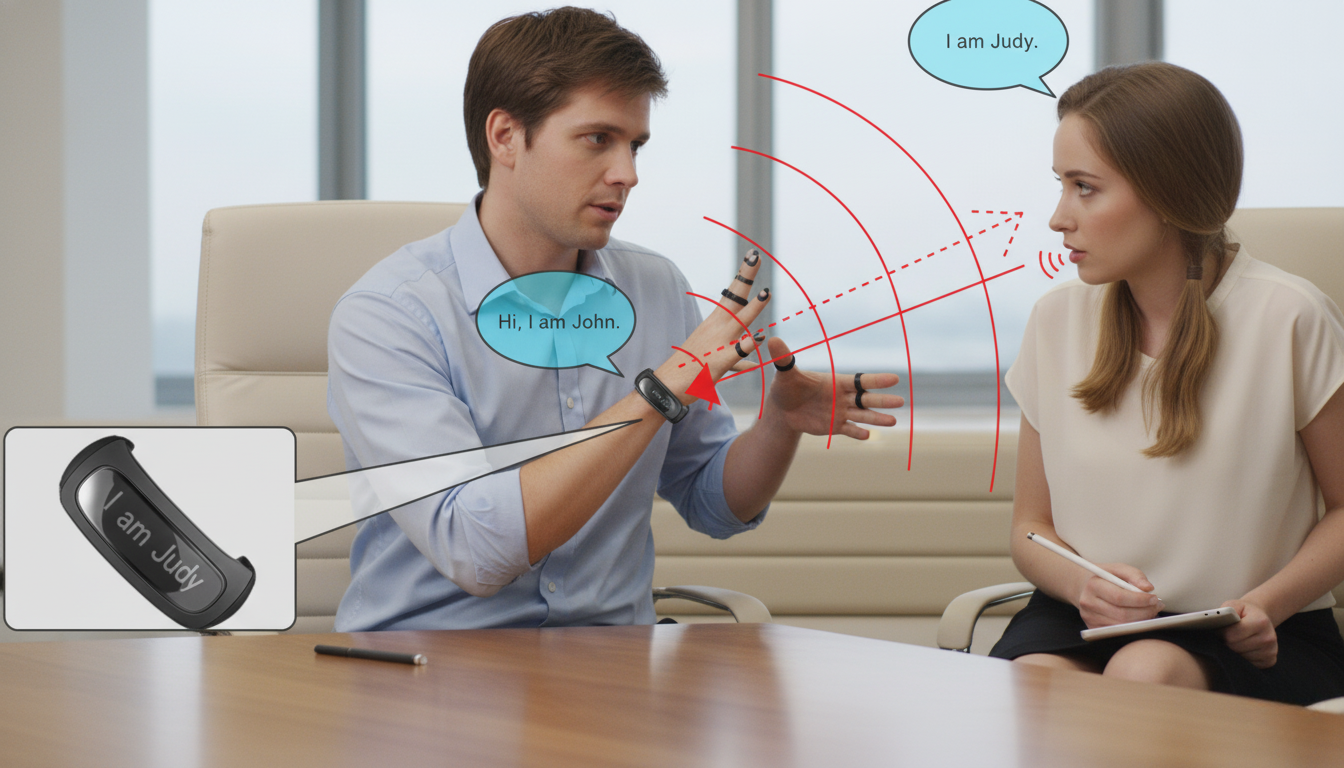
- Smart Gloves and Wearables: Detect hand movements and convert them to text or speech instantly.
- Emotionally Expressive Avatars: Replicate facial expressions and tone naturally.
- Multi-Language Support: Translate between different sign languages (ASL, BSL, ISL, etc.).
- Integration with Smart Devices: Voice assistants like Alexa or Google Home could soon support ASL communication.
As technology evolves, we’re moving toward a future where communication will be universal and inclusive—no matter how we express ourselves.
Why ASL Translators Matter
At the heart of it all, ASL translators are about equality and understanding. They ensure that Deaf individuals are not isolated or left out of conversations that shape their lives.
For Deaf users, they mean empowerment. For hearing users, they offer awareness and connection. For society, they represent progress toward a world where communication is a right, not a privilege.
The ASL translator stands as a symbol of inclusion—turning technology into a tool for compassion.
Conclusion
The ASL Translator—whether human or digital—has transformed the way we connect across the Deaf-hearing divide. With the help of AI, machine learning, and visionary platforms like SLTranslator.com, real-time sign language translation is no longer a dream—it’s a reality.
As innovation continues, ASL translators will become more accurate, natural, and universally available. They’re not just tools; they’re bridges—uniting communities, spreading understanding, and giving every person a voice that can be seen, heard, and understood.
Because in the end, communication isn’t just about words—it’s about human connection.




.webp)