Sign up with Google
 Sign in with Zoho
Blurry vision, burning eyes or a constant need to change your spectacle power: most of us brush these off as tiredness. Sometimes that’s all it is. But sometimes these are early signs of eye diseases that need timely care.
Knowing which conditions are common, and how they differ, helps you act early. Here’s a simple guide in plain language.
Which Eye Diseases Are Most Common?
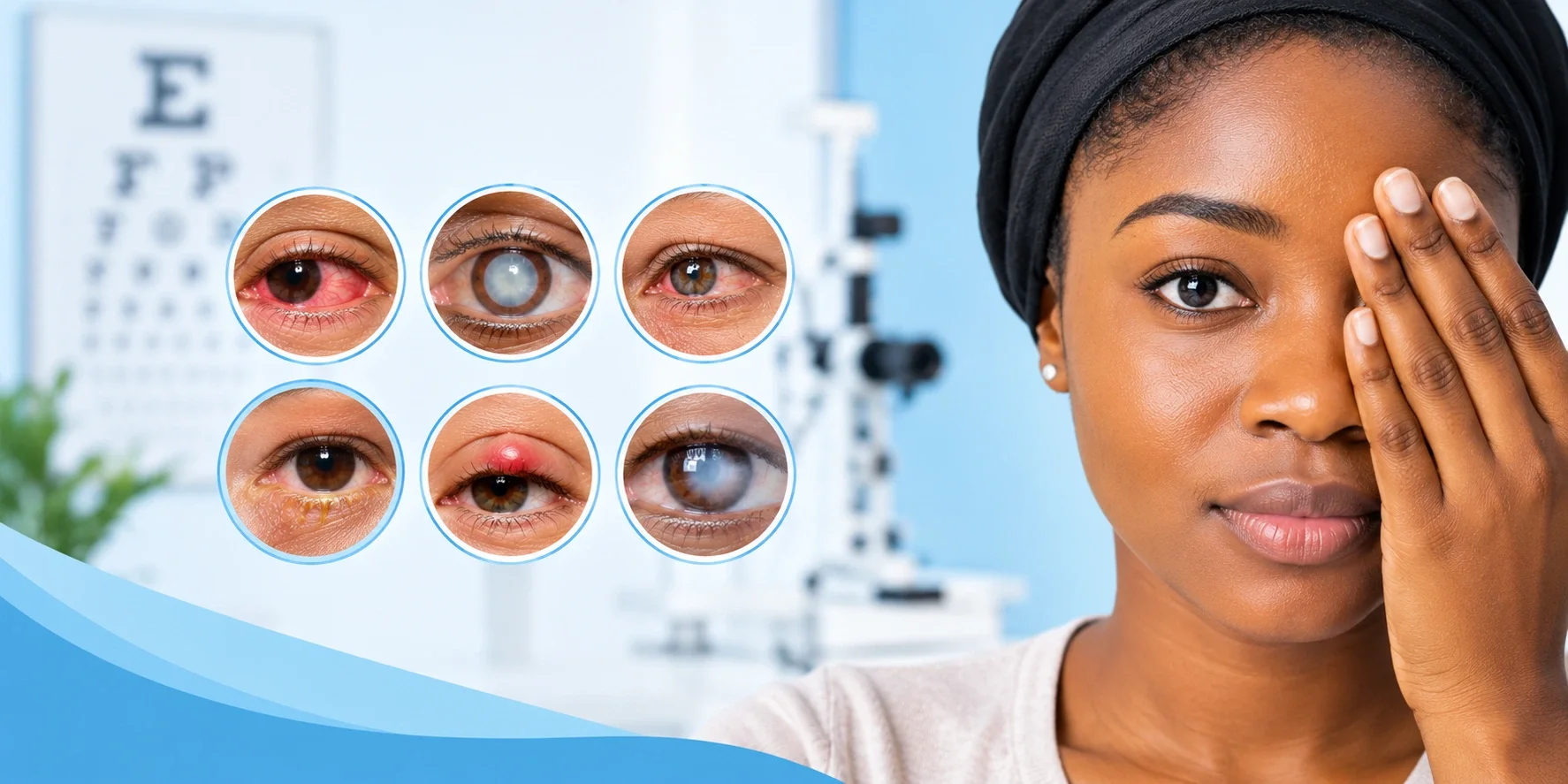
The most common eye diseases include refractive errors, cataract, glaucoma, diabetic retinopathy, age-related macular degeneration (AMD), dry eye and conjunctivitis. Some affect vision gradually, while others can cause permanent damage if ignored.
1. Refractive Errors
These are the most frequent reason people visit an eye doctor. They occur when the eye can’t focus light properly on the retina.
- Myopia: Distant objects look blurry
- Hypermetropia: Near objects look blurry
- Astigmatism: Vision is distorted at all distances
- Presbyopia: Difficulty reading small print, usually after 40
Treatment: Spectacles, contact lenses or refractive surgery, depending on your eyes and lifestyle.
2. Cataract
A cataract is clouding of the eye’s natural lens. It develops slowly, often with age.
Symptoms: Hazy or foggy vision, glare from lights, faded colours, frequent changes in spectacle number.
Treatment: Glasses may help early on, but surgery to replace the cloudy lens with an artificial one is the only way to remove a cataract.
3. Glaucoma
Glaucoma damages the optic nerve, often linked to raised pressure inside the eye. It’s called a “silent” disease because early stages usually cause no pain or obvious symptoms.
Why it matters: Vision lost to glaucoma can’t be recovered, so early detection through regular check-ups is vital.
Treatment: Eye drops, laser procedures or surgery to control eye pressure.
4. Diabetic Retinopathy
High blood sugar over time can damage the tiny blood vessels in the retina. If you have diabetes, this is one to watch closely.
Symptoms: Floaters, blurred vision, dark patches. Early stages may have none at all.
Treatment: Good blood sugar control, laser treatment, injections or surgery, depending on severity.
5. Age-Related Macular Degeneration (AMD)
AMD affects the macula, the central part of the retina responsible for sharp vision. People may notice straight lines looking wavy or a blind spot in the centre of vision.
Treatment: Depends on the type, and may include injections, supplements or monitoring under a retina specialist.
6. Dry Eye Disease
Long hours on screens, air conditioning and pollution make this increasingly common in Indian cities.
Symptoms: Burning, grittiness, watering, redness.
Treatment: Lubricating drops, regular screen breaks and treatment of any underlying cause.
7. Conjunctivitis (Pink Eye)
This is an inflammation of the thin membrane covering the white of the eye. It can be viral, bacterial or allergic, and the first two spread easily.
Symptoms: Redness, itching, discharge and swollen eyelids.
Quick Comparison
- Refractive errors: Blurred vision, correctable with glasses or surgery
- Cataract: Cloudy vision, treatable with surgery
- Glaucoma: Often no early signs, damage is permanent
- Diabetic retinopathy: Floaters and blurring, can be controlled if caught early
- Dry eye: Burning and grittiness, manageable with care
Warning Signs That Need Urgent Attention
See an eye doctor without delay if you notice:
- Sudden loss or reduction of vision
- Flashes of light or a sudden shower of floaters
- A curtain-like shadow over your vision
- Severe eye pain with redness or nausea
- An eye injury or chemical exposure
Tips for Healthier Eyes
- Get a comprehensive eye exam regularly, even if vision seems fine
- Follow the 20-20-20 rule: every 20 minutes, look 20 feet away for 20 seconds
- Manage diabetes and blood pressure well
- Wear sunglasses with UV protection outdoors
- Don’t share towels, kajal or eye drops
Common Mistakes to Avoid
- Using steroid or leftover drops without advice: This can worsen infections and raise eye pressure
- Ignoring gradual vision changes: Slow loss is easy to miss
- Putting home remedies in the eye: Honey, rose water or breast milk can introduce infection
- Skipping follow-ups: Conditions like glaucoma need lifelong monitoring
Conclusion
Most eye diseases are far easier to manage when caught early. From refractive errors to glaucoma and diabetic eye problems, regular check-ups and prompt attention to symptoms protect your sight. Knowing the common eye diseases is the first step, and acting on warning signs is the next.
If you’ve noticed changes in your vision, consult a qualified eye specialist for a proper examination. Clinics such as Skipper - EyeQ offer comprehensive eye check-ups and personalised guidance.
This article is for general information and doesn’t replace professional medical advice.