Sign up with Google
 Sign in with Zoho

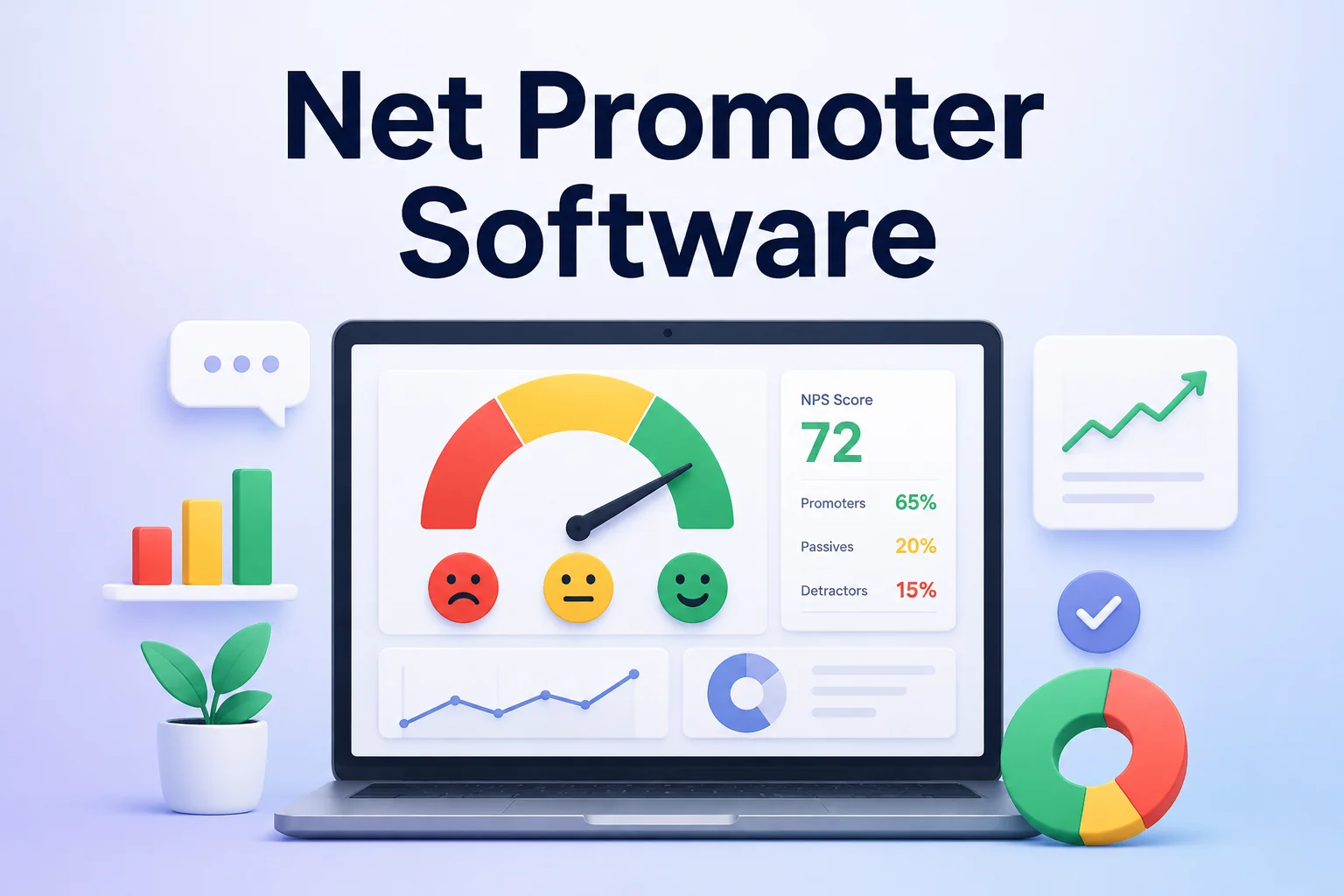
A low Net Promoter Score typically indicates a process issue rather than merely a customer base with unhappy customers. The right net promoter software can help you find that problem and solve it more quickly.
Many businesses collect NPS data but never see the score move. The issue is rarely the survey question. It is what happens, or does not happen, after a response comes in.
This article looks at how the right software changes that outcome. It also covers what to look for when choosing a platform built for real improvement, not just data collection.
What Net Promoter Score Actually Measures
Net Promoter Score is based on one question. What is the probability that they would refer your business to someone else?
Answers can be divided into three categories. Promoters give you a 9 or 10 rating and are loyal advocates. Passives rate you 7 or 8 and are satisfied but not enthusiastic. Detractors rate you 0 through 6 and are at risk of leaving.
Your Score is the proportion of promoters minus the proportion of detractors. A number alone provides a fast health check; it doesn't explain customers' feelings. That explanation is typically part of the follow-up question, which is the blank text box with the customer's explanation.
Why the Right Software Makes a Difference
Basic survey tools stop at the number. They let you know the score has increased or decreased, but don't give you the reason. This puts teams in a situation where they can only guess at what to repair.
NPS software used for action is more than just a score. It ties answers to real workflows, resulting in follow-up calls, support tickets, or changes to the product. This is the dichotomy between measuring satisfaction and enhancing it.
The right Net Promoter Score software with the right features saves time and ensures that feedback is not “stored” in a dashboard. But when teams use manual spreadsheets, they're unable to keep track of who was contacted and who wasn't, and these little things add up.
Capture Feedback at the Right Moment
The timing of the questionnaire influences the truthfulness of the customer's answer. A survey sent a few days after a purchase tends to have a lower response rate than one that is sent immediately after the purchase.
In search of customer feedback software, find the one that enables you to automate surveys. Good triggers include:
- Right after a purchase or service completion
- Following a support ticket resolution
- After a specific number of app sessions
- At scheduled intervals for ongoing relationships
Automated timing removes guesswork and increases the chance customers respond while the experience is still fresh.
Use Follow-Up Workflows to Close the Loop
No Detractor Response means no follow-up. When customers complain and nothing happens, it's a warning that they won't remain loyal.
The NPS survey software includes workflows to enable your team to react fast. When a score is low, the software can assign a task, notify a manager, or automatically send an email.
Closing the loop means that customers feel their feedback is valued. It also allows your team to resolve the problem before the customer goes away once and for all.
Segment Responses to Find Patterns
A single overall score hides useful details. Segmenting responses by location, product line, or customer type reveals where problems actually start.
Strong customer satisfaction survey software allows filtering by these categories. It may be that one store performs worse and gets consistently poorer ratings, or that the quality of a particular product attribute is the source of complaints.
If there isn't segmentation, teams are likely to fix symptoms rather than root causes. Proper filtering will guide you towards the right repair that will actually get you closer to the score. It also aids leadership in prioritizing what issues to address first in cases of limited resources.
Automate Alerts for Detractors
It's difficult to imagine that most teams would manually review the results of their surveys every day. The automated alerts fix this by notifying you of low scores as soon as they arrive.
Set up alerts to notify the correct person immediately when a detractor response comes in. When customer frustration is resolved in a timely fashion, the customer can become a customer for life because help was provided on time.
This is one feature that will really help in the retention of the users, as most complaints get worse the longer they go unaddressed. The single most important factor behind customer retention is likely to be a same-day response that requires very little effort and makes a huge impact.
Track NPS Trends Over Time
Context is essential to a single score. You can monitor changes over weeks and months and see if they are effective.
A good net promoter software shows a history of the data and not merely a single snapshot. Search for visual trend lines, comparison periods, and tagging changes, e.g., a new policy or product update, with score movement.
This makes it easier to link particular business choices with customer sentiment modifications.
Make It Easy for Customers to Respond
It is important to keep surveys simple, as they lower response rates. A long survey and/or an intrusive one are not good combinations, unless it's the only one that can be completed.
Keep surveys short. Typically, one core NPS question, along with a short open-ended response box, is sufficient. Multi-channel software, like SMS, email, and in-person kiosk software, also boosts response rates by communicating with customers where they are.
There is an offline collection as well. Kiosk surveys that don't require customers to check email later provide benefits to retail stores, clinics, and restaurants. A tablet at the checkout stands can collect feedback that is unlikely to be submitted at any other point.
Turn Promoters into Advocates
But NPS is not just about resolving the problems of detractors. Many businesses don't take advantage of the opportunity of promoters.
Auto software will alert you to the existence of promoters, enabling you to encourage them to join a public review or a referral program. This results in positive feedback becoming social proof that is visible for future growth.
Treating promoters as a resource, not just a good score, adds measurable value beyond the NPS number itself.
Steps to Improve NPS With the Right Software
Businesses looking to raise their score can follow this general process:
- Choose software that supports automated survey triggers.
- Set up alerts for low scores so teams respond quickly.
- Build follow-up workflows to close the loop with detractors.
- Segment results by location, product, or customer type.
- Review trend data monthly to track real progress.
- Encourage promoters to share public reviews or referrals.
- Keep surveys short across every channel you use.
Following these steps consistently turns NPS from a passive metric into an active improvement tool.
Final Thoughts
What matters more than the survey is what happens after the response. It's not so much about the survey as it is about what comes after the response and what you do as a result. The key to getting the right net promoter software is to ensure that teams act on feedback promptly rather than sitting in a report.
Find a platform that allows you to set up automated triggers and follow-up workflows, and easily track trends. These features make customer feedback more than just a numeric quarterly review; they can become a continuous process for improvement.
Businesses that want these capabilities built into one platform can look at SmartReviews, which combines multi-channel collection, automated alerts, and a task-based inbox designed to help teams close the loop on every response.