Sign up with Google
 Sign in with Zoho
.webp)
FABTECH Las Vegas 2026 is an important platform for manufacturers to demonstrate advanced equipment, fabrication solutions, welding technologies, finishing systems, and innovations to an audience of industry professionals and decision-makers.
Manufacturing products are rarely simple. Industrial machinery can be large, technical, and packed with specifications that require explanation. At a major trade show, however, exhibitors have only a limited opportunity to capture attention and communicate value.
A successful booth should therefore do more than display equipment. It should make complex products easier to understand, create an engaging visitor journey, and provide the right environment for technical discussions and business decisions.
1. Begin With a Clear Product Strategy
Before designing the booth, identify exactly what you want visitors to understand.
Start by defining:
- Your most important products
- Key product advantages
- New technologies
- Target industries
- Primary buyer groups
- Product demonstrations
- Key commercial messages
Avoid attempting to showcase every product equally. Select a few flagship solutions and give them visual priority.
Why this matters
A focused product strategy prevents the booth from becoming visually overloaded. Visitors should quickly understand what your company does and which solutions are most relevant to them.
2. Create a Logical Product-Zoning System
Complex manufacturing products require structure.
Divide your booth into dedicated areas such as:
Innovation Zone:Showcase new technologies, machinery, or recently developed solutions.
Product Demonstration Zone:Allow visitors to see equipment or processes in action.
Technical Information Zone:Present specifications, applications, diagrams, and supporting information.
Meeting Zone:Provide comfortable space for detailed conversations with qualified prospects.
Brand Zone:Communicate your company's capabilities, experience, and industry expertise.
This zoning approach makes it easier for visitors to navigate the booth and find information relevant to their needs.
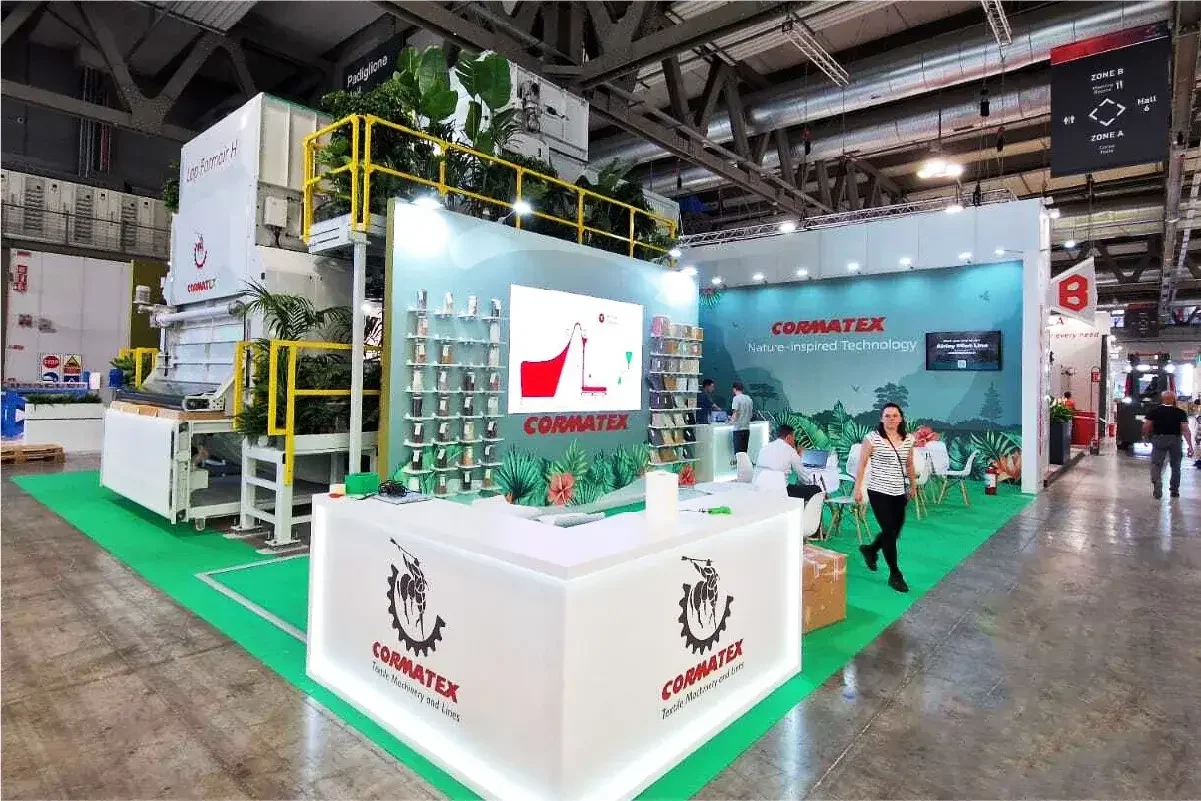
3. Make Large Machinery a Visual Attraction
Industrial equipment can become the biggest asset of your booth when presented correctly.
Instead of simply placing machinery on the floor:
- Give major equipment sufficient surrounding space.
- Use strategic lighting to highlight important components.
- Add concise explanatory graphics.
- Display the machine's key benefits nearby.
- Use screens to demonstrate its operation.
- Keep visitor pathways clear.
The objective is to make large equipment look approachable rather than intimidating.
4. Use Demonstrations to Explain Complexity
A live demonstration can communicate what several paragraphs of technical copy cannot.
Demonstrate:
- How the machine operates
- Production speed
- Automation capabilities
- Precision and accuracy
- Material handling
- Safety features
- Efficiency improvements
- Real-world applications
When visitors can see a product solving a practical manufacturing problem, its value becomes easier to understand.
5. Combine Physical and Digital Displays
Not every feature needs to be physically demonstrated.
Digital technology can expand what your booth communicates without requiring additional floor space.
Consider using:
- Large LED screens
- Interactive touchscreens
- Product animations
- 3D visualisations
- Digital catalogues
- QR-enabled product information
- Process videos
- Virtual demonstrations
A touchscreen, for example, could allow a visitor to select a machine and explore specifications, applications, videos, and related products independently.
6. Design for Different Types of Visitors
A manufacturing exhibition attracts people with different priorities.
Engineers may want:
- Technical specifications
- Performance data
- Operating capabilities
- Integration details
Purchasing professionals may focus on:
- Productivity
- Cost efficiency
- Reliability
- Return on investment
Executives may want to understand:
- Business impact
- Scalability
- Competitive advantage
- Long-term value
Your booth should provide different levels of information without overwhelming visitors.
7. Build Comfortable Spaces for Technical Discussions
Complex products often require longer conversations.
A visitor may need to discuss production requirements, installation, integration, pricing, specifications, or customisation before becoming a serious prospect.
Your meeting area should offer:
- Comfortable seating
- Privacy
- Professional lighting
- Product presentation screens
- Charging facilities
- Easy access to technical information
A well-designed meeting space can turn initial curiosity into a detailed business conversation.
8. Make Your Brand Visible From a Distance
Even the best product display can lose impact if visitors cannot identify the company behind it.
Strengthen long-distance visibility with:
- Elevated brand signage
- Bold but professional graphics
- Consistent colours
- Strategic lighting
- Large-format imagery
- Concise messaging
Your primary message should be readable before visitors enter the booth.
9. Work With an Experienced Exhibition Partner
Transforming a manufacturing concept into a functional exhibition environment requires expertise in design, construction, graphics, logistics, and installation.
Sensations Exhibits specialises in trade show booth design and exhibition solutions, with a dedicated presence in Las Vegas. Its FABTECH-focused service is designed for companies looking to create professional exhibition environments for the metal forming, fabricating, welding, and finishing industries.
The company can assist with:
- Custom booth design
- Exhibition stand construction
- Product-focused displays
- Modular exhibit solutions
- Graphics and branding
- Technology integration
- Installation
- Dismantling
- Exhibition support
The company's Las Vegas production and sales facility can also provide a practical advantage for businesses exhibiting at local events. The supplied FABTECH page lists its Las Vegas facility at 3655 W Sunset Rd, Suite E, Las Vegas.
10. Design the Booth Around Lead Generation
A booth should ultimately support business development.
Make lead collection simple:
- Use digital lead forms.
- Create product-specific enquiry options.
- Record visitor interests.
- Qualify prospects by industry and requirement.
- Schedule follow-up meetings directly from the booth.
Your team should know which visitors need immediate attention and which prospects require longer-term nurturing.
11. Plan Every Detail Before the Show
Good booth execution starts long before installation day.
Prepare:
- Product displays
- Demonstration schedules
- Technical brochures
- Digital presentations
- Staff training
- Meeting schedules
- Lead-capture systems
- Promotional materials
- Shipping and installation requirements
The earlier these elements are coordinated, the easier it becomes to maintain a consistent and professional exhibition experience.
12. Turn Technical Complexity Into a Competitive Advantage
Complexity does not have to make your booth difficult to understand. With the right design strategy, technical sophistication can actually become your strongest attraction.
Use visual storytelling, demonstrations, product zoning, interactive technology, clear messaging, and purposeful meeting spaces to translate complicated manufacturing solutions into experiences visitors can understand.
FABTECH brings manufacturers and industry professionals together to discover technologies, exchange information, participate in educational sessions, and explore solutions for improving productivity and business performance.
Final Thoughts
A successful manufacturing booth should not simply display machines—it should explain their value.
When large equipment, technical information, digital experiences, demonstrations, and business conversations are brought together within a carefully planned environment, visitors can move naturally from curiosity to understanding and eventually to commercial interest.
With thoughtful preparation and support from an experienced exhibition partner such as Sensations Exhibits, manufacturing brands can transform complicated products into compelling booth experiences that attract attention, encourage meaningful conversations, and create stronger opportunities on the show floor.