Sign up with Google
 Sign in with Zoho
 (1).webp)
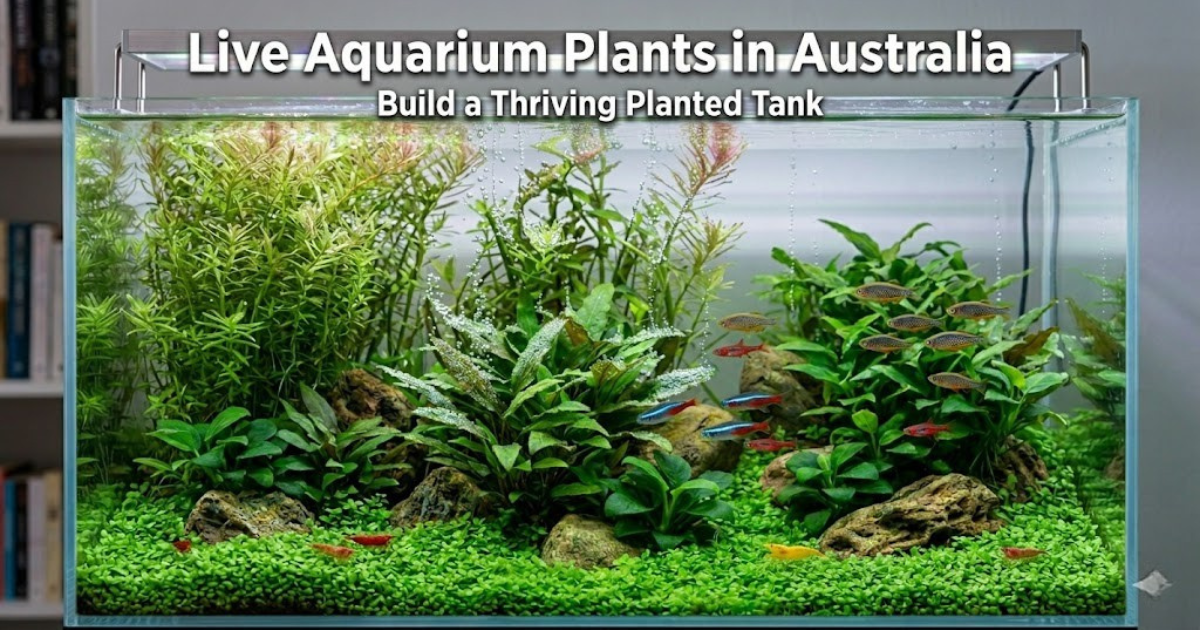
There's something almost meditative about watching a beautifully planted aquarium. The gentle sway of aquatic stems, the carpet of green spreading across a substrate, fish weaving between carefully arranged rocks and driftwood — it's nature distilled into glass. It's no wonder that aquascaping has quietly grown from a niche hobby into something of an art form, attracting enthusiasts across the globe, including a rapidly growing community of plant lovers across Australia.
But if you're new to it, the world of aquascaping plants in Australia can feel a little overwhelming. Which plants will actually thrive in your tank? What size aquarium do you need? And how do you even begin to create something that looks like the lush underwater forests you see online?
This guide is for anyone curious about getting started — whether you're eyeing up a modest beginner setup or seriously considering investing in a large aquarium fish tank for a proper display piece.
What Is Aquascaping, and Why Is It Having a Moment?
Aquascaping is the art of arranging aquatic plants, rocks, substrate, and other natural materials within a fish tank in an aesthetically pleasing way. Think of it as landscape gardening — but underwater.
The hobby has roots in Japan, particularly through the influential work of Takashi Amano, whose Nature Aquarium style brought international attention to planted tanks in the 1990s. Since then, it has exploded globally, with dedicated competitions, online communities, and specialist retailers now catering to aquascaping enthusiasts on every continent.
In Australia, interest has grown considerably over the past decade. With a warm climate and a strong culture of home improvement and interior design, it's little surprise that planted fish aquariums are increasingly appearing in living rooms, offices, and restaurants across the country.
Choosing the Right Tank: Size Matters More Than You Think
Before you even think about plants, you need to think about your tank. And here's one piece of advice that experienced aquascapers will almost universally give you: go bigger than you think you need to.
Smaller tanks are notoriously harder to manage. Water parameters fluctuate more rapidly, there's less room for error, and the aesthetic potential is quite limited. A large fish tank — particularly a 4ft fish tank or larger — gives you far more creative freedom and a much more stable environment for your plants and fish.
What to Look for in a Large Aquarium Fish Tank
When shopping for a large aquarium fish tank, there are several things worth considering:
- Material quality: Look for tanks with low-iron glass for better clarity and colour accuracy. You want to actually see those plants in their full glory.
- Filtration capacity: Planted tanks require good filtration to manage nutrients and keep the water clean. Make sure the tank you choose can accommodate a filter rated for its volume.
- Lighting compatibility: Aquatic plants need appropriate lighting to photosynthesise. Many modern tanks, including those from brands like Aqua One, come with built-in LED lighting systems designed with planted setups in mind.
- Cabinet or stand: A properly supported stand is essential for tanks of any significant size. Water is heavy — very heavy — and improvised furniture simply isn't safe.
If budget is a concern, don't be disheartened. There are genuinely good cheap fish tanks available in Australia that are well-suited to beginner aquascapes. The key is not to sacrifice filtration or lighting quality for the sake of saving a few dollars on the tank itself.
Understanding Australian Water Conditions
One of the most important — and often overlooked — aspects of aquascaping in Australia is understanding your local water supply. Water hardness, pH, and mineral content vary quite significantly between cities and regions.
Melbourne, for instance, tends to have soft, slightly acidic water, which suits many popular aquascaping plants beautifully. Sydney's water is moderately hard. In parts of Queensland and Western Australia, harder water can present more of a challenge for certain plant species.
Before you buy a fish tank and begin planting, it's worth testing your tap water and researching which plants are most compatible with your local conditions. This small step can save you a great deal of frustration down the line.
The Best Aquascaping Plants for Australian Conditions
Now, to the good stuff. Selecting the right aquascaping plants in Australia depends on several factors: your tank size, lighting setup, CO₂ injection (more on that shortly), and water parameters. Here's a breakdown of some of the most popular and reliable choices.
Foreground Plants (Carpet Plants)
These low-growing plants spread across the substrate to create that signature lush carpet effect.
- Hemianthus callitrichoides (HC Cuba): One of the smallest aquatic plants available, HC Cuba creates a stunning dense carpet but requires high light and CO₂. Best suited to experienced aquascapers or those committed to a high-tech setup.
- Eleocharis parvula (Dwarf Hairgrass): Easier to grow than HC Cuba and more forgiving of lower light conditions. A great option for beginners wanting that meadow effect.
- Marsilea hirsuta: An Australian native, this clover-like plant is particularly well-suited to local water conditions and is relatively low maintenance.
Midground Plants
These fill the middle section of your layout and provide structure and depth.
- Anubias varieties: Incredibly hardy and slow-growing, anubias can be attached to rocks or driftwood and thrive in low to medium light. An excellent choice for large tank fish setups where the plants need to hold their own visually.
- Cryptocoryne (Crypts): Available in dozens of varieties, crypts are adaptable, reasonably priced, and widely available through Australian aquatic retailers. They tolerate a range of water conditions, making them ideal for beginners.
- Bucephalandra: A more recent favourite in the aquascaping community, bucephalandra has jewel-like leaves with iridescent blue or purple hues. Slow-growing but utterly striking.
Background Plants
Taller, faster-growing plants that fill the rear of the tank and provide a sense of depth.
- Vallisneria: A hardy, fast-growing plant that grows in long ribbon-like leaves. Thrives in harder water, making it excellent for parts of Australia where softening isn't practical.
- Rotala varieties: Beautiful stem plants that add colour and movement. Rotala rotundifolia, for example, develops pinkish-red hues under high light.
- Hygrophila polysperma: One of the easiest stem plants to grow, polysperma is forgiving and fast-growing — ideal for filling out the background of a new tank quickly.
Do You Need CO₂ Injection?
This is one of the first questions most new aquascapers ask, and the honest answer is: it depends on what you want to achieve.
CO₂ injection supercharges plant growth, intensifies colour, and allows you to grow more demanding species. However, it adds cost and complexity to your setup. For a beginner working with a medium-sized tank and easy-to-grow plants like anubias, crypts, and vallisneria, a low-tech setup without CO₂ is entirely viable.
If you're working with a large fish tank (say, 300 litres or more) and want to grow carpeting plants or high-demand species, investing in a pressurised CO₂ system is likely worth it.
Setting Up Your Aquascape: A Brief Overview
Once you've chosen your tank, plants, and equipment, the setup process itself is genuinely exciting. Here's a simplified overview:
- Plan your layout on paper first. Sketch out where you want your hardscape (rocks, driftwood) and which plant species go where. Many aquascapers follow compositional rules like the rule of thirds or golden ratio.
- Add your substrate. Nutrient-rich aquasoil (such as ADA Aqua Soil or similar alternatives) is ideal for planted tanks.
- Build your hardscape. Arrange rocks and driftwood before adding water or plants.
- Plant your foreground first, then midground, then background. Use tweezers for precision.
- Flood the tank slowly to avoid disturbing your layout.
- Cycle the tank before adding fish. This is a non-negotiable step that many beginners skip to their detriment.
For plant sourcing in Australia, it's well worth exploring specialist retailers who offer tissue culture and locally grown specimens. The team at School of Scape — known for their range of live aquarium plants Australia — are a great starting point for quality plant stock suited to Australian conditions.
Caring for Your Planted Tank
Once your aquascape is established, regular maintenance keeps it looking its best. This includes:
- Trimming: Fast-growing stem plants in particular need regular trimming to prevent them from shading lower plants.
- Fertilisation: Even with a quality substrate, liquid fertilisers help sustain plant health over time.
- Water changes: Regular partial water changes (typically 30–50% weekly) remove waste and replenish minerals.
- Algae management: A well-balanced tank with appropriate lighting duration (7–8 hours per day is a common starting point) will naturally resist most algae outbreaks.
FAQ
What are the easiest aquascaping plants for beginners in Australia? For beginners, the easiest aquascaping plants in Australia include anubias, java fern, crypts, and vallisneria. These species tolerate a wide range of water conditions, require minimal CO₂, and are widely available from Australian aquatic retailers. They're forgiving, attractive, and a great foundation for any starter aquascape.
What size tank is best for aquascaping? A 4ft fish tank (approximately 200–250 litres) is widely considered an ideal size for aquascaping. It provides enough space for creative layouts, is more stable than smaller tanks, and is large enough to house a variety of plant species and fish without feeling cramped.
Can I buy aquascaping plants online in Australia? Yes. Many specialist retailers ship aquascaping plants across Australia, including tissue culture plants, which are free from pests and algae. Buying online gives you access to a far wider range of species than most local pet shops can offer.
Do I need expensive equipment to start aquascaping? Not necessarily. While high-end setups with CO₂ injection and premium lighting can cost a significant amount, it is entirely possible to create a beautiful planted tank on a modest budget. Choosing low-tech plant species and starting with a quality but affordable tank is a perfectly viable approach.
Are there aquascaping plants native to Australia? Yes. Species like Marsilea hirsuta and various native Vallisneria are found in Australian waterways and can perform excellently in aquascapes. Using native species can also make sourcing easier and may result in plants better adapted to your local water conditions.
Final Thoughts
Aquascaping is one of those hobbies that rewards patience, creativity, and a genuine curiosity about the natural world. Whether you're setting up a modest beginner tank or investing in a grand 4ft showpiece with a full CO₂ system and a carpet of Hemianthus, the process of creating an underwater landscape is endlessly satisfying.
The key is to start with solid foundations: choose the right tank for your space and budget, select plants suited to your water conditions and experience level, and resist the urge to overcomplicate things early on. Australia has a growing aquascaping community with excellent resources, specialist retailers, and a wealth of shared knowledge to tap into.
Your underwater garden is waiting. All it needs is a little planning — and the right plants to bring it to life.