Sign up with Google
 Sign in with Zoho

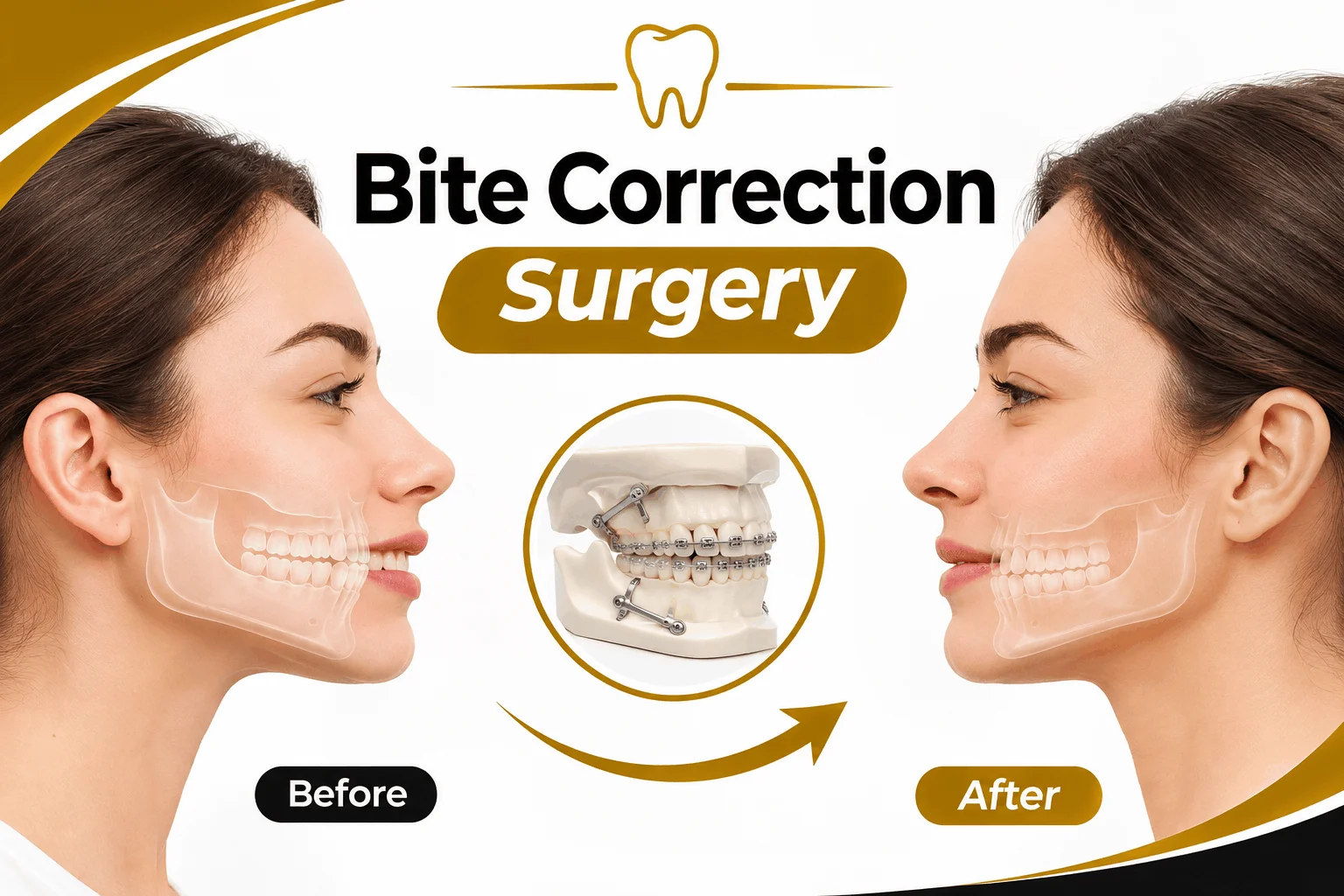
Think about the last time you ate a meal without a second thought. You picked up the food, chewed, swallowed and carried on with your day. For a lot of people, that simple act isn't so simple. Their teeth don't meet the way they should, and the body has been quietly working around the problem for years.
Here's the thing about a poor bite: it rarely announces itself. It shows up as a habit, like always chewing on the left or avoiding crunchy food. You adapt so gradually that you forget there was ever another way.
Let's look at what's really going on, and when it's time to ask a professional for help.
Why Your Bite Deserves Your Attention
Your teeth, jaw joints and chewing muscles are one team. When the upper and lower teeth meet well, the load spreads evenly and everything moves smoothly. When they don't, something has to take the extra strain.
And a bite is not only about straight teeth. Plenty of people have a lovely, even smile and still have a jaw that sits out of balance behind it. The position of the jawbones decides how the teeth come together, and it also shapes how the lower face is proportioned. So if you've always assumed braces fix everything, keep reading.
The Everyday Signs People Learn to Ignore
Chewing becomes a chore. If certain foods feel awkward to bite into, or you've unknowingly picked a "good side" for chewing, your bite may be telling you something.
Some teeth do all the work. When contact is uneven, a few teeth take the pressure while others barely join in. Over time that can show up as uneven wear.
Your jaw muscles feel tired. Some people notice aching or tightness around the jaw after long meals or a lot of talking. A word of caution here: jaw discomfort has many causes, and a bad bite is only one of them. Don't self-diagnose. Get it looked at.
Closing your mouth takes effort. In more pronounced cases, the jaws don't rest together comfortably. If your lips or teeth never quite settle at ease, that's worth mentioning to a professional.
Know Your Bite: The Four Common Patterns
You can't fix what you can't name, so here are the main types of malocclusion. Dentists and surgeons use them to decide the right path.
Overbite. The upper front teeth cover the lower ones. Some overlap is perfectly normal. Too much of it can lead to dental or functional trouble.
Underbite. The lower teeth sit in front of the upper teeth. Sometimes the position or growth of the lower jaw is behind it.
Open bite. Some upper and lower teeth never touch when the mouth is closed. It can make biting certain foods awkward and, at times, affect speech.
Crossbite. Some upper teeth sit inside the lower teeth instead of outside. It can affect one side or both, and the cause may be dental, skeletal or both.
Can Braces Fix It All?
Honestly, no. But they fix a great deal.
Braces and clear aligners are excellent at moving teeth. Crowding, gaps and many dental bite problems respond well to them. That's why so many people get excellent results from orthodontics alone.
But teeth sit in bone. If the real issue is the size or position of the jaw itself, moving the teeth can only do so much. You can straighten the fence, but you can't move the land it stands on.
In those cases, an orthodontist may suggest seeing an oral and maxillofacial surgeon. Depending on the diagnosis, the plan could be orthodontics alone, or orthodontics combined with surgery. Neither path is "better." The right one is the one that matches your anatomy.
So, What Is Bite Correction Surgery?
Bite correction surgery, also called orthognathic surgery, repositions the jawbones when there is a significant skeletal mismatch. Depending on your case, it may involve the upper jaw, the lower jaw or both.
Nothing about it is guesswork. Planning relies on a clinical examination and diagnostic imaging, so the team can decide exactly where the jaws should sit before anything begins.
It also helps to understand how this differs from most cosmetic procedures. Those mainly aim to change appearance. Orthognathic surgery is mainly about function, meaning how your jaws line up and work. Your face may look different afterwards because the bones have moved, but that's a side effect of the correction, not the reason it's done.
Walk Into Your Consultation Prepared
A good consultation answers one big question first: is your bite problem dental, skeletal or a mix of both? Everything else follows from that.
Don't go in empty-handed. Bring questions like these:
- What exactly is causing my bite problem?
- Can braces or aligners handle it, or is that not enough?
- Is my jaw position part of the problem?
- Would surgery make sense for me?
- Which tests or scans will I need?
- What does recovery look like, realistically?
- What are the risks and the long-term considerations?
Ask them all. A good clinician will respect you for it, because you're making a decision about your own body.
Think Long-Term
Bite correction is a patient game. It starts with a careful look at how your teeth, jawbones and the tissues around them relate to each other. Many bite problems are handled well with orthodontics. The more complex skeletal ones deserve a surgical opinion.
The goal isn't a perfect-looking photograph. It's a plan built around your actual problem, your oral health, how you function every day and expectations that are honest and realistic.
Don't pick a treatment because of one symptom you read about online. Get evaluated, understand the cause, and then decide. Your jaw works for you every single day, so it's worth giving it a proper look.