Sign up with Google
 Sign in with Zoho
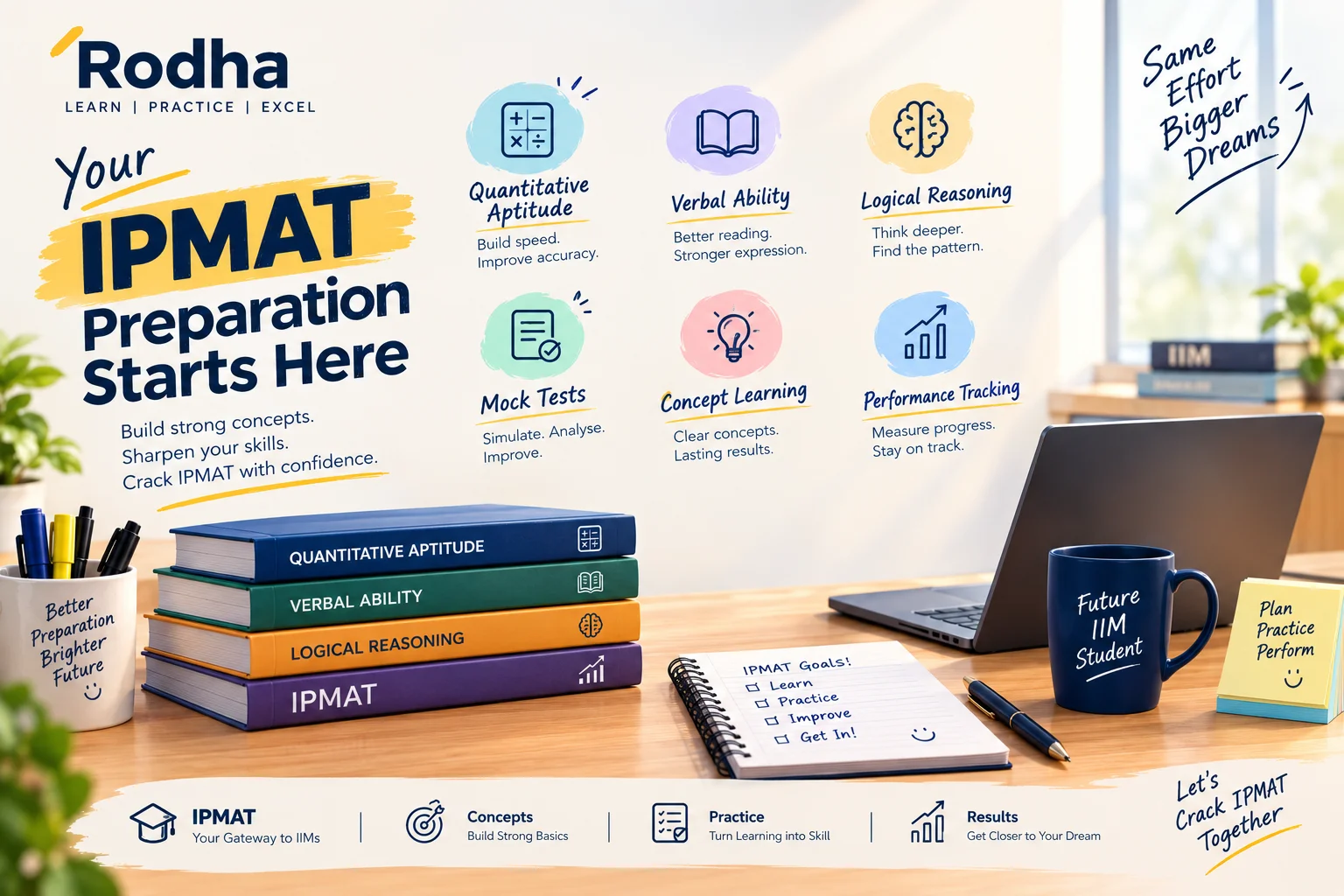
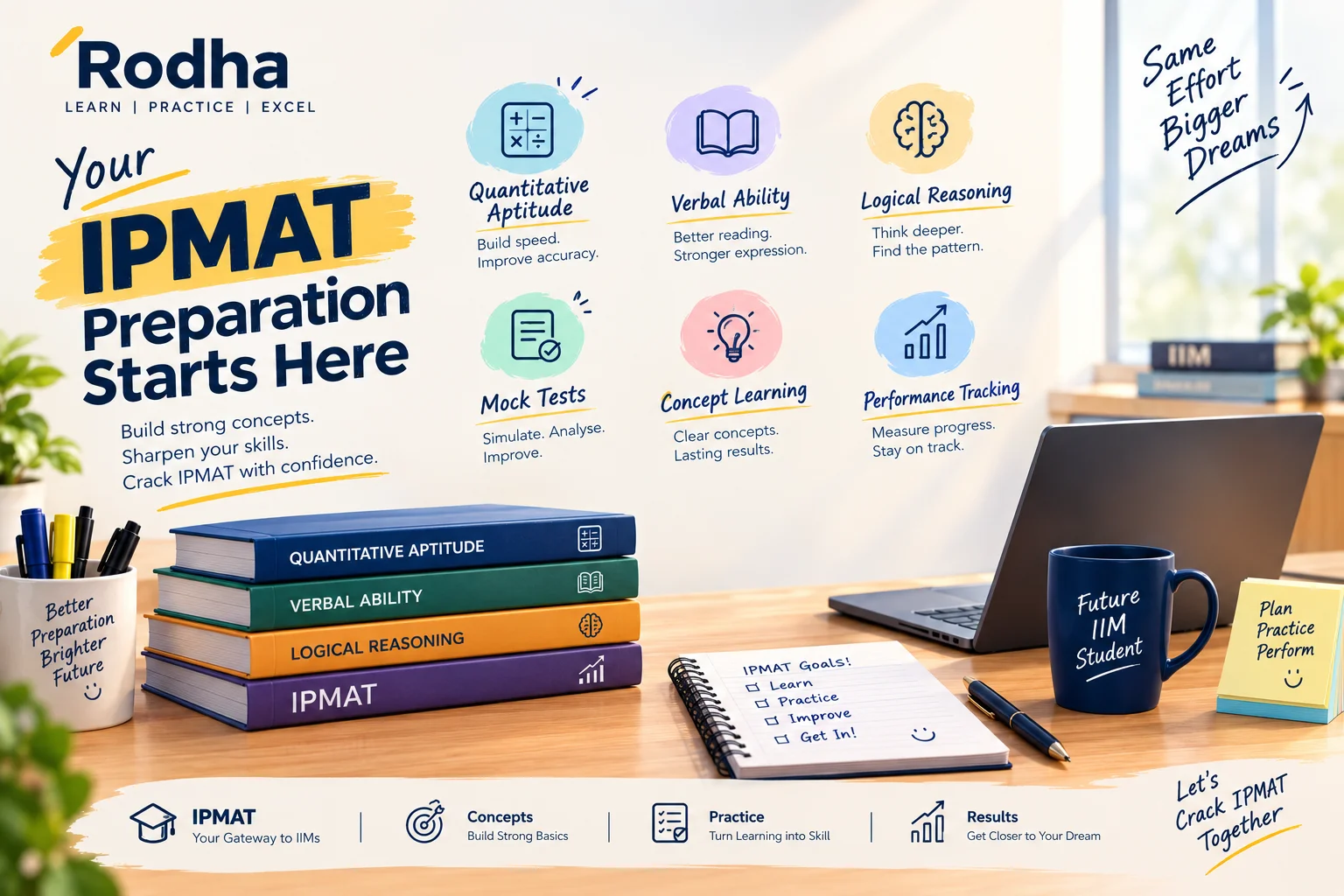
In 2026, IIM Rohtak reported that 14,488 candidates attended its IPM Aptitude Test, a reminder that preparation needs to be specific, not generic.
IPMAT Indore and IPMAT Rohtak require a shared foundation but different finishing plans. Indore rewards section-locked quantitative work and short-answer handling, while Rohtak adds a dedicated logical-reasoning and flexible speed-management burden. Build one core plan first, then assign separate practice blocks and mocks according to a baseline diagnostic.
This guide maps the official 2026 formats into a practical weekly plan, separate mock-review rules, and a checklist for checking whether a course truly covers both exams.
What Do the 2026 Patterns Require?
The two exams overlap in QA and VA, but their structure changes how you should practise. Indore’s 2026 format used three separately timed sections and a pre-specified order, so you cannot compensate for a difficult QA section by borrowing time from VA. The Indore procedure also confirms that short-answer QA questions had no negative marking.
Rohtak’s admissions notice states that its 2026 paper had 40 questions each in QA, LR and VA, all within 120 minutes. That makes LR a full scoring component, not an optional add-on after you finish quant and verbal work.
For a broader view of the integrated-management route available after school, see our guide to management colleges after Class 12.
What Belongs in an IPMAT Indore and Rohtak Preparation Strategy?
A strong IPMAT Indore and Rohtak preparation strategy begins with one shared base: number sense, arithmetic, algebra, reading comprehension, grammar, vocabulary, calculation accuracy, and timed decision-making. We recommend building those skills before splitting your calendar, because both papers still reward a student who reads cleanly and solves standard QA questions reliably.
Build the Shared Foundation First
Use your core study blocks for concepts that transfer across both exams. If basic QA is inconsistent, fix the concept before adding speed drills, since more attempts do not help when the underlying method is unstable.
Finish Specifically for Indore
Indore needs more than multiple-choice familiarity. In QA-SA, you must produce the answer without using options to test or eliminate. Keep a separate short-answer error log that records whether you lost the question through concept, calculation, formatting, or time.
Indore also rewards composure inside a fixed section window. Practise ending one section cleanly, accepting its result, and moving to the next rather than mentally carrying a missed question forward.
Finish Specifically for Rohtak
Rohtak needs a protected LR block each week. Treat it as its own skill area, with set selection, pattern recognition, and time-aware skipping, rather than folding it vaguely into aptitude practice. If QA fundamentals are weak, use quant fundamentals resources before increasing LR volume.
For VA, reading faster matters only when comprehension survives. Build a steady pace without turning every passage into a race.
How Do You Diagnose and Allocate Weekly Hours?
Do not begin with an equal split between the two exams. First, run one timed Indore-format mini-diagnostic and one timed Rohtak-format mini-diagnostic. Record attempts, correct answers, wrong answers, questions left, and time consumed by skill. The point is not to predict a final score. It is to identify where the next study hour has the highest return.
Run Two Format-Specific Diagnostics
For Indore, keep QA-MCQ, QA-SA, and VA separate. For Rohtak, keep QA, LR, and VA separate. A student can be strong in QA-MCQ but weak in short answers, or comfortable in QA and VA but lose marks in LR. Combining these results into one generic “aptitude score” hides the decision you need to make.
Tag Every Lost Mark
Label each loss as a concept gap, calculation error, reading error, option-elimination mistake, question-selection mistake, or time loss. One label should lead to one next action. A concept gap needs relearning, while a rushed correct method needs a timed drill. If reading is the recurring time loss, work on pace without sacrificing comprehension.
Turn Results into a Weekly Allocation
Use your available weekly study hours as the total. Reserve the largest block for shared fundamentals until they are dependable, then assign finish-plan time to the single exam-specific weakness causing the biggest score loss.
Once your diagnostic identifies the right starting point, use Rodha to turn those blocks into a consistent study sequence.
How Should Mocks and Reviews Differ?
Mocks should test your plan, not merely produce a score. For Indore, the review asks whether you protected performance in each separately timed section. For Rohtak, the review asks whether your time moved toward questions that paid back. Indore’s 2026 selection rules required positive raw scores and minimum marks in all three sections for the eligible pool, which makes section-level analysis especially important.
Review Indore Mocks by Section
- QA-MCQ analysis: Check concept accuracy, option use, and negative-marking decisions.
- QA-SA analysis: Check completion, calculation accuracy, and whether unanswered questions were genuinely difficult or simply delayed.
- VA analysis: Check reading errors separately from vocabulary or grammar mistakes.
- Timing analysis: Compare time spent with marks earned inside each fixed section.
Review Rohtak Mocks by Decisions
- LR analysis: Record which set types consumed time without a worthwhile return.
- First-pass choices: Identify questions you should have skipped earlier.
- Return-pass choices: Check whether returning improved the score or only used time.
- Section balance: See whether QA, LR, and VA received time in proportion to your actual strengths.
We recommend keeping one error log across both exams, but tagging every entry by exam and section. Use mock analysis to turn that log into repeatable review habits.
How Do You Verify a Course Covers Both Exams?
A course title alone does not prove dual-exam coverage. We advise students to verify what they will actually receive: named lessons, format-specific drills, sectionals, full mocks, and a dated process for updating materials when official notifications change. Both institutes can modify admissions processes, so the safest approach is to compare the provider’s materials against the latest official admissions information.
Before paying, save the curriculum page, inspect sample materials, and ask for the exact labels on sectionals and full mocks. Review pricing details only after you know the programme fits your diagnostic, rather than choosing by headline cost alone.
Build Your Dual-Exam Plan with Rodha
At Rodha, we do not treat a dual-exam goal as a generic IPMAT timetable. We help students build the shared QA and VA base first, then use timed evidence to decide whether the next block belongs to Indore short-answer work, Rohtak logical reasoning, or review. Our approach keeps course selection practical: students should see named lessons, exam-labelled sectionals, full mocks and a clear update process before relying on any programme. We also encourage a simple weekly record of accuracy, attempts and time, because a score alone cannot explain where the next hour should go.
We want each decision to follow evidence, not a fixed weekly split copied from someone else. If your foundation is uneven, start with the smallest skill gap that limits both exams, then retest it in the format that exposes it.
FAQs on IPMAT Indore and Rohtak Preparation Strategy
How Should Preparation Differ for IPMAT Indore and Rohtak?
Build shared QA and VA fundamentals, then give Indore separate fixed-section and short-answer practice. Give Rohtak dedicated LR practice, flexible pacing drills, and all-MCQ attempt rules.
Can One Study Plan Cover IPMAT Indore and Rohtak?
Yes. Start with shared concepts, diagnose losses separately by exam and section, then adjust weekly Indore and Rohtak finish blocks according to evidence from timed practice.
How Do I Check Whether Coaching Covers Both IPMAT Exams?
Review named lessons, sample drills, sectionals, full mocks, and a dated update policy. Coverage counts only when every item clearly maps to one official format.