Sign up with Google
 Sign in with Zoho

Rocks are easy to ignore until you actually have to clean them up. Then they become the whole job. Add roots, branches, broken chunks of concrete, and loose dirt into the mix, and a basic bucket can leave you doing the same work twice.
For contractors shopping for a rock bucket for sale, the main thing to look at is not just how much material the bucket can carry. The design matters. Bar spacing, bucket construction, size, and the way it handles mixed material all affect how useful it will be once you put it to work.
A Rock Bucket Is Not Just Another Bucket
A regular bucket is great when the job is mostly digging, scooping, and moving material. But what happens when that material is full of rocks?
You scoop up a load of dirt and rocks. You move it. You dump it. And now you still have a pile of rocks sitting where you don't want them.
That's where a rock bucket can save some time.
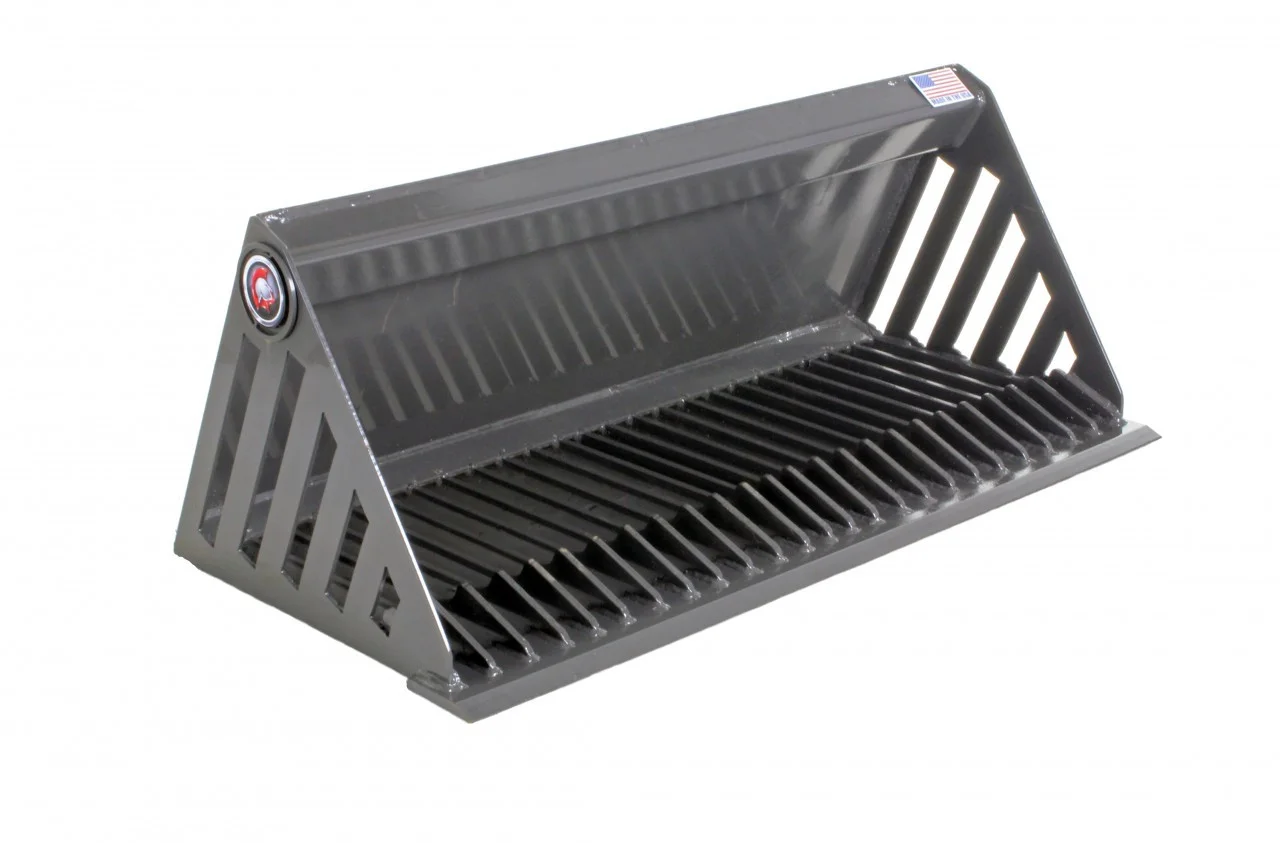
The open bottom allows smaller soil and loose material to drop through while larger rocks and debris stay in the bucket. So instead of moving everything together, you can do some of the sorting while you're already handling the material.
It's a simple idea, but on a big cleanup job, simple things can save a lot of time.
Bar Spacing Does More Than You Might Think
Look at the bottom of a rock bucket and one of the first things you'll notice is the open spacing.
Those gaps aren't there just to make the bucket look different from a standard bucket. They control what stays in the bucket and what falls back through.
If you're trying to pull larger rocks out of soil, you want the smaller dirt to fall away. But you don't want the rocks you're trying to collect dropping through at the same time.
The material on your job should determine what kind of spacing makes sense.
There isn't one perfect setup for every site. A contractor cleaning rocky soil may have different needs than someone dealing with larger chunks of construction debris. That's why looking at the actual job is more useful than simply picking a bucket because it has the word “rock” in the name.
Rocks Are Only Part of the Problem
Most jobs don't give you nice, clean rocks sitting by themselves.
You get roots mixed in. Then branches. Maybe old fence pieces. Maybe chunks of concrete or other debris left behind from previous work.
A rock bucket can be useful for this kind of mess because it is built around handling larger unwanted material while allowing smaller loose material to fall away.
Think about a property that has been sitting untouched for years. You start clearing it and find rocks under the dirt, roots running through the ground, and random debris mixed in. There is no neat pile waiting for you.
That is where a sorting-style bucket starts making more sense.
The Bucket Has to Take Some Abuse
There is no getting around it. Rock work is hard on attachments.
Rocks are abrasive. Some are heavy. Some get wedged into places you don't want them. Then the bucket gets lifted, dumped, dragged into another pile, and used again.
So construction matters.
Look at the bottom bars and side plates. Look at the frame and the connection points. You want something built for actual equipment work, not something that only looks heavy sitting on a product page.
For someone running attachments every week, durability becomes a pretty simple calculation. If the bucket spends more time sitting in the shop than it does working, it wasn't much of a bargain.
Why Separation Can Save a Step
Here's where the rock bucket really earns its place.
Say you're cleaning up an area where the soil is usable but there are a lot of rocks mixed through it. With a standard bucket, you can pick everything up together. But you haven't really solved the problem.
The dirt is still mixed with the rocks.
You can dump it into a pile and sort it later, or bring another tool into the process. Either way, you've added another step.
With an open-bar rock bucket, some of that separation happens while you're working.
Smaller dirt falls through. Larger material stays behind.
It isn't magic, and you're not going to get every piece of material separated perfectly. But if the bucket can eliminate even part of the extra handling, that's time your crew isn't spending sorting piles by hand.
Good Fit for Cleanup and Landscaping Work
Landscaping jobs are another area where these buckets can come in handy.
Preparing a planting area sounds simple until you start finding rocks everywhere. The same goes for cleaning up a property after excavation or getting an area ready for grading.
You don't always need a massive machine for that kind of work. In fact, larger equipment can be more trouble than it's worth when you're working around homes, fences, trees, or other tight areas.
A compact machine with the right bucket can get into those spaces and still handle the cleanup.
That is one reason attachment selection matters so much. The machine gives you the power, but the attachment determines what you can actually do with it.
Small Machines Can Do More With the Right Attachment
Mini skid steers are a good example.
They are small, easy to move around, and useful in places where a full-size skid steer simply doesn't make sense. But they also need the right attachments to get the most out of them.
That is where mini skid loader attachments come into the picture.
A contractor might use one attachment for moving material and another for cleanup. The point isn't to turn a mini skid steer into a full-size machine. It is to make the machine you already have more useful for the jobs you actually take on.
For residential landscaping, property maintenance, smaller excavation work, and cleanup projects, that flexibility can be a big deal.
What to Check Before Buying a Rock Bucket
Don't start with price. Start with the machine.
Make sure the bucket fits the loader and mounting system you're using. Check the dimensions and capacity, too. A bucket that is too large for the machine isn't going to become better just because it holds more material.
Then look closely at the bottom spacing.
Ask yourself what you're actually trying to keep in the bucket. Large rocks? Roots? Construction debris? A mixture of everything?
That answer should guide the bucket you choose.
Construction is worth a close look as well. If you're working around rocks all the time, you want an attachment that can handle repeated contact with rough material.
And don't forget the basic stuff. Make sure the bucket works with the way your crew actually works. A bucket can have great specifications and still be the wrong attachment for a particular operation.
Who Uses Rock Buckets?
There isn't just one type of customer for a rock bucket.
Contractors use them for excavation cleanup and site preparation. Landscapers can use them when preparing rocky soil or cleaning up properties. Farmers and agricultural operators may run into rocks and roots when maintaining fields or clearing sections of land.
Municipal crews can also have plenty of cleanup work where rocks, roots, and debris need to be collected.
The job doesn't have to be huge, either. Sometimes the biggest benefit comes from a bucket that saves a crew from handling the same material over and over.
FAQ About Rock Buckets
What is a rock bucket used for?
A rock bucket is generally used to collect larger rocks, roots, and debris while allowing smaller soil and loose material to fall through the open bottom.
Can a rock bucket handle roots?
It can handle roots and other larger debris, depending on their size and the bucket design. They are commonly useful when the material being cleaned up is mixed together.
How is a rock bucket different from a regular bucket?
A standard bucket is mainly built for digging and moving material. A rock bucket has an open-bar design that allows smaller material to pass through while retaining larger pieces.
Can a mini skid steer use a rock bucket?
Yes, as long as the bucket is designed to fit the specific machine and mounting system. Always check compatibility before ordering.
What should I look at when buying a rock bucket?
Start with machine compatibility, bucket size, capacity, bar spacing, and construction. Most importantly, think about the material you will actually be handling.
Final Thoughts
There are jobs where a regular bucket is all you need. Then there are jobs where you're looking at a pile of dirt full of rocks, roots, and debris and wondering how many times you're going to have to move the same material.
That is where a rock bucket for sale can make sense. The open design lets smaller soil fall away while the larger unwanted material stays in the bucket. It gives the operator a chance to do some sorting during the work instead of creating another cleanup job afterward.
And for smaller machines, the attachment matters even more. The right mini skid loader attachments can give a compact machine another useful job without bringing a much larger piece of equipment onto the site.
Spartan Equipment builds and supplies attachments for contractors, landscapers, agricultural operators, municipal crews, and equipment owners who need their machines to do more than one thing.
SEPTEMBER SALE — Free Shipping + Save 15% On Orders Over $2,500 With Code SPARTAN15