Sign up with Google
 Sign in with Zoho

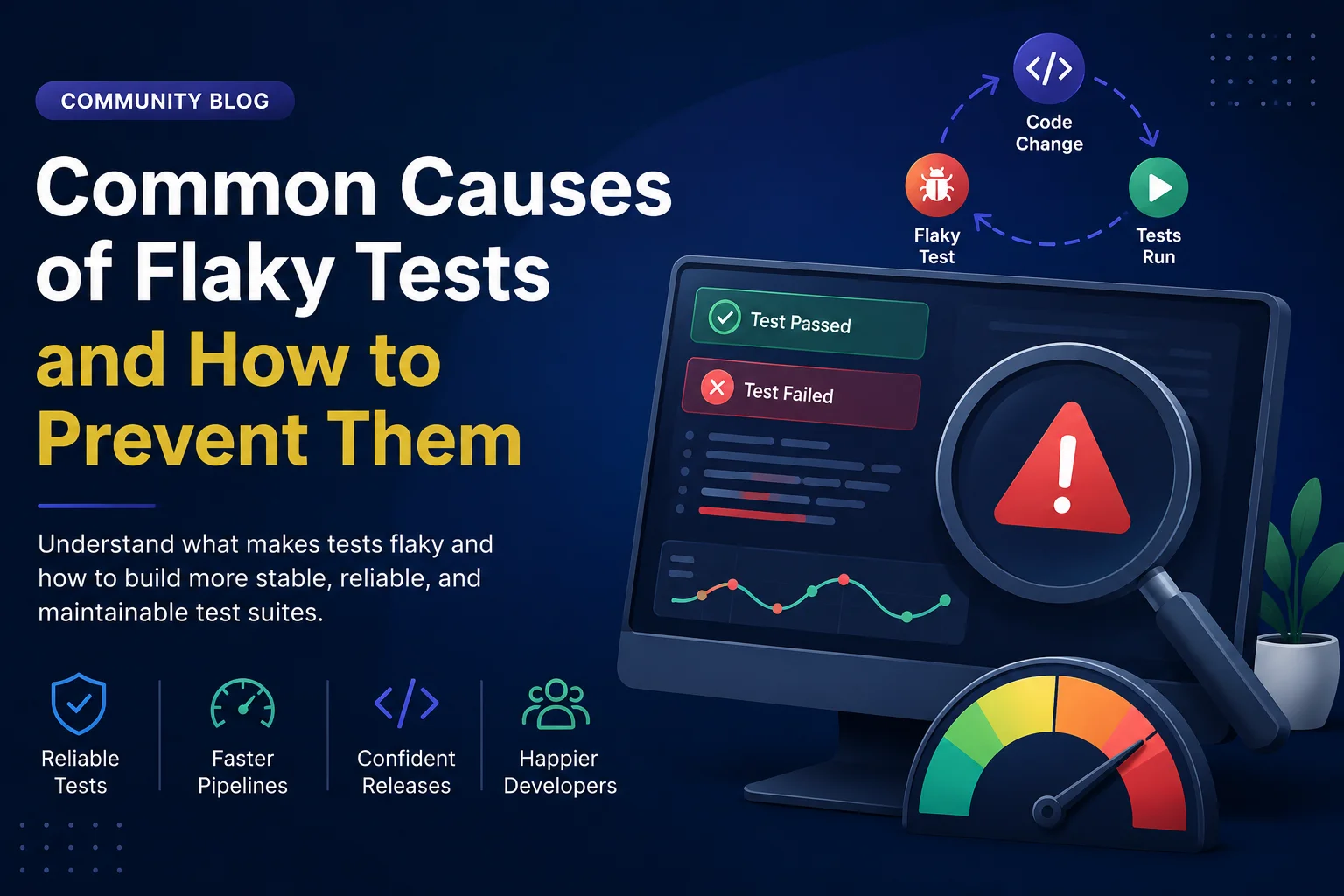
As software applications become more complex, maintaining quality without slowing development has become a major challenge. Modern engineering teams rely on automated testing to validate new features, detect regressions, and support rapid releases. However, the effectiveness of automation depends on one key factor—consistency.
When tests produce different results under the same conditions, developers lose confidence in the testing process. Instead of focusing on innovation, teams spend valuable time rerunning pipelines and investigating failures that aren't caused by real bugs. Understanding how to fix flaky tests is one of the most effective ways to improve the reliability of automated testing and maintain a healthy CI/CD workflow.
The Importance of Consistent Test Results
Automated tests should provide clear and predictable feedback. Whether a test runs on a developer's machine or in a CI/CD pipeline, the result should remain the same if the application hasn't changed.
Inconsistent tests create unnecessary confusion. Developers may begin ignoring failed builds because they assume the failures are temporary. Over time, this habit increases the risk of genuine software defects reaching production.
Reliable testing helps teams:
- Detect bugs earlier in development
- Reduce deployment risks
- Increase developer confidence
- Improve software quality
- Accelerate release cycles
Why Automated Tests Become Unreliable
Several common issues can affect test stability.
Asynchronous Processes
Modern applications frequently perform tasks in the background. If tests verify outcomes before these tasks complete, failures may occur randomly.
Using explicit waits instead of fixed sleep statements makes tests far more dependable.
Shared Test Environments
When multiple tests use the same database, cache, or files, they can interfere with one another. Isolating test environments ensures every execution starts from a clean state.
External Services
Third-party APIs and cloud platforms can experience downtime or latency. Mocking these dependencies during testing reduces unexpected failures.
Configuration Differences
Different operating systems, browser versions, or package dependencies can cause inconsistent behavior between local machines and CI environments.
Standardized environments using containers help eliminate these discrepancies.
Best Practices for Reliable Test Automation
Engineering teams can improve test stability by adopting a few proven practices.
Keep Tests Independent
Every test should run successfully regardless of the execution order.
Use Dynamic Waiting
Replace hardcoded delays with condition-based synchronization that waits only as long as necessary.
Create Fresh Test Data
Avoid sharing records across multiple tests. Independent data prevents conflicts and unexpected failures.
Monitor Test Health
Track recurring failures and investigate unstable tests before they affect the development process.
Continuously Improve Test Suites
Regular maintenance keeps automated tests aligned with evolving application behavior and infrastructure changes.
Supporting Faster CI/CD Pipelines
Stable automated tests provide fast, accurate feedback, allowing developers to merge code with confidence.
Reliable test suites help organizations:
- Release software more frequently
- Reduce pipeline reruns
- Lower maintenance costs
- Improve engineering efficiency
- Deliver better user experiences
The more predictable the testing process becomes, the faster teams can innovate without sacrificing quality.
Conclusion
Automated testing is a critical component of modern software development, but its value depends on consistency. Unreliable tests slow development, reduce confidence, and create unnecessary work for engineering teams.
By learning how to fix flaky tests and implementing reliable testing practices, organizations can build stronger CI/CD pipelines, improve software quality, and deliver releases with greater confidence. Stable tests don't just catch bugs—they enable faster, more efficient software development.