Sign up with Google
 Sign in with Zoho

Every country writes its own rulebook, which is why aluminum windows that work in one market don’t always pass in another. ZMR, a Foshan manufacturer, sells separate American, Canadian and Australian series to deal with exactly that. This article explains how each series fits its market and what buyers should ask before ordering. It’s less complicated than it sounds.
Why can’t one window fit every market?
Because standards, climate and installation habits differ. A window sold in Toronto needs different paperwork from one sold in Sydney. ZMR handles this by organizing its range into an American series, a Canadian series and an Australian series, each built around the testing and certifications that region expects. The company exports mainly to the United States, Canada and Australia, so it’s not guessing at these rules. It’s working with them every day. For buyers, that means fewer surprises when approvals come due.
What stands out in the American series?
Think NFRC, Energy Star and AAMA. ZMR holds US NFRC certification and Energy Star, and its products have been through AAMA testing and Intertek testing. The company also passed the Intertek American Standard CW level test. Watertightness under the American standard is listed at 720Pa. For contractors in places like New York, Chicago or San Francisco, where ZMR has completed projects, those labels matter because inspectors ask for them. Choosing a series that already carries the right paperwork can save weeks.
What about the Canadian series?
Canada points you toward CSA. ZMR has CSA certification for its casement window and fixed window, plus CSA listings for its bi fold door and sliding door. One dealer described ZMR as the only manufacturer he’d found with both CSA and NFRC certification for a folding door suited to the American market. That kind of dual coverage is useful for anyone supplying both sides of the border. Canadian projects, including work in Toronto, give the series real world experience as well.
And the Australian series?
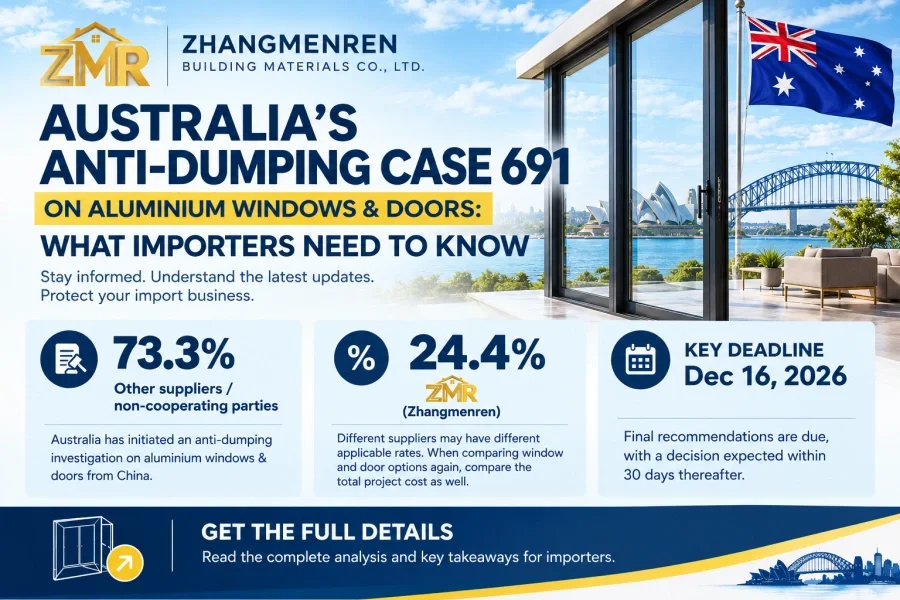
Australia follows AS2047, and ZMR carries that certification. Its watertightness figure under AS2047 is 600Pa. Beyond the product, ZMR provides local installation and technical support in Australia, which is a big deal for builders who don’t want to coordinate overseas fitters alone. Many suppliers stop at shipping. Here, the service continues until the project is finished. So when a client asks who will help if something needs adjusting, you’ve got an answer ready.
How do the three series compare at a glance?
- American series: NFRC, Energy Star, AAMA testing and Intertek testing, with 720Pa watertightness.
- Canadian series: CSA certification across casement, fixed, bi fold and sliding products.
- Australian series: AS2047 certification, 600Pa watertightness and local installation support.
Across all three, the shared base stays the same: double layer Low E glass, full sealing systems and a 30 year warranty.
Can the series be customized?
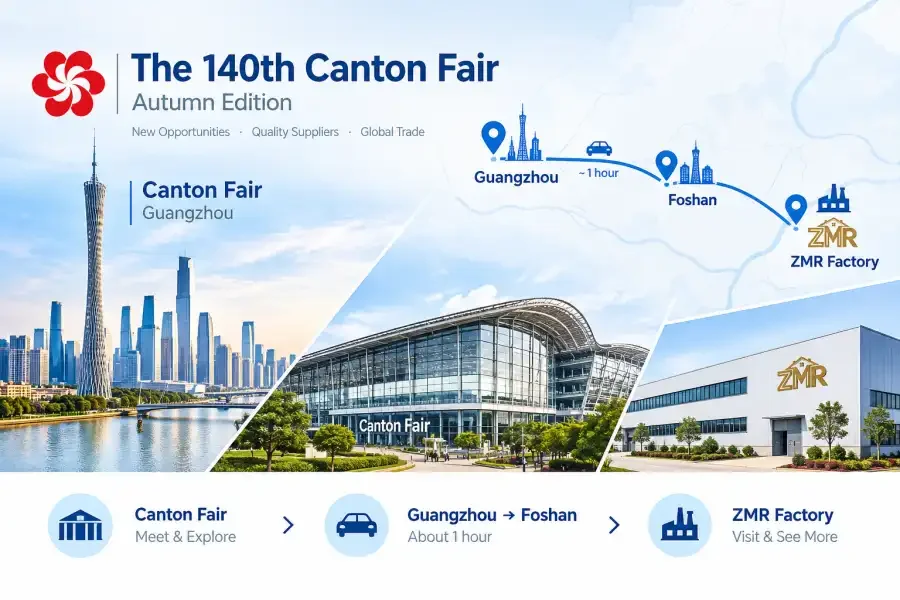
Yes, and that’s where many buyers get value. Whether you’re ordering aluminium doors and windows for a house, a villa or an engineering project, ZMR builds to your size and style with a low MOQ. You can start from a series that matches your market and adjust from there. Standard paperwork stays in place while dimensions and looks change. The company also exhibits at the Canton Fair and other global window and door expos, so you can often meet the team in person.
What should you ask before ordering?
Keep the list short and direct. Which certificate covers my destination? Can I see the test data? What delivery time should I plan for? ZMR quotes about 15 days for delivery, and it ships in bubble wrap and wooden crates for protection. Ask about samples too. Seeing a corner section or hardware set in your hands tells you more than any photo could, and it makes the conversation with your client far easier.
Final thoughts
Different countries, different rules, same need for reliable products. By offering American, Canadian and Australian series, ZMR gives importers a head start on certification and a clearer route through inspection. That’s a real advantage when you’re juggling several projects and deadlines.
If you’re sourcing aluminum windows for any of these markets, tell the team where the building stands and what size you need. A good match between series and destination keeps approvals smooth and installations on schedule.







.webp)