
 Sign up with Google
 Sign in with Zoho

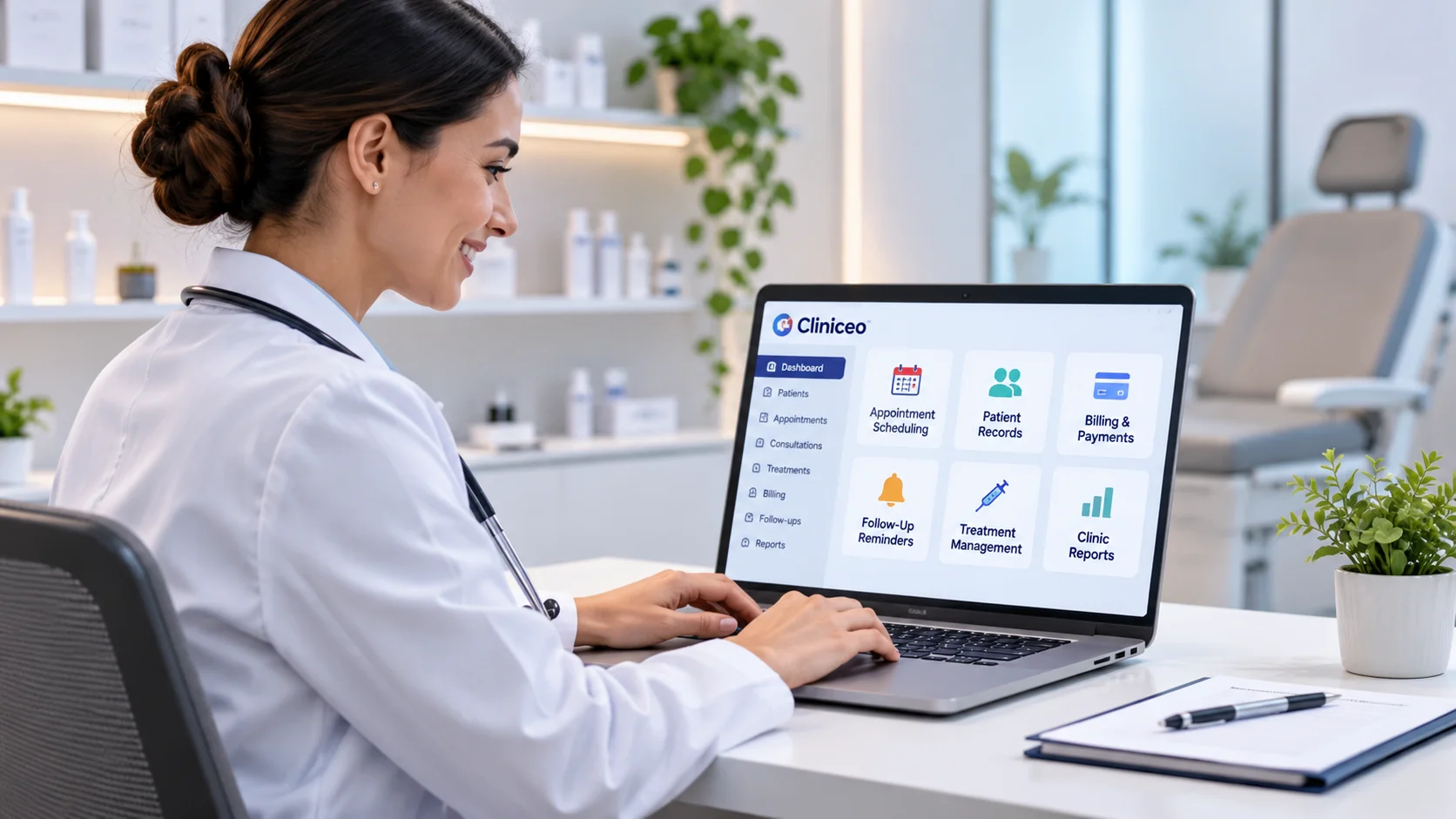
Running a clinic is not always as straightforward as it looks. A doctor's day may begin with scheduled consultations but quickly turn into a series of phone calls, appointment changes, patient enquiries, billing tasks, and follow-up requests. For clinics that still depend on paper registers or multiple disconnected applications, keeping everything organised can become a challenge.
This is one reason clinic management software has become increasingly useful for modern healthcare practices. It gives doctors and administrative teams a more organised way to handle routine activities without relying entirely on manual processes.
Whether it is a small dermatology clinic, an aesthetic practice, or a multi-doctor healthcare facility, the right software can make everyday management considerably easier.
Here are ten practical benefits worth considering.
1. Easier Appointment Scheduling
Managing appointments manually can take more time than expected. Reception staff need to answer calls, check availability, update schedules, and inform patients about changes.
Clinic management software provides a central place to organise appointments. Staff can view schedules, manage bookings, and coordinate consultation timings more efficiently.
Some platforms also support automated reminders, helping clinics reduce missed appointments and keep patients informed.
2. Better Organisation of Patient Records
Patient information is among the most important resources in any healthcare practice. Medical histories, consultation notes, treatment details, and previous visits need to be maintained properly.
Searching through physical files can be inconvenient, particularly when a clinic handles a large number of patients.
Digital patient management makes it easier to store, organise, and retrieve relevant information. Authorised staff can access records when needed, subject to appropriate permissions.
This also helps reduce dependence on paper documentation.
3. Less Administrative Work for Doctors and Staff
Doctors generally prefer spending their time with patients rather than handling repetitive administrative responsibilities.
However, patient registration, appointment coordination, record updates, and billing are unavoidable parts of running a clinic.
A clinic management system can simplify several of these activities by bringing them together in one platform. This reduces the need to switch between different tools and helps staff manage their daily responsibilities more systematically.
4. More Consistent Patient Follow-Ups
Follow-up appointments are particularly important for patients undergoing ongoing treatments or procedures.
Without a proper tracking system, it is possible for follow-up schedules to become disorganised, especially in busy clinics.
Clinic management software helps maintain consultation histories and organise follow-up activities. Reminder features can also help staff communicate with patients at appropriate intervals.
For aesthetic and dermatology clinics, this is especially useful when patients require multiple sessions or progress assessments.
5. Simplified Billing and Payment Tracking
Financial management is another area where manual processes can create unnecessary complications.
Clinics need to manage consultation charges, treatment costs, invoices, payment records, and outstanding balances.
Software with integrated billing capabilities helps maintain these records in an organised format. It can also reduce repetitive data entry and make it easier for administrators to review financial transactions.
For growing clinics, having organised billing information can make routine financial management less complicated.
6. Better Management of Treatments and Procedures
Aesthetic and dermatology practices often provide several treatments, each with different consultation requirements, procedures, and follow-up schedules.
Keeping track of treatment details across separate registers can become difficult.
Specialised clinic management software can help practitioners maintain treatment histories, procedure information, and package details in a structured manner.
This is useful for clinics that want a clearer overview of each patient's treatment journey.
7. Convenient Before-and-After Photo Management
Photography is an important part of many aesthetic procedures. Doctors often use before-and-after photographs to document visible treatment progress and support clinical assessments.
However, storing these images in personal devices or unorganised folders can create privacy and retrieval issues.
A dedicated photo management feature allows clinics to organise images alongside relevant patient information. Clinics should also maintain appropriate consent procedures and secure access controls when handling patient photographs.
8. Improved Coordination Among Clinic Staff
A clinic usually involves more than just doctors. Receptionists, nurses, assistants, and administrative staff all contribute to its daily functioning.
When everyone maintains separate records or communicates through scattered messages, important information can be missed.
A centralised management platform can help authorised team members work with consistent operational information.
This improves coordination and makes it easier to manage appointments, patient details, billing, and other routine responsibilities.
9. Useful Insights Through Clinic Reports
Understanding how a clinic is performing requires more than looking at the number of patients visiting each day.
Clinic owners may want to review appointment trends, consultation volumes, treatment demand, revenue, and other operational information.
Reporting and analytics features can help organise this information and make it easier to identify patterns.
These insights can support decisions about staffing, scheduling, services, and future business planning.
10. A Better Overall Patient Experience
Patients notice more than the treatment they receive. Their experience also depends on how easily they can book an appointment, how smoothly registration is handled, how clearly information is communicated, and how follow-ups are managed.
When clinic operations are organised, patients are less likely to experience unnecessary administrative delays or confusion.
Clinic management software helps support this experience by making several everyday processes more structured and convenient.
Choosing the Right Clinic Management Software
Not every clinic needs the same features. A general medical practice may prioritise patient records, appointments, and billing, while an aesthetic or dermatology clinic may require additional capabilities for treatment tracking, procedure management, and before-and-after photography.
Before selecting a platform, clinic owners should consider a few practical questions:
- Is the software easy for doctors and reception staff to use?
- Can it manage patient records and consultation histories?
- Does it support appointment scheduling and follow-ups?
- Are billing and payment records available?
- Does it offer features relevant to the clinic's speciality?
- How does it handle patient data security and access permissions?
- Is customer support available when needed?
Choosing software based on actual clinic requirements is usually more useful than selecting a platform simply because it offers a long list of features.
How Cliniceo Helps Modern Clinics Manage Their Practices
For doctors running aesthetic and dermatology practices, having software that understands their everyday requirements can make a difference.
Cliniceo is a clinic management platform designed to help healthcare and aesthetic practices organise their daily operations through digital tools.
It brings together important practice management activities, including patient management, appointment scheduling, consultation records, treatment and procedure management, before-and-after photo documentation, billing, follow-ups, and clinic analytics.
Instead of depending on multiple disconnected systems, clinics can use a more structured approach to managing essential workflows.
Cliniceo is particularly relevant for dermatology and aesthetic practices looking to organise patient information and treatment-related activities while simplifying administrative responsibilities.
Doctors and clinic owners interested in improving their practice management can explore the platform at https://cliniceo.app/.
Final Thoughts
Running a successful healthcare practice requires more than clinical expertise. Good organisation, accurate documentation, efficient scheduling, and consistent patient communication all contribute to the overall functioning of a clinic.
Clinic management software helps bring these responsibilities into a more manageable system. From appointment scheduling to patient records and billing, the right platform can reduce administrative complications and support smoother daily operations.
For clinics planning to grow, investing in suitable digital management software is not just about convenience. It is about building reliable processes that can support the practice as its patient base and operational requirements increase.















 (1).webp)