Sign up with Google
 Sign in with Zoho

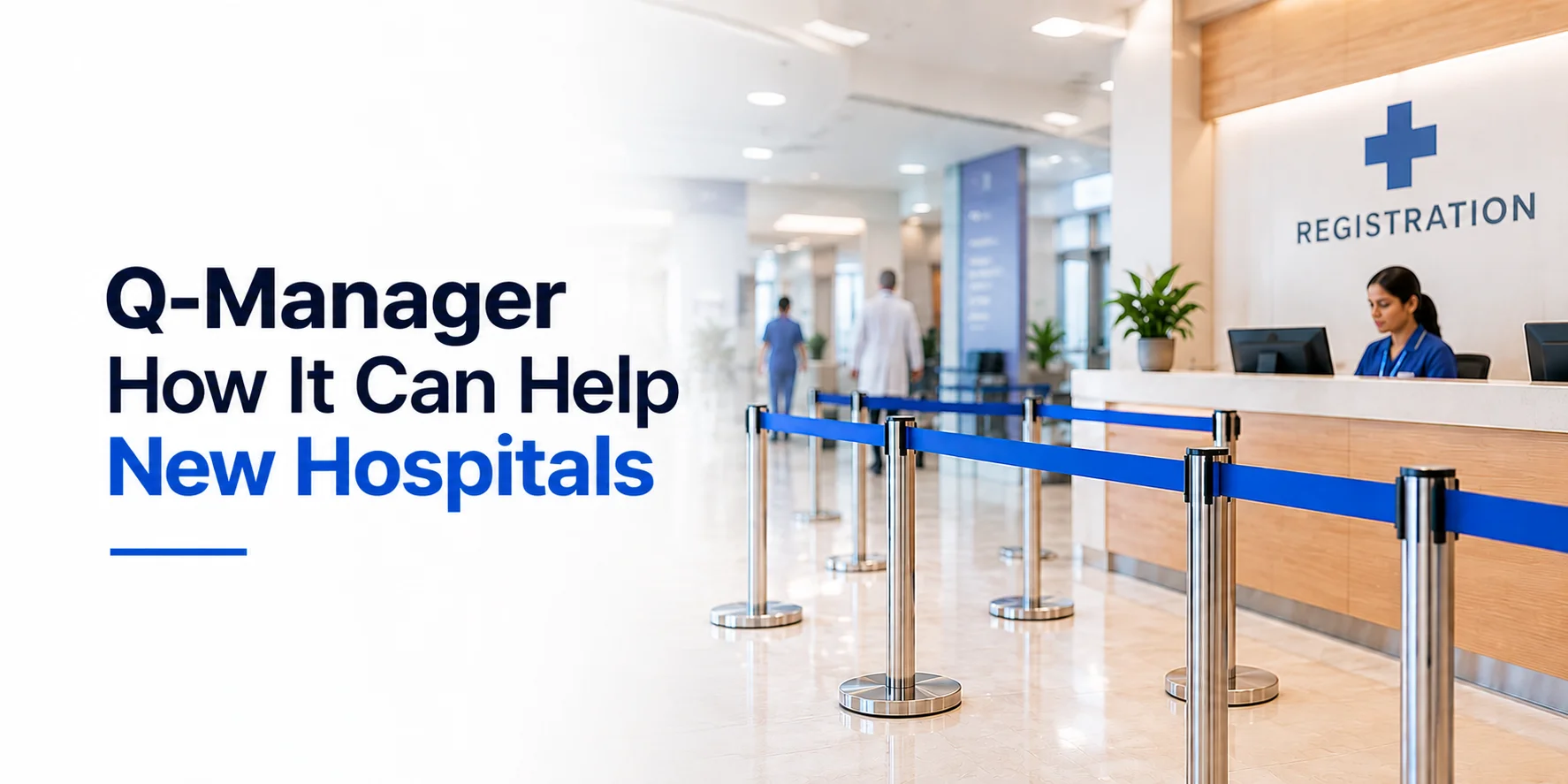
With more and more patients and visitors to be accommodated in new hospitals and healthcare facilities, patient flow is an important aspect to consider in addition to clinical infrastructure, equipment, and interior design. In a hospital setting, administrators and facility staff need more than adequate floor space to deal with registration counters, outpatient departments, pharmacies, diagnostic facilities, and entrances. It also calls for a simple and flexible system to guide people through the facility.
One of the increasingly common considerations when planning their operations is the use of queue management solutions. In some cases, physical queue barriers, retractable belt posts, signage systems, and other crowd-management equipment can help to create defined pathways and waiting zones to prevent permanent modifications in each location.
At Q-Manager, a company established in 2004 that supplies queue and crowd-management products to various sectors such as those in the healthcare industry, the use of such systems in hospitals focuses on one simple need: making movement more orderly wherever patients and visitors must wait, turn, enter, or exit.
Patient Flow Begins Before the Consultation
A patient's experience in a hospital does not begin when they enter the consultation room. The journey may include reception, registration, token collection, waiting, consultation, diagnostic testing, pharmacy visits, and payment or discharge processes.
Each of these stages can create a separate point of congestion.
In a newly opened hospital, these movement patterns may also change as patient volumes increase. A registration area that appears sufficient during the initial operating period may experience longer queues during peak hours. Similarly, pharmacy counters, laboratory collection points and OPD waiting areas can develop bottlenecks if there is no clearly defined movement pattern.
The Ministry of Health and Family Welfare's operational guidelines for improving patient care services recognize the importance of hospital waiting areas and call for clear information about patient pathways and services, including directions such as where patients should go first.
Queue management equipment can complement this approach by giving those pathways a physical structure.
Why New Hospitals Need to Plan Queues Early
For an established hospital, queue-management changes can often be made after observing actual patient movement. A new hospital has a different opportunity: patient flow can be considered while the facility is still being planned and configured.
This allows facility managers and designers to consider questions such as:
- Where will patients first form a queue?
- Which counters are likely to experience the highest traffic?
- Should one waiting line serve multiple counters?
- Where should entry and exit paths be separated?
- Which areas need temporary queue arrangements?
- Which high-traffic locations require permanently positioned barriers?
- Where should directional signage be placed?
- How can queues be changed when patient volumes fluctuate?
The objective is not simply to create longer or more elaborate barriers. It is to establish a movement pattern that is understandable to patients, visitors and hospital staff.
Creating Defined Waiting and Movement Zones
One of the simplest functions of a queue management system is to establish a visible boundary between a waiting area and a movement corridor.
Retractable belt posts, for example, can be positioned to create lanes leading toward a registration or service counter. When the configuration needs to change, the belts can be released and connected to different posts.
Q-Manager's retractable belt systems are designed for managing queues and pedestrian movement, with models available in stainless steel, chrome, brass and powder-coated finishes. Standard retractable belt models on the company's website feature belts of approximately 2.25 metres and multiple connectivity points.
For a new hospital, this flexibility can be useful because patient movement is rarely identical throughout the day.
A queue may need to be longer during morning OPD hours and shorter later in the day. A pharmacy may require additional lanes during peak periods. Registration areas may need a different configuration during special clinics or health camps.
Supporting Registration and OPD Areas
Registration is often one of the first points where a patient encounters hospital operations.
If patients cannot immediately understand where to stand, where to collect a token or which counter to approach, staff may have to repeatedly provide directions. This can create unnecessary movement around the reception area.
A structured queue can provide a simple visual indication of where patients should wait.
In an OPD environment, queue barriers can also help separate waiting lanes from walking paths. This is particularly relevant where multiple departments operate from adjacent counters or consultation areas.
The aim is not to replace hospital staff or digital queue systems. Instead, physical queue infrastructure can work alongside signage, token systems and other patient-flow measures to make the physical environment easier to navigate.
Managing Pharmacy and Diagnostic Queues
Patient movement does not stop at the OPD.
Pharmacy counters, pathology collection points, imaging departments and billing areas can each create their own waiting requirements.
The appropriate queue configuration may differ depending on the service.
A pharmacy may require a straightforward single-direction queue. A diagnostic department may need separate pathways for registration and sample collection. A billing area may require multiple lanes feeding several counters.
Because retractable systems can be repositioned, hospitals can configure the physical queue according to the operational requirement rather than treating every area identically.
For higher-density environments, Q-Manager also offers double-belt systems, which use two independent retractable belts on a single post. The company's product range includes both portable and permanently installed variants.
Permanent Queue Infrastructure for High-Traffic Areas
Not every hospital queue needs a portable post.
Areas with predictable, continuous queuing may benefit from permanently positioned equipment. Q-Manager's floor-mount belt posts are surface-mounted using a base plate and are designed for locations where a fixed queue configuration is required. The company also offers floor-socket systems in which the post can be removed when the queue is not required, leaving the socket flush with the floor.
This distinction can be important during hospital planning.
A temporary registration arrangement and a permanently busy pharmacy counter do not necessarily require the same type of queue infrastructure.
For architects, facility managers and procurement teams, selecting the appropriate configuration therefore involves considering expected footfall, available space, frequency of layout changes and whether the queue will be required continuously.
Clear Physical Guidance Can Complement Signage
Queue barriers work best when they form part of a broader patient-flow system.
Signage can tell a patient where to go. A queue barrier can show where to wait.
The combination can be particularly useful in larger facilities where several services operate within the same area.
Q-Manager's product range includes sign holders and other accessories intended to provide information and guidance within managed spaces. Its website also describes customization options for printing messages or branding on retractable belts.
For hospitals, the emphasis can be placed on functional information rather than promotional messaging — for example, directing patients toward registration, pharmacy, billing or specific service points.
Choosing the Right Queue System for a Hospital
There is no single queue configuration suitable for every healthcare facility.
A procurement team evaluating queue-management equipment may need to consider:
Footfall: How many people are expected to use the area during peak periods?
Layout: Is the queue located in a narrow corridor, open lobby or dedicated waiting zone?
Flexibility: Will the arrangement change during different operating hours?
Durability: Will the equipment be exposed to continuous daily use?
Cleaning and maintenance: Can the equipment be maintained appropriately for the environment?
Visibility: Can patients easily understand the intended pathway?
Aesthetics: Does the equipment fit the hospital's interior and reception environment?
Installation: Is a portable, floor-mounted or floor-socket solution more appropriate?
These considerations can help prevent a common planning mistake: selecting queue equipment based only on appearance or unit price without considering how it will actually be used.
Designing for Patient Movement, Not Just Crowd Control
The term "crowd control" can make queue management sound relevant only to extremely busy environments. In healthcare, however, the requirement is broader.
A hospital may need to manage people who are elderly, visiting for the first time, accompanying family members, carrying documents or moving between several departments. The objective is therefore not simply to stop people from entering a particular area.
It is to make movement more predictable.
A well-planned queue can establish where one process ends and another begins. It can separate waiting space from walking space and make the direction of movement more visible.
For new hospitals, incorporating these considerations early can also help facility teams avoid repeatedly improvising queue arrangements after operations begin.
Q-Manager's Healthcare-Focused Queue Solutions
Q-Manager's website identifies healthcare as one of the industries it serves alongside retail, hospitality, public spaces, aviation, railways, education and BFSI. The company's range includes retractable belt posts, double-belt posts, rope posts, chain posts, floor-mounted systems, floor-socket systems, wall-mount units and signage-related accessories.
The company's product specifications also include stainless steel retractable belt posts, with approximately one-metre post height, a cast-iron base and a belt length of approximately 2.25 metres.
For permanent high-traffic applications, its floor-mounted belt systems are available in stainless steel, chrome and brass finishes, while its floor-socket range is designed to allow posts to be removed when the queue arrangement is no longer required.
These options allow hospitals to select equipment according to the operational requirements of individual areas rather than adopting one configuration throughout the facility.
A Practical Part of New Hospital Planning
There are several factors that influence patient flow in a hospital, such as the layout of the facility, the number of staff members available, appointment scheduling, registration processes, signage, and waiting areas. One component of this system is the queue management equipment that can be useful in assisting hospitals to organise patient movement.
Properly designed and installed queue barriers and posts can help establish clear flow paths, separate waiting areas and control patient lines in areas like the reception desk, outpatient departments, diagnostic facilities and registration counters. Patient demand and requirements can vary during the day, and flexible queueing systems enable hospitals to adapt queues as needed.For more information on planning queue systems for healthcare facilities, read our guide on hospital queue management solution.
If new patient facilities are being built, it is best to plan queue management activities early in the design process to ensure that the patient environment will be more organized from the outset. To prevent the need to install new queue equipment in response to congestion, hospitals can think about the movement of patients and waiting areas and access points to the overall layout of the facility.
In the current environment of effective and streamlined patient care in healthcare facilities, practical infrastructure plays a crucial role. Physically clear pathways and delineated waiting zones can facilitate patient and visitor understanding of where to wait.
About Q-Manager
Q-Manager is a queue and crowd-management brand of I.Q. Enterprises (India) Pvt. Ltd., founded in 2004. The company provides queue-management and people-flow products including retractable belt posts, double-belt posts, rope posts, chain posts, floor-mounted systems, floor-socket systems, café barriers and related accessories. Q-Manager states that its products are supplied across India and that healthcare is among the industries it serves.
For more information about Q-Manager's queue-management solutions for healthcare facilities, visit www.q-manager.com.