Sign up with Google
 Sign in with Zoho

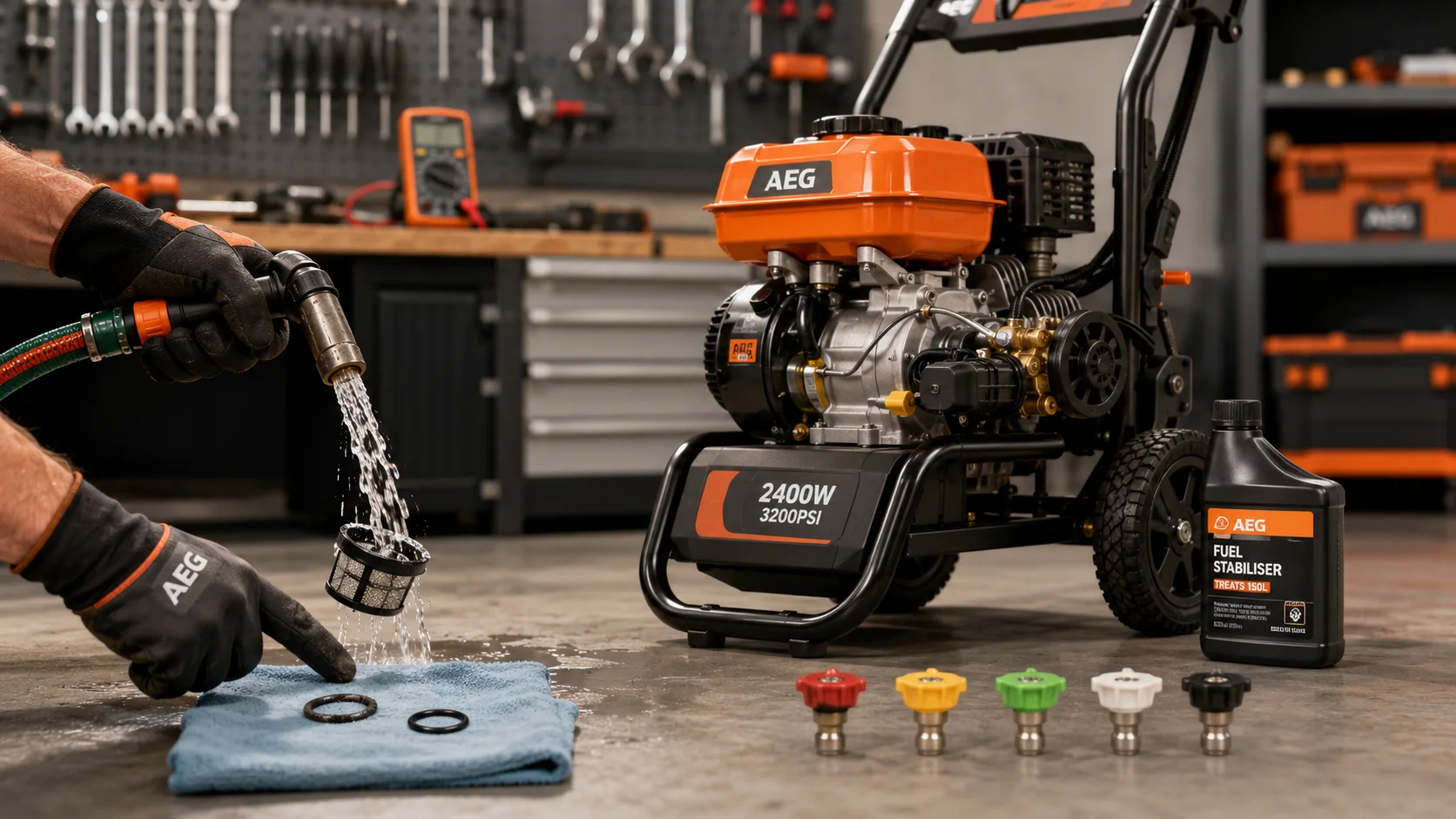
A pressure washer sits unused for months at a time and then gets asked to perform under serious load the moment driveways, decks, fences or machinery need cleaning. That start-stop pattern — long idle stretches followed by sudden hard use — is exactly what causes most of the failures that come through for service, and nearly all of them are avoidable with a few minutes of basic care before and after each job. None of the tips below require any special tools or mechanical knowledge; they're simply habits worth building into how you store and use the machine.
1. Never Run It Dry
The pump relies on water flowing through it for both cooling and lubrication. Running a pressure washer without a connected, flowing water supply — even briefly, even just for a few seconds while you sort out a hose connection — can damage the pump seals almost immediately, and that damage is often not obvious until pressure starts dropping off weeks or months later. Always confirm water is flowing freely from the tap or tank before starting the engine or motor, not after, and if the flow ever cuts out mid-job (a kinked hose, an empty tank), stop the machine straight away rather than letting it keep running.
2. Check and Clean the Inlet Filter
Most pressure washers have a small mesh filter where the garden hose connects to the machine. Grit, sand, leaf litter and general debris from garden hoses or rainwater tanks collect here over time and gradually restrict flow, forcing the pump to work harder than it's designed to. Rinse this filter every few uses, and make it a habit every single time if you're drawing water from a tank, dam or rain barrel rather than clean mains supply — untreated water sources carry far more sediment than most people expect, and a blocked inlet filter is one of the most common and most preventable causes of reduced pressure.
3. Flush the System After Detergent Use
Detergents and cleaning chemicals left sitting in the pump and hose after a job can dry out, gum up internal seals, and cause blockages before the machine is even used again. This is especially true for anything left over summer in a hot shed, where residue dries and hardens far faster than most people expect. Run clean water through the system for a minute or two after any job that used detergent — flushing the detergent injector and hose as well as the main pump — before you coil the hose and pack the machine away.
4. Store It Properly Between Uses
Two things damage a stored pressure washer faster than almost anything else:
- Water left in the pump over winter or extended storage, which can freeze, expand, and crack internal components — a real risk even in relatively mild NSW winters if the machine is stored in an uninsulated shed or garage
- Fuel left sitting in a petrol unit's tank and carburettor, which degrades over time and gums up fuel lines, jets and the carburettor itself, often making a machine hard or impossible to start the following season
For petrol units being stored more than a few weeks, either run the tank dry before putting the machine away or use a fuel stabiliser mixed in at the correct ratio. For all units regardless of power source, disconnect hoses and allow the pump to drain fully — tilting the machine slightly if needed — before any long-term storage. A few minutes spent on this before the machine goes back in the shed is far cheaper than a pump rebuild in spring.
5. Inspect Hoses, O-Rings and Fittings Regularly
High-pressure hoses degrade from the inside before any external damage becomes visible, which is part of why hose failure often seems to happen suddenly. A hose that feels unusually soft, bulges visibly under pressure, or shows any fraying or wear right at the fittings should be replaced before it fails mid-job — a burst high-pressure hose is at minimum a wasted afternoon, and at worst a genuine safety risk. Cracked, flattened or missing O-rings on quick-connect fittings are a common, cheap-to-fix source of pressure loss and leaks, and are worth checking any time you notice water seeping from a connection point rather than assuming the whole unit needs replacing.
6. Match Nozzle to Task — and Check It for Wear
Nozzles wear out gradually with use, and a worn nozzle changes your spray pattern and effective pressure even though the pump itself is working exactly as it should. This is one of the most common reasons people assume their pressure washer is failing when the real issue is a five-dollar part. If cleaning performance has dropped off gradually over a season rather than suddenly, a worn nozzle tip is one of the first things worth checking before assuming it's a pump problem — swap in a new nozzle of the correct type and see if performance returns before booking a service.
7. Don't Skip the Annual Service
Most pressure washer problems that eventually require a workshop visit — worn pump seals, degraded valves, carburettor issues on petrol units, worn unloader valves — are far cheaper to catch early in a routine service than to repair after a full failure mid-job. An annual check-up, ideally booked in before the season you use the machine most (spring cleaning, pre-summer deck and outdoor area prep), catches small issues while they're still small, rather than after a fitting has failed or a seal has given out entirely under pressure.
Quick Reference
A Note on Choosing Between Electric and Petrol
If you're weighing up your first pressure washer rather than maintaining an existing one, it's worth knowing that the maintenance load differs meaningfully between electric and petrol units. Electric pressure washers have no fuel system to manage and generally need less routine attention, making them a lower-maintenance option for occasional, light-duty use around the house. Petrol units deliver more sustained pressure and flow for larger areas — driveways, decking, farm equipment — but come with the fuel storage and carburettor care outlined above as part of the trade-off for that extra power.
Keep It Running Season After Season
A well-maintained pressure washer will comfortably outlast a neglected one by years, not months, and the difference usually comes down to a handful of small habits rather than any one major intervention. If yours is overdue for a service, or you're weighing up your first purchase, Premier Outdoor's team can talk through the right unit for the jobs you actually do and keep it servicing-ready for the long haul — the current range of pressure washers covers both electric and petrol options for home and heavier-duty use.