
 Sign up with Google
 Sign in with Zoho

Defining the Rustic Style
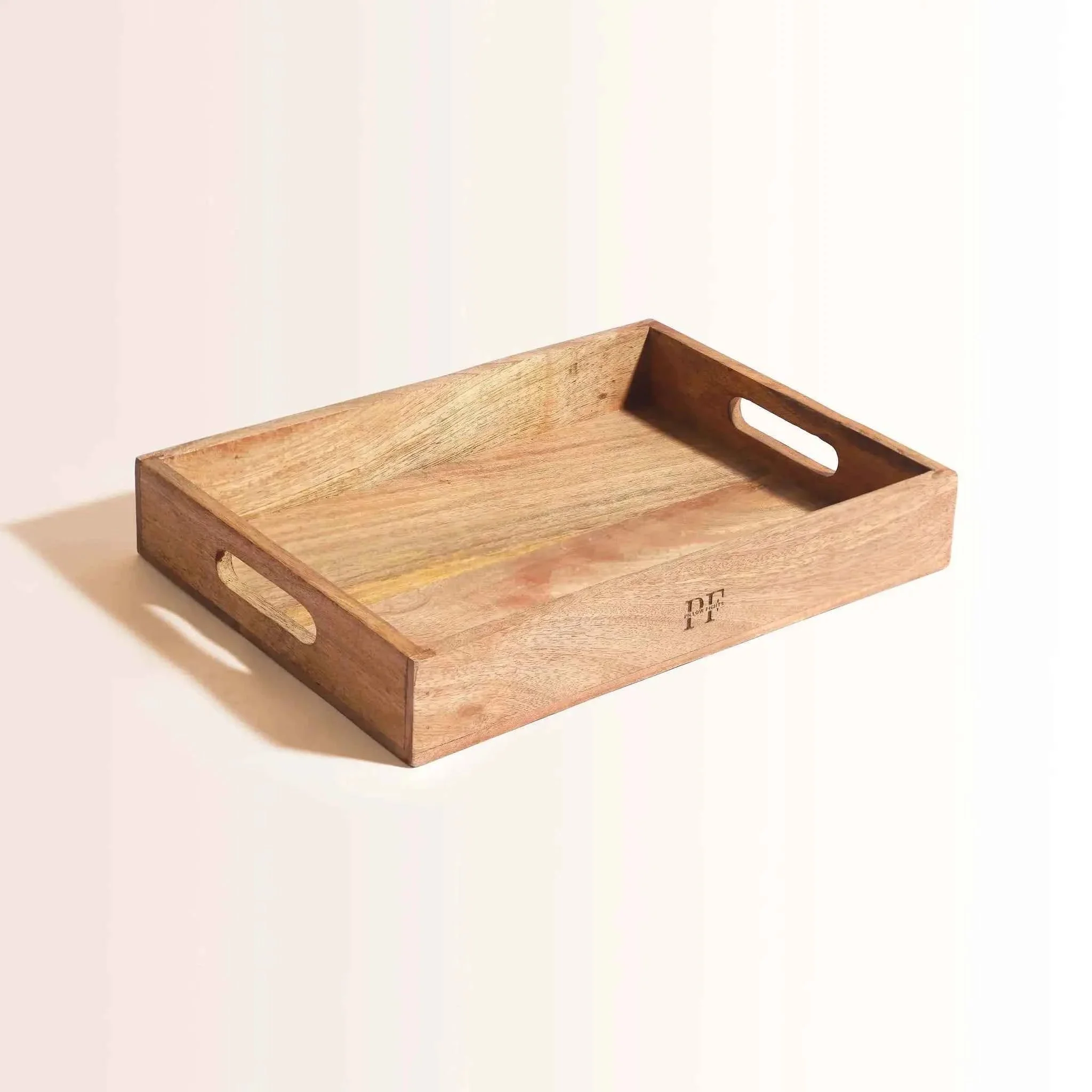
Rustic wooden trays celebrate the natural, imperfect qualities of wood. Think visible grain patterns, natural or slightly uneven edges, warm tones, and minimal processing. These trays often look like they were crafted directly from raw timber, with a focus on authenticity over polish.
Key characteristics of rustic trays:
- Natural, unfinished, or lightly oiled surfaces
- Visible knots, grain variation, and organic edges
- Warmer, earthier wood tones
- Often paired with metal accents like iron or aged brass
Defining the Modern Style
Modern wooden trays lean into clean lines, symmetry, and refined finishes. These trays are often crafted with precise, uniform edges and a smooth, polished surface that reflects light more evenly. Modern designs prioritize simplicity and versatility over raw texture.
Key characteristics of modern trays:
- Sleek, matte, or glossy lacquered finishes
- Sharp, geometric edges and symmetrical shapes
- Lighter or more uniform wood tones
- Often paired with minimal metal accents like brushed steel or matte black
Which Style Suits Different Home Types?
- Farmhouse and cottage homes: Rustic trays are a natural fit, complementing exposed beams, woven textiles, and vintage accents.
- Scandinavian and minimalist interiors: Modern trays with clean lines and light wood tones suit the simplicity and functionality central to this style.
- Industrial lofts: Rustic trays with visible texture pair beautifully with exposed brick and metal fixtures.
- Contemporary apartments: Modern trays with a polished finish complement sleek furniture and neutral color palettes.
Mixing Styles Thoughtfully
You don't have to commit entirely to one aesthetic. Many modern homes incorporate a single rustic piece — like a tray — as a warm, organic counterpoint to otherwise sleek furnishings. Similarly, a modern tray can bring a touch of refinement to an otherwise heavily rustic, farmhouse-style room.
Choosing Based on Function, Not Just Style
Beyond aesthetics, consider how the tray will be used. Rustic trays with natural, unsealed finishes may require more frequent oiling and care, while modern trays with a sealed lacquer finish tend to be more resistant to daily wear, spills, and moisture.
Exploring Both Styles
Whether your taste leans rustic or modern, browsing a full collection of wooden trays side by side makes it easier to compare finishes, tones, and shapes to find the piece that truly complements your space.
Completing the Look
Once you've chosen your tray style, extend the same aesthetic to other wooden accessories in your home. A rustic-finished wooden coaster set continues the raw, natural theme on your coffee table, while a matching modern Wooden Chopping Boards brings the same clean-lined aesthetic into your kitchen.
FAQs
Can rustic and modern trays be used in the same home?
Yes, as long as they're placed in different rooms or used to intentionally contrast with the surrounding décor style.
Which style is easier to maintain?
Modern trays with sealed, lacquered finishes are generally easier to maintain, as they're more resistant to moisture and staining than raw, rustic finishes.
Is rustic style out of trend?
No — rustic wood décor remains a popular, enduring style, particularly in farmhouse and organic modern interiors.
How do I know which style will suit my home before buying?
Look at your existing furniture and color palette — if it leans toward raw textures and warm tones, go rustic; if it's sleek and neutral, choose a modern finish.











 (1).webp)