Sign up with Google
 Sign in with Zoho

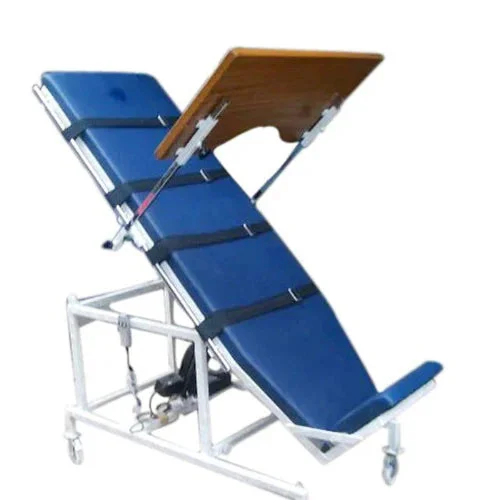
Rehabilitation equipment is vital in assisting patients to move freely again once they have become ill or injured, improve their posture and slowly prepare for standing. A motorised tilt table is a specialized medical device used for patients to be supported from a horizontal position to a standing angle. It has many applications in physiotherapy centres, hospital, neurological rehabilitation units and specialized care facilities. Motorised adjustment system makes it easy to adjust the table angle smoothly and to position the patient in a controlled manner as per the individual patient's requirement.
What's a motorized tilt table?
A motorised tilt table is a rehabilitation table that features an electric motor to tilt the table. Patients are strapped in with cushioned straps and the platform is slowly raised or lowered. This is a controlled movement to assist patients to practice upright positioning if they are not able to stand safely on their own.
A motorised tilt table can reduce the amount of effort that is required to tilt the table plate. It also enables healthcare professionals to make progressive angle adjustments with the ability to watch how the patient reacts. They can also have features such as an adjustable height, foot support, safety straps, hand controls, and an emergency stop mechanism, depending on the design.
Key Benefits of a Motorised Tilt Table
1. Supports Gradual Standing Practice
Patients who have undergone surgery in some parts of the nervous system, patients who have been bedridden for a long period of time, or patients who have severe injuries may require support as they try to get into an upright position. A motorised tilt table allows gradual introduction of standing dependent on patient's tolerance and clinical condition.
2. Supports advancing of postural tolerance
Transition from lying to standing can be difficult for people with impaired mobility or who don't tolerate standing well. With professional guidance, progressive tilting may allow healthcare professionals to evaluate and build tolerance to standing upright within an appropriate rehab program.
3. Provides Controlled Positioning
The electric adjustment system enables therapists to adjust the table angle in a controlled fashion. This allows for easier tracking and modifying of positioning based on patient's comfort, stability, and response for a planned rehabilitation session.
4. Minimises the need for manual adjustments.
Manual tables may require more physical effort to change their position. A motorised tilt table facilitates powered positioning, making it easier to position in a healthcare setting during normal clinical use.
5. Supports Rehabilitation Planning
The equipment is suitable to be integrated in specific therapeutic program for patients with neurological impairments, reduced mobility and other pathologies which could benefit from supported upright positioning. Always individualize treatment plans, which should be done by qualified health care professionals.
Common Applications in Healthcare Facilities
Motorized tilt tables are employed in hospitals, physiotherapy clinics, rehabilitation and neurological care units. They may be incorporated into rehabilitation protocols for patients after stroke, spinal cord injury or extended periods of immobilization – as appropriate.
Clinicians may use tilt table therapy in conjunction with other types of therapeutic exercises, such as functional exercise therapy, balance training and mobility exercises. The activities chosen will be dependent on the patient's diagnosis, stage of recovery and treatment plan.
Important Features to Consider Before Buying
When choosing a motorised tilt table, safety, comfort, and functionality are important considerations.
Electric motor system: Check for smooth and consistent tilting action.
Adjustable tilt angle: The proper angle range enables slow positioning as per clinical needs.
Secure supports (safety straps): Appropriate patient positioning is maintained with secure supports.
Footboard adjustment: Good foot support during upright sessions.
Stable construction – This is important to have a good frame and a stable base for regular clinical use.
Accessible controls: Trained personnel can easily use the controls.
Safety mechanisms: Emergency stop and other suitable safety features.
It is also important for buyers to take into account the equipment's weight capacity, maintenance needs, warranty, and technical support.
Safe Guidelines for Effective Use
A motorised tilt table should only be operated by trained healthcare professionals. Prior to a session, the therapist should use a secure technique, inspect equipment, and review pertinent clinical precautions. Tilting should be eased up with the patient's symptoms and vital signs monitored if necessary.
If dizziness, unusual discomfort or other symptoms of concern arise, the session should be discontinued or modified following clinical procedures.
Conclusion
Motorised tilt table is useful for rehabilitation to position patients in a controlled upright position when they require an upright position for practice purposes. The powered adjustment, design and safety make it a practical choice for today's healthcare facilities. The use of a reliable model and supervised by a professional, can support therapists to provide structured rehabilitation sessions that can be adapted to the individual patient.