Sign up with Google
 Sign in with Zoho

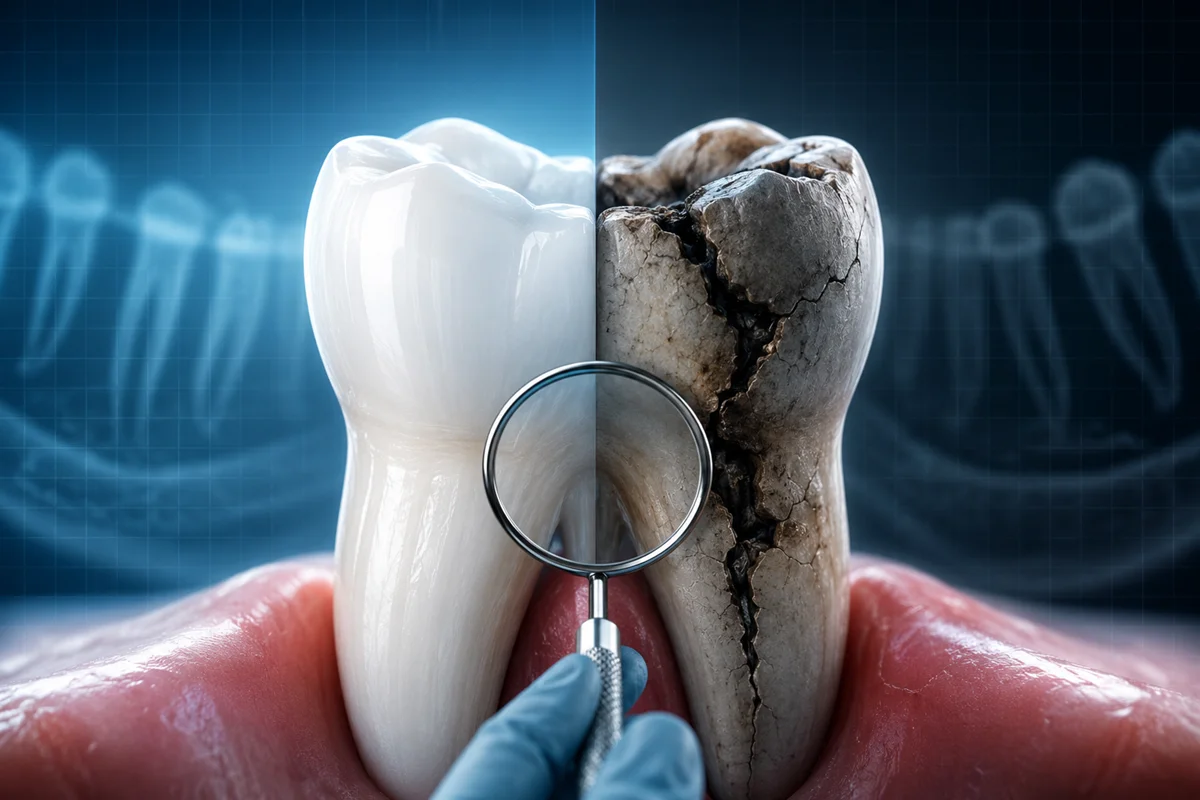
A persistent toothache usually means one of two things is coming: a root canal or an extraction. Both fix the problem, but they lead to very different outcomes for your bite, your budget, and your long-term dental health. So how do dentists actually decide which path is right for a damaged or infected tooth?
It's a decision most people don't think about until they're sitting in the chair, wincing every time they bite down on that side of their mouth. By that point, the pain itself often feels like the only thing that matters, but the choice between saving the tooth and removing it altogether has consequences that last well beyond the appointment. Understanding what dentists are actually looking for during that assessment can make the conversation with your own dentist a lot less confusing, and help you feel more confident about whichever option ends up being right for you.
When a Tooth Can Still Be Saved
Every dentist's first goal is to preserve your natural tooth if it's realistically possible. A tooth becomes a candidate for root canal north ryde treatment when the outer structure (the enamel and dentine) is still largely intact, even if the inner pulp is infected or inflamed. During the procedure, the dentist removes the damaged pulp tissue, disinfects the canals, and seals the tooth, which is usually enough to stop the pain and prevent the infection from spreading.
Root canal treatment tends to be the preferred option when:
- The crack or decay hasn't reached below the gumline
- There's enough healthy tooth structure left to support a filling or crown afterward
- The surrounding bone and gum tissue are still in reasonably good condition
- The patient wants to avoid the long-term costs and bone loss associated with removing a tooth
Keeping a natural tooth also has real functional benefits. Natural teeth handle chewing forces more predictably than any replacement, and the jawbone stays better stimulated, which matters over decades rather than years. There's also a knock-on effect for the teeth either side of it: a natural tooth that stays in place helps keep neighbouring teeth from drifting out of position, and helps maintain a stable, even bite.
Modern root canal treatment is also far more comfortable than its reputation suggests. With effective local anaesthetic, most patients describe the experience as being on par with getting a filling: some pressure, but no real pain during the procedure itself. Mild soreness for a day or two afterward is normal and usually manageable with over-the-counter pain relief. For back teeth in particular, dentists will typically recommend fitting a crown once the root canal is complete, since a tooth without its nerve becomes more brittle over time and a crown helps protect it from cracking under everyday biting pressure.
When Extraction Becomes the Better Option
Sometimes, though, saving the tooth isn't realistic, or isn't worth it. A dentist will usually recommend north ryde tooth extraction when the damage has gone beyond what a root canal can fix. Common scenarios include:
- A fracture that extends below the gumline or splits the tooth vertically
- Decay or infection so extensive that little healthy structure remains
- Advanced gum disease that has loosened the tooth beyond stabilising
- Impacted teeth, such as wisdom teeth, that are causing repeated pain or infection
- Overcrowding that's interfering with orthodontic treatment
In these cases, attempting a root canal can mean spending money and time on a tooth that's still likely to fail later. Removing it, while not anyone's first choice, is often the more practical and cost-effective route, especially when paired with a plan for replacement.
Extractions themselves fall into two categories. A simple extraction applies to teeth that are visible and accessible, where the tooth can be gently loosened and lifted out under local anaesthetic, and recovery is usually quick, often just a day or two of taking it easy. A surgical extraction is needed when a tooth has broken below the gumline or is impacted, such as with wisdom teeth. This involves a small incision to access the tooth and sometimes a bit of bone reshaping, and it comes with a longer healing window, generally around a week. Either way, dentists will usually talk through aftercare in detail, since avoiding complications like dry socket comes down to following those first-24-hour instructions closely, things like not rinsing too vigorously, skipping straws, and sticking to soft foods.
Comparing the Two: Cost and Recovery
Cost is often the deciding factor patients weigh once they know both options are clinically viable. Root canal treatment is generally the pricier of the two upfront, particularly once a protective crown is factored in for a back tooth. Extractions are typically cheaper in the short term, but there's an added cost to consider afterward if you choose to replace the missing tooth with an implant, bridge, or denture, which most patients eventually do, to prevent shifting teeth and bone loss.
Recovery also differs. A root canal usually involves mild tenderness for a day or two, with no real downtime. A simple extraction has a similarly quick recovery, while a surgical extraction, needed for impacted or badly broken teeth, can take closer to a week to heal comfortably.
What Happens After an Extraction
If extraction ends up being the right call, the conversation doesn't usually stop there. Leaving a gap unaddressed can cause the surrounding teeth to shift out of position over time and lead to gradual bone loss in the jaw where the tooth used to be. Most dentists will walk through the replacement options at the same time they discuss the extraction itself, so there's a clear plan in place rather than an open-ended gap to deal with later.
The main options are a dental implant, which replaces both the tooth and its root for a fixed, natural-feeling result; a bridge, which anchors a replacement tooth to the teeth on either side of the gap; or a partial or full denture, typically used when several teeth need replacing. Which one makes sense depends on where the tooth was, the condition of the bone underneath it, and budget. In some cases, if an implant is being considered, the dentist may recommend bone grafting or socket preservation right after the extraction to keep the site in the best possible shape for future implant placement.
Making the Right Call for Your Tooth
There's no universal answer here. It comes down to how much of the tooth is left to work with, the state of the surrounding bone and gum, and what you're hoping to avoid long-term, whether that's cost, treatment time, or losing a natural tooth altogether. An X-ray and a proper clinical assessment are really the only reliable way to know which path applies to your situation, since two toothaches that feel identical can have completely different underlying causes.
If you're dealing with ongoing tooth pain, it's worth getting it looked at sooner rather than later, since infections and fractures rarely improve on their own, and catching the problem early often keeps root canal treatment on the table as an option, rather than making extraction the only choice left.
This article is for general informational purposes and isn't a substitute for a professional dental assessment. Always consult a registered dentist to determine the right treatment for your specific tooth and situation.