Sign up with Google
 Sign in with Zoho

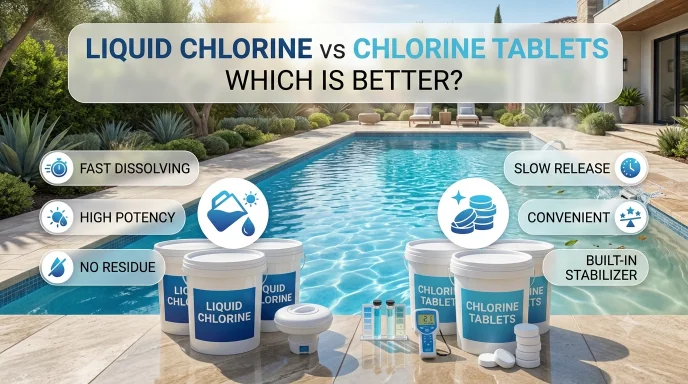
Choosing the right swimming pool sanitizer is one of the most critical decisions a pool owner faces. While there are several methods to keep water safe, the classic debate always comes down to liquid chlorine vs chlorine tablets. Both options effectively eliminate pathogens and bacteria, but they behave quite differently once added to your water. Selecting the wrong type can inadvertently disrupt your pool water chemistry, resulting in cloudy water or expensive chemical corrections. Understanding these differences ensures your pool stays clean, clear, and perfectly balanced.

What Is Liquid Chlorine?
Liquid pool chlorine—chemically known as sodium hypochlorite—is a non-stabilized liquid pool chlorine solution typically featuring a strength of 10% to 12.5%, which is significantly stronger than household bleach.
- Composition: Sodium hypochlorite mixed with water. It has a high pH of around 11 to 13.
- Advantages: It disperses instantly throughout the pool, leaves no residual byproduct scale, and does not raise stabilizer levels. It is highly effective for large-scale dosing and routine pool shocking.
- Disadvantages: Liquid chlorine has a short shelf life, losing up to 50% of its potency within a few weeks of storage. Because it is bulky and heavy, transportation requires significant physical effort.
- Best Uses: Excellent for quick sanitation adjustments, shocking heavily used pools, and routine maintenance in commercial settings.
What Are Chlorine Tablets?
Tablet chlorine (typically sold as 3-inch pucks) consists of stabilized chlorine, most commonly Trichloro-s-triazinetrione (trichlor).
- Types: Standard slow-dissolving trichlor tablets (containing stabilizer) and less common calcium hypochlorite (cal-hypo) tablets.
- Advantages: Incredibly convenient and easy to use. Placed inside a floating dispenser, skimmer basket, or automatic inline chlorinator, they dissolve slowly to provide a steady, continuous stream of pool chlorine.
- Disadvantages: Because trichlor tablets contain roughly 50% to 55% cyanuric acid by weight, continuous use causes stabilizer levels to continually climb, eventually leading to chlorine lock. They also feature a low pH (~2.8), which can lower your total alkalinity over time.
- Best Applications: Ideal for routine, low-maintenance sanitizing in residential pools, especially when pool owners are away for extended periods.
Liquid Chlorine vs Chlorine Tablets: Comparison Table
To help you choose the best pool chlorine for your specific routine, this breakdown highlights how both varieties compare across core maintenance categories:
Which One Should You Choose?
The right choice depends heavily on your pool type, usage habits, and how much time you want to spend managing pool chemicals.
- Residential Pools: A hybrid approach works best. Use chlorine tablets for baseline, day-to-day convenience, but switch to liquid chlorine when you need to shock the pool without elevating your stabilizer levels.
- Commercial Pools: Liquid chlorine is generally preferred due to its lower cost at scale and the absolute necessity to prevent cyanuric acid buildup under constant public operation.
- Saltwater Pools: Liquid chlorine is an exceptional backup choice to quickly boost sanitizer levels when a saltwater chlorine generator cannot keep up during intense heatwaves.
- High-Use Pools: Liquid chlorine is superior here, as it allows rapid sanitation delivery without long-term chemical side effects.
Explore our comprehensive selection of sanitizers on our dedicated Pool Chlorine Product Page to find the perfect fit for your setup.
Expert Tips
To get the most out of your pool regimen, never add chlorine tablets directly into your skimmer basket if your pump turns off for long periods. The tablets will continue to dissolve, creating a highly concentrated, acidic chlorine pocket that can corrode your pool plumbing and pump seals upon restart. Instead, utilize a dedicated inline chlorinator or a floating dispenser.
Featured Snippet & AEO Answers
Is liquid chlorine better than tablets?
Liquid chlorine is better for rapid sanitization, shocking, and preventing cyanuric acid buildup because it is unstabilized. However, chlorine tablets are superior for daily convenience and maintaining a slow, steady release of sanitizer without manual pouring.
Which chlorine lasts longer?
Chlorine tablets last longer both in storage and in the pool. In storage, tablets remain stable for years if kept dry, whereas liquid chlorine degrades within weeks. In the water, tablets dissolve slowly over several days, providing extended sanitation.
Which chlorine is cheaper?
Liquid chlorine is generally cheaper per application and has a lower upfront cost. While chlorine tablets offer excellent convenience, they carry a premium price tag per pound due to manufacturing, processing, and stabilization packaging.
Which chlorine is easier to use?
Chlorine tablets are significantly easier to use. They can be placed inside an automatic chlorinator or floater to dissolve slowly over a week, whereas liquid chlorine requires heavy lifting, precise measuring, and frequent manual additions to the pool.
Frequently Asked Questions (FAQs)
1. Can I use liquid chlorine and tablets at the same time?
Yes, combining both is a highly effective maintenance strategy. You can use chlorine tablets in a floater to provide a steady baseline sanitizer level and add liquid chlorine weekly or after heavy usage to shock the pool.
2. Does liquid chlorine raise cyanuric acid (CYA) levels?
No, liquid chlorine is entirely unstabilized and contains zero cyanuric acid. It will not raise your CYA levels, making it the perfect option if your pool stabilizer levels are already high.
3. Why do chlorine tablets lower my pool's pH?
Most chlorine tablets are made of trichlor, which is highly acidic with a pH of roughly 2.8. Continuous use will gradually lower your pool's total alkalinity and pH, requiring you to add a pH increaser like soda ash.
4. How long does liquid chlorine take to mix into the pool?
Liquid chlorine mixes very rapidly. If your pool pump is running and providing good circulation, the liquid sanitizer will distribute evenly throughout the pool water within 15 to 30 minutes.
5. How should I store liquid chlorine to prevent it from degrading?
To maximize the shelf life of liquid chlorine, store the containers in a cool, dry, and dark environment out of direct sunlight. Ensure the caps are tightly sealed and stored upright to prevent dangerous leaks.
Conclusion
Neither option is universally superior; rather, they serve different maintenance styles. Liquid chlorine offers immediate action without chemical buildup, while chlorine tablets deliver unmatched daily convenience. Striking the right balance between these two powerful tools keeps your pool pristine and functional. For professional guidance and top-tier chemical supplies, check out the options at Pearl Water to discover the ideal solutions for your backyard oasis.