Sign up with Google
 Sign in with Zoho

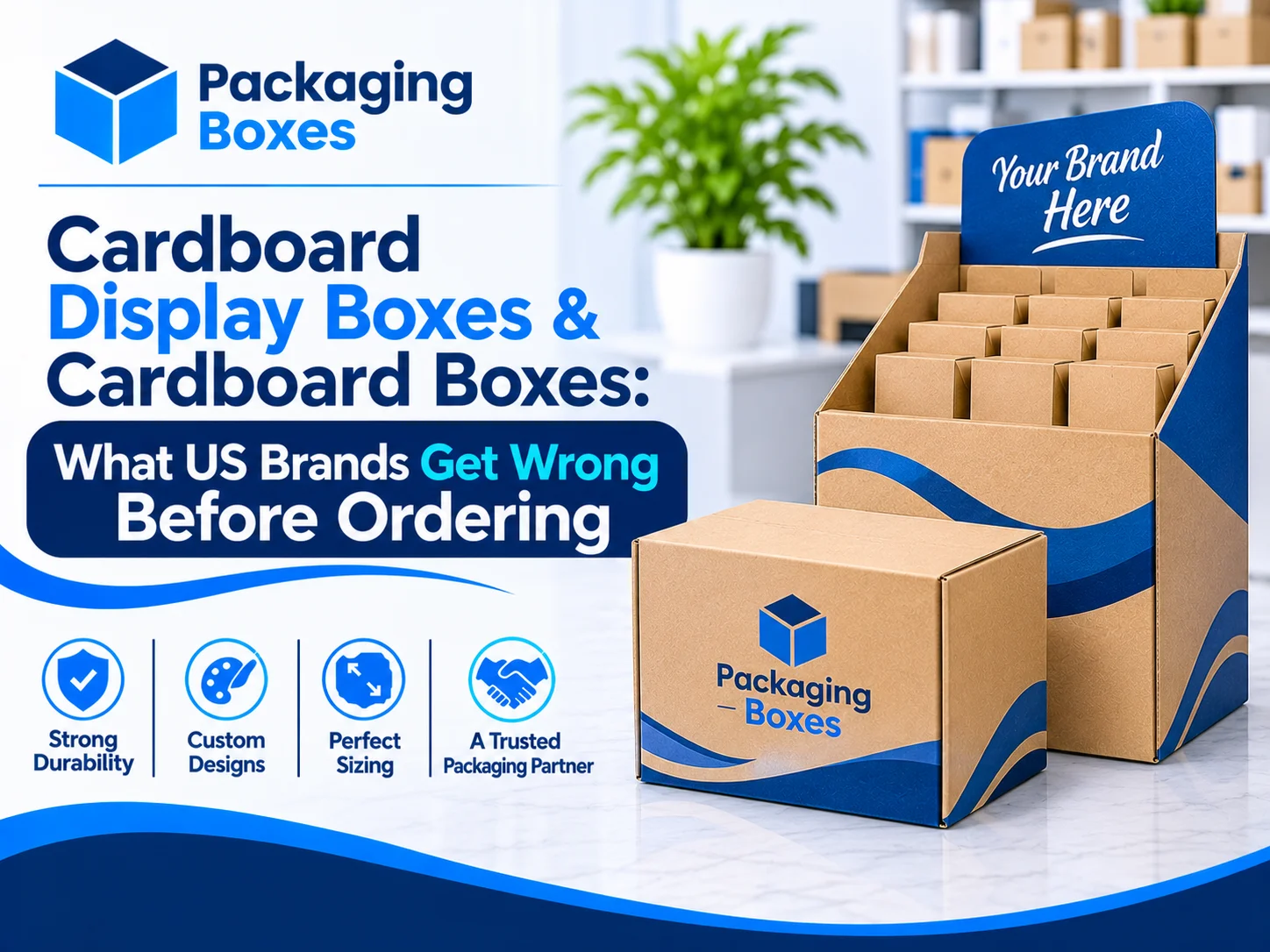
A brand sets up a counter display at a retail partner. Two weeks later, the shelf sags, the header card tilts forward, and the product looks abandoned. The box didn't fail in shipping. It failed on the shelf.
That's the thing most US brands don't think about until it happens: cardboard display boxes and regular cardboard boxes are built for different jobs. A display box has to hold its shape while customers pull product out of it, day after day. A shipping box has to survive a parcel network. Use one for the other, and something breaks.
Here's the thing: most suppliers sell you on price per unit and skip the structural conversation. That's backwards. The structure decides whether the box works.
At Packaging Boxes, we supply both lines to US sellers who need flexibility-no minimum order, 4–6 day turnaround, and free design support. Before you order from anyone, here's what actually matters.
Cardboard Display Boxes: The Shelf Is a Harsher Environment Than the Truck
A counter display or shelf-ready tray sits in a retail environment for weeks. Customers grab products. Staff restock. The box gets pushed, turned, and refilled. If the structure is flimsy, it looks worn out before the product sells.
The structure has to hold under repeated handling. E-flute corrugated or heavy SBS paperboard holds up to restocking. A thin folding carton tray sags after the second refill. I've seen brands save a few cents per unit on display trays and lose the retail placement because the display looked shabby by week three.
The header card is a structural element, not decoration. A header card that tilts forward looks broken. The fold or tab that holds it upright needs to be spec'd for the weight of the card and any hanging product. If you're hanging the display on a pegboard, the hang tab needs reinforcement-a single-layer cardboard tab tears under the weight of a full tray.
Depth matters for restocking. A tray that's too shallow lets product fall forward. Too deep, and the front product hides at the back. Match the tray depth to the product footprint, plus a little clearance so staff can refill without fighting the box.
Windows and cutouts sell. A display box that shows the product through a cutout or window gets more attention than a closed box. Just confirm the cutout doesn't weaken the structure. Cutouts near corners or along fold lines are where displays fail first.
Cardboard Boxes: The Flute and the Fit Decide Everything
Regular cardboard boxes live or die on two specs: the flute grade and the internal fit.
The flute is the strength spec. E-flute is thin and dense-good for retail packaging and mailers. B-flute is thicker and stronger for stacking. Double wall handles heavy or fragile goods. For most DTC brands, E-flute with a proper insert is the right call. For heavier products or bulk shipments, B-flute or double wall.
The fit is the protection spec. A box that's too big lets the product slide and take impact. Too small, and the product presses against the walls, and the corners crush. Measure the product, add the insert thickness, and spec the box to that. Not "about right." Exact.
The drop test nobody runs. Pack the box with the real product and the real insert. Drop it from waist height onto a corner, then a flat face. If the product shifts, the insert is wrong. If the corner dents badly, the flute is too light. Do this with a physical sample before you approve production. A 3D mockup can't tell you how the box handles impact.
Tape and closure matter more than you think. A box that's hard to tape slows down fulfillment. A box that doesn't stay closed in transit is a return waiting to happen. Test the closure with the tape you actually use.
Materials: Corrugated vs. Folding Carton vs. Rigid
Corrugated cardboard has flutes between liners. It absorbs shock. This is the shipping material and the display material for anything that needs structure.
Folding carton board is single-layer paperboard. It's lighter and cheaper. Fine for retail packaging inside a display, not fine as a shipping box on its own.
Rigid chipboard is thick, non-bending board wrapped in printed paper. It's the premium retail material for gift sets and shelf displays. It doesn't ship well without an outer box.
For cardboard display boxes, corrugated is usually the right call. For a premium shelf display where structure and finish matter more than shipping, rigid works. For the shipping box that protects the display on the way to the retailer, corrugated is non-negotiable.
Skip foam for eco-conscious brands. Pulp and molded fiber inserts pair well with cardboard and recycle curbside. Cardboard box inserts do the structural work; the pulp does the cushioning.
Printing on Cardboard: What Reads and What Doesn't
Cardboard isn't white paper. Brown kraft board shifts ink colors. White corrugated gives accurate color but costs more and shows scuffs.
Dark colors print well on brown. Navy, black, deep green-these read cleanly. Light colors need a white base layer.
Simple typography beats photography. Full-color images look muted on brown board. Solid colors, line art, and bold type look intentional. Design for the material, not for a white page.
Inside printing is underrated. A printed message or logo inside the box looks premium and costs less than full exterior coverage. For display boxes, inside printing doesn't matter. For shipping boxes, it does.
Why US Brands Order From Packaging Boxes
I'll be direct because you can get "premium quality" from anyone's homepage.
No minimum order. Testing a new display design or a seasonal shipping box? Order a small run and see how it performs before committing to inventory you haven't validated. No MOQ cardboard display boxes and no minimum cardboard boxes change the math for small brands.
4–6 day standard turnaround. Retail launches, seasonal drops, restocks-you can't wait weeks for packaging. Our timeline is on the quote.
Free dieline and digital proof. Send your dimensions. Get a dieline you can drop artwork into. Approve a 3D mockup before anything prints. No surprise setup fees.
Free shipping across the USA. Cardboard is bulky, and shipping costs add up fast. Cardboard display boxes with free shipping and cardboard boxes with free shipping keep the landed cost predictable.
Free design support. Can't visualize the finished box? Our team provides templates, mockups, and revisions before production starts.
Reliable customer support. You'll have questions about flute grades, display structure, and printing. Our team answers them quickly.
The trade-off? We're not the cheapest per-unit at massive volumes. High-volume buyers with rigid specs can find lower quotes elsewhere. For brands doing small-to-mid runs, the flexibility usually beats the per-unit savings.
The Detail That Saves You Money: Structural Testing
Most display box failures happen at the fold lines and corners. Most shipping box failures happen because the product moves.
For display boxes: test the tray with the product in it. Pull products out. Restock. Does the tray hold its shape? Does the header card stay upright? If it sags, the board is too light.
For shipping boxes: do the drop test. Corner drop, flat drop. If the product shifts or the corner dents, the insert or flute is wrong.
These tests aren't glamorous. But they're the difference between a display that sells and one that looks abandoned.
Quick Answers to What US Brands Actually Ask
What's the difference between cardboard display boxes and cardboard boxes?
A cardboard display box is built for retail shelves-sturdy, stackable, with a header card or cutout for visibility and restocking. A cardboard box is built for shipping and product protection. Many brands need both, and they're spec'd differently.
Are cardboard display boxes strong enough for retail?
Yes, if the board grade matches the product weight and restocking frequency. E-flute corrugated or heavy SBS holds up. Thin folding carton board sags after a few refills.
Can I order a small batch of cardboard display or shipping boxes?
With Packaging Boxes, yes. No minimum order. Test a new display design or limited launch without tying up cash in inventory.
How long does production and shipping take?
4–6 business days standard turnaround after proof approval, plus free shipping anywhere in the USA. Rush options available if you ask upfront.
Bottom line: A display box that sags on the shelf and a shipping box that crushes in transit fail for different reasons-but both cost you money. Don't order from a supplier who won't show you a dieline, won't give you a proof, and won't tell you the turnaround before you pay.
Packaging Boxes does all three. Send your product dimensions and your retail setup. We'll spec the display box and the shipping box-separately-and get you a quote. No minimum, no pressure.