Sign up with Google
 Sign in with Zoho

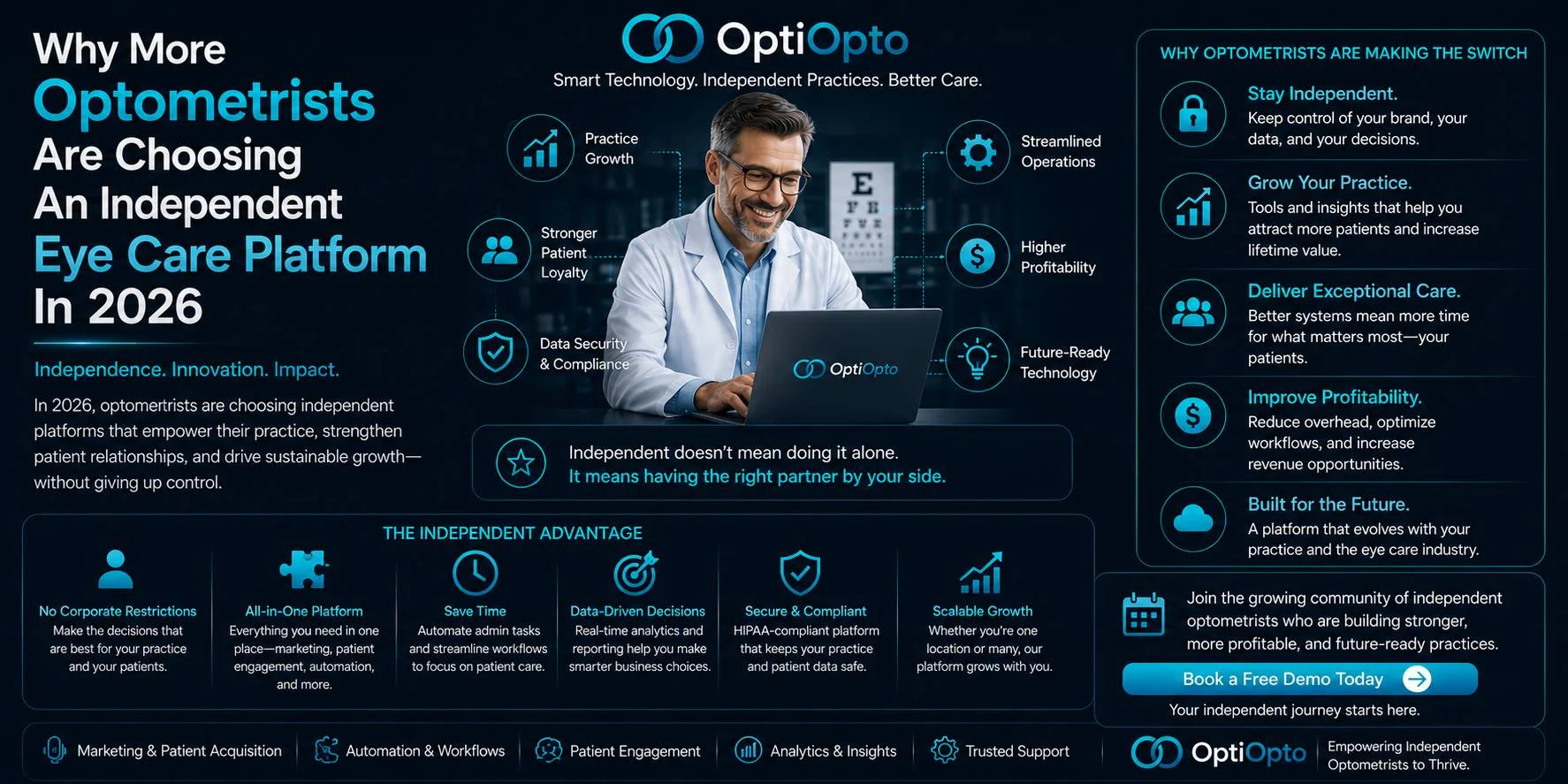
Why are more private optometry owners rechecking the tools behind their practice growth? Many independent practices want better purchasing terms, stronger patient marketing, fewer vendor headaches, and useful business support without giving up ownership control. That is where an independent eye care platform is getting more attention in 2026.
This page explains why optometrists are comparing platform-based support models, what they expect from modern eyecare business tools, and how vendor management, AI-backed marketing, rebates, loyalty programs, and patient growth systems can help independent practices compete with larger groups.
Why Independent Optometry Practices Are Rethinking Growth Support
Independent practices carry two jobs at once. They provide clinical care, and they also manage retail sales, billing, vendors, payments, patient communication, and recall activity. That second part often takes more time than owners expect.
Staff members chase orders, check invoices, follow up on payments, manage vendor calls, and still try to keep patients returning. When these tasks stay scattered, the practice loses time and margin.
That is why the independent model for eye care now feels more relevant. It gives practice owners a way to keep their identity while using a stronger business infrastructure. The goal is not to turn a private clinic into a chain location. The goal is to make the back end work with less friction.
The OptiOpto membership platform fits this discussion because it supports independent eye care professionals who want help without losing business freedom.
What Practice Owners Compare Before Joining A Platform
Optometrists usually compare platforms through practical business pressure, not broad promises. They want to know where the platform saves time, protects margins, and helps the practice grow.
This is the comparison that matters. A platform must help the owner run a better practice, not just add another dashboard.
How AI Marketing Is Changing Patient Growth
Marketing has become harder for small practices. A basic website and occasional email no longer do enough. Patients compare clinics online, delay exams, forget recalls, and often book with the provider who communicates first.
An independent eye care platform can help by connecting marketing activity to patient behavior. AI-backed tools can support recall campaigns, patient segmentation, review growth, appointment reminders, and local visibility. The benefit is not only more ads. It is better timing, cleaner messaging, and stronger follow-up.
For an optometry owner, that can mean fewer missed opportunities. A patient who has not booked an annual exam needs a different message than a patient who recently bought glasses. A family with multiple prescriptions needs another reminder. Smarter marketing handles these details with more accuracy.
Why Vendor Management Has Become A Bigger Decision Point
Vendor work can quietly drain a practice. Frames, lenses, lab orders, payments, rebates, invoices, and product updates often move through different channels. When every vendor has a separate process, staff lose time, and mistakes become more likely.
The OptiOpto membership platform addresses these issues through vendor orders, billing, payments, pricing access, and rebate support in one business framework. That setup can appeal to owners who want cleaner purchasing without giving up choice.
Practices often look for fewer vendor steps, better invoice visibility, member-based pricing, rebate access, and less back-office pressure. This scenario is where platform value becomes practical. It removes small delays that repeat every week.
How Better Margins Support Practice Independence
Independent optometry does not depend only on patient volume. It also depends on margin control. A practice can stay busy and still feel pressure if product costs, vendor terms, admin waste, and missed rebates reduce profit.
That is why many owners now compare platforms through financial discipline. Exclusive pricing, purchasing power, rebate access, and billing support can help practices protect more revenue from the same daily activity.
Such an approach does not replace good clinical care or staff training. It supports them. When the business side works better, owners can focus more on patient experience, eyewear sales, scheduling, and long-term retention.
Why Patient Engagement Tools Now Matter More
Patients often drift away for ordinary reasons. They miss an annual exam, forget a prescription, or ignore a paper reminder after a busy week. For a practice owner, those small delays can turn into lost appointments and weaker repeat visits.
Engagement tools help practices stay in touch without making staff chase every patient by hand. A timely recall note, eyewear follow-up, or loyalty message can bring patients back while keeping communication useful, not excessive.
Conclusion
Optometrists are choosing platform support because practice ownership now needs more than clinical skill. Owners need smarter marketing, cleaner vendor control, stronger purchasing terms, better patient retention, and less administrative drag. The right support model should protect independence while improving the business systems behind daily care. For practices reviewing an independent eye care platform, careful consulting before joining can make the decision more useful and financially sound.