Sign up with Google
 Sign in with Zoho

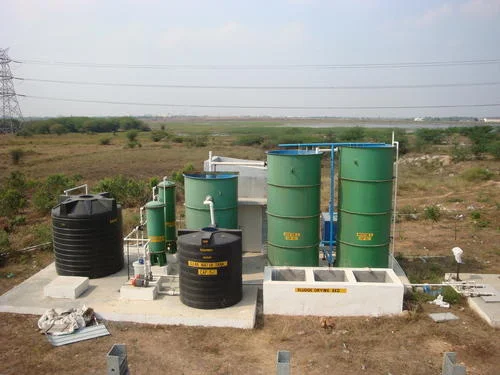
Artificial intelligence is starting to change how sewage treatment plants are monitored, controlled and maintained.
The useful part isn't replacing the treatment process with “AI.” It's giving an STP a better way to interpret operating data, predict what may happen next and help operators adjust aeration, dosing, equipment operation and other process variables before problems become obvious.
For anyone evaluating an STP plant manufacturer, that distinction matters. A smart control system cannot compensate for poor process design, undersized equipment or unreliable instrumentation.
It can make a properly engineered plant considerably smarter.
What Does AI Actually Do in a Sewage Treatment Plant?
AI in wastewater treatment uses plant data to identify relationships and operating patterns that are difficult to capture with fixed rules alone.
That data might come from flow meters, level instruments, dissolved oxygen sensors, pH sensors, online water-quality instruments, equipment status signals and historical operating records.
Machine-learning models can then be developed for tasks such as predicting effluent conditions, detecting abnormal equipment behaviour or identifying operating settings that meet treatment objectives with lower resource consumption.
Recent reviews describe applications including real-time monitoring, soft sensing, process optimization, fault detection, fouling management and predictive maintenance.
In simplified form, an AI-assisted STP looks like this:
Wastewater → Treatment Process → Sensors → Operational Data → AI/ML Model → Prediction or Recommendation → Operator/Control System
The biological and physical treatment still does the actual work.
AI helps decide how that process should be operated.
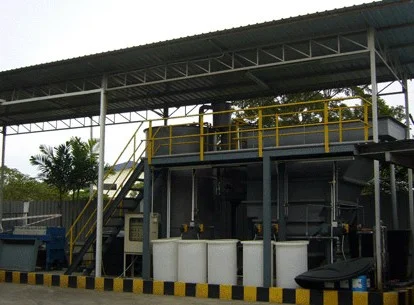
1. AI Can Help Predict Treated-Water Quality
A conventional STP operator knows what is happening from instrument readings, laboratory tests and experience.
AI adds another possibility: prediction.
Instead of looking only at the current condition of the plant, machine-learning models can analyse historical and current operating variables and estimate future or difficult-to-measure treatment outcomes.
Researchers have developed models for predicting parameters including ammonia, nitrogen, phosphorus, COD and other treatment indicators. A 2026 study, for example, developed a multi-pollutant prediction model using three years of daily wastewater-treatment-plant data.
This becomes interesting operationally.
If the system identifies a developing process change before the final effluent is affected, the operator has an opportunity to investigate the cause rather than waiting for a poor laboratory result.
But there is an obvious catch: bad data produces bad predictions.
Sensor accuracy, data quality and plant-specific validation remain major limitations when applying AI to real wastewater facilities.
2. Aeration Is One of AI's Most Practical Targets
Walk into a biological STP and the blower system deserves attention.
Microorganisms in aerobic biological treatment require oxygen. But simply supplying more air is not a smart control strategy.
The oxygen requirement changes with the wastewater load and biological conditions.
This is a good problem for data-driven control.
A 2024 Journal of Water Process Engineering study developed an AI-based model to predict effluent quality and optimize aeration. In that specific study, the optimized model reduced airflow by 30.9% compared with the actual operating data while addressing effluent-quality requirements. That number belongs to that plant and model; it should not be treated as a universal energy-saving promise.
That's an important distinction for buyers.
An STP plant manufacturer shouldn't promise that adding AI will automatically cut your blower electricity by a particular percentage.
The real engineering question is:
Can the control system determine how much aeration the process actually needs under changing loads?
That is far more useful than putting an “AI-powered” sticker on the control panel.
3. AI Can Make Chemical Dosing More Responsive
Chemical dosing is another area where fixed operation can become inefficient.
Wastewater characteristics don't remain identical throughout the day. Yet a system operated at a fixed dosing rate can continue feeding chemicals according to its setting until someone changes it.
AI-based optimization can use process data to recommend or control dosing according to actual conditions.
This isn't purely theoretical. A 2025 study reported full-scale municipal wastewater treatment using real-time sensor/probe data, IoT data transfer and machine-learning optimization across aeration and chemical dosing processes. The results were specific to that installation, but they demonstrate that AI-driven control has moved beyond simulation in some wastewater applications.
The goal isn't “use AI.”
It's simpler:
Dose what the process requires, when it requires it.
4. AI Can Spot Equipment Problems Before Failure
A blower doesn't wake up one morning and decide to fail.
Performance can deteriorate first.
Pressure changes. Airflow changes. Power consumption changes. Vibration or temperature can change, depending on the equipment and instrumentation installed.
Traditional maintenance might be reactive — repair the machine after something goes wrong — or preventive, where maintenance happens at predetermined intervals.
Predictive maintenance adds another layer.
Machine-learning systems can analyse equipment operating data and look for patterns associated with deterioration or abnormal operation.
A 2025 study specifically investigated explainable AI for wastewater-treatment aeration systems. It modelled pressure-loss and diffuser-fouling scenarios and used machine learning for early fault detection. The study used the BSM2 simulation environment, so its reported detection performance should not be presented as guaranteed real-plant performance.
For an STP operator, the practical idea is still valuable:
Don't wait for a blower, pump or aeration system to stop before asking whether something was changing.
5. AI Can Help an STP React to Changing Sewage Loads
Real sewage isn't a laboratory feed with perfectly constant characteristics.
Flow and pollutant loading change.
A residential development, hotel, hospital, commercial complex and industrial facility can each have very different operating patterns.
That's one reason fixed operating settings aren't always ideal.
AI and machine-learning models are particularly interesting here because wastewater treatment involves nonlinear relationships between influent conditions, biological processes, operating variables and effluent quality. Current research is increasingly moving from simple prediction toward optimization and supervisory control.
Imagine a plant receiving a higher load than its normal pattern.
The useful AI system isn't one that tells the operator:
“High load detected.”
A conventional alarm can do that.
The more interesting system estimates what that load means for the treatment process and helps determine what operating adjustment is appropriate.
That's a much higher bar.
6. AI Can Support MBR and Other Advanced STP Technologies
AI isn't tied to one biological process.
STPs can use technologies including MBBR, SBR and MBR, each with different process configurations and control requirements.
In an MBR, for example, membrane performance introduces another set of variables. Machine-learning research includes applications for fouling management as well as process monitoring and optimization.
This is where the discussion around smart STPs becomes more interesting.
AI doesn't need to control the entire treatment plant to be useful.
A manufacturer or operator can apply data-driven models to a particular high-value problem — aeration, membrane operation, effluent prediction or equipment health — rather than attempting full autonomous operation from day one.
7. AI + IoT + PLC/SCADA Is More Useful Than AI Alone
AI needs information.
That makes instrumentation and automation architecture just as important as the algorithm.
A practical smart-STP architecture might include:
Field instruments and sensors
↓
PLC / data acquisition
↓
SCADA / historical plant data
↓
AI or machine-learning model
↓
Prediction / optimization
↓
Operator decision or automated control
The exact architecture depends on the plant.
Modern research increasingly discusses AI together with IoT, SCADA/PLC integration, digital twins and intelligent supervisory control rather than treating the algorithm as an isolated tool.
And this exposes one of the biggest problems with the phrase “AI-powered STP.”
What exactly is AI-powered?
The blower control?
Water-quality prediction?
Chemical dosing?
Predictive maintenance?
Alarm analysis?
An AI dashboard that doesn't influence the process?
Those are very different systems.
Can AI Run an STP Without an Operator?
That isn't where most real STPs are today.
AI can provide predictions, recommendations, anomaly detection and, in appropriately engineered systems, closed-loop optimization. But fully autonomous plant-wide control still faces practical challenges.
A recent municipal-wastewater review identifies sensor accuracy, data quality, cross-plant validation, cybersecurity, interpretability and integration with existing SCADA/PLC systems among the issues that still need work. It also describes autonomous plant-level control as insufficiently developed.
So the better model today is:
Operator + automation + reliable data + targeted AI.
Not operator versus AI.
Can AI Fix a Poorly Designed STP?
No.
This is probably the most important point in the article.
AI doesn't replace hydraulic design.
It doesn't replace biological-process design.
It doesn't turn an undersized aeration tank into a correctly sized one.
It doesn't compensate for inappropriate technology selection, poor-quality equipment, missing instrumentation or neglected maintenance.
If the incoming sewage characteristics, hydraulic loading and treatment objectives haven't been properly considered, adding machine learning later doesn't solve the underlying engineering problem.
The hierarchy should be:
Good process design → suitable equipment → proper instrumentation → reliable automation → quality operating data → AI optimization
Not the other way around.
What Should You Ask an STP Plant Manufacturer About AI?
Don't start with:
“Does your STP have AI?”
Start with what you actually need the system to accomplish.
Ask what parameters will be measured online. Ask which instruments are required and how frequently data is collected. Find out whether the system only displays information or actually predicts process behaviour.
Then go deeper.
What equipment can the control system adjust?
How does it communicate with the PLC and SCADA?
What happens when a sensor fails?
Can operators override automated decisions?
How is the model trained and validated?
Does the system provide understandable alarms and recommendations, or does it simply output a number?
And one question tends to expose exaggerated AI claims quickly:
What exactly does the AI control that a conventional PLC doesn't?
A good engineering answer should be specific.
The Future STP Will Be More Predictive, Not Just More Automated
Traditional automation is largely rule-based:
If X happens, do Y.
AI introduces another capability:
Based on what has been happening, what is likely to happen next — and what operating action makes sense?
That's the real shift.
For an STP plant manufacturer, AI therefore isn't a replacement for MBBR, SBR, MBR, blowers, pumps, membranes, dosing systems or PLC panels. It is an additional intelligence layer built around the treatment process.
Research already demonstrates applications in effluent prediction, aeration optimization, chemical dosing and predictive maintenance, while plant-wide autonomous operation still has significant engineering and validation challenges.
For a new STP project, don't start by asking how much AI the plant has.
Start with the sewage characteristics, required treated-water quality, treatment technology, equipment sizing and instrumentation.
Then ask where better prediction and smarter control would actually improve the plant.
That is where AI earns its place.