Sign up with Google
 Sign in with Zoho

A hernia develops when an internal organ or tissue pushes through a weak area in the surrounding muscle or connective tissue. It can appear in the abdomen, groin, or around a previous surgical incision. Although some hernias cause only mild discomfort initially, others may become painful or lead to complications that require prompt medical attention. Understanding the symptoms, diagnosis, and available treatment options can help patients make informed decisions about their health.
For people exploring Laparoscopic hernia treatment and surgery in Abu Dhabi ( علاج وجراحة الفتق بالمنظار في أبوظبي ), understanding minimally invasive surgical techniques is an important first step. Laparoscopic hernia repair uses small incisions, a camera, and specialized instruments to repair the weakened area. Bone Care One Day Surgery Center in Abu Dhabi provides a point of contact for patients seeking information about available medical services and surgical consultations. Patients should consult a qualified surgeon to determine the most appropriate approach for their specific condition.
What Is a Hernia and Why Does It Develop?
A hernia occurs when tissue pushes through a weakened section of muscle or connective tissue. It may develop gradually or become noticeable after physical strain. Hernias do not always cause immediate pain, but they can produce a visible bulge or discomfort during daily activities.
Several types of hernias are commonly diagnosed:
- Inguinal hernia: Develops in the groin and is more common in men.
- Femoral hernia: Occurs near the upper thigh and groin.
- Umbilical hernia: Appears near the belly button.
- Incisional hernia: Develops through a weakened area of a previous surgical incision.
- Hiatal hernia: Occurs when part of the stomach moves through the diaphragm into the chest.
Factors that may contribute to hernia development include muscle weakness, ageing, previous abdominal surgery, pregnancy, chronic coughing, constipation, and repeated physical strain. However, the cause can vary depending on the type of hernia and the individual's health history.
What Are the Common Symptoms of a Hernia?
Hernia symptoms differ depending on the location, size, and severity of the condition. Some patients notice a bulge that becomes more prominent when standing, coughing, or lifting objects. Others experience discomfort without an obvious visible swelling.
Common signs include:
- A noticeable lump in the abdomen or groin.
- Pain or pressure when bending, coughing, or lifting.
- A feeling of heaviness in the affected area.
- Discomfort during prolonged standing or physical activity.
- Swelling that becomes less noticeable when lying down.
Not every hernia produces symptoms, and other medical conditions can cause similar complaints. A proper clinical assessment is necessary to establish the diagnosis.
Important: Sudden, severe pain, vomiting, abdominal swelling, difficulty passing stool or gas, or a hernia bulge that becomes hard, tender, or cannot be pushed back requires urgent medical assessment. These symptoms may indicate an incarcerated or strangulated hernia, which can be a medical emergency.
How Is a Hernia Diagnosed?
Diagnosis generally begins with a review of symptoms, medical history, and a physical examination. The doctor may examine the affected area while the patient stands, coughs, or changes position to identify a bulge or weakness.
Depending on the suspected hernia and the findings, additional investigations may be recommended. An ultrasound can help assess certain abdominal or groin hernias. A CT scan may be useful when the diagnosis is unclear, the hernia is complex, or complications are suspected.
The surgeon also considers the hernia's size, location, symptoms, previous operations, and the patient's overall health before recommending treatment.
Some hernias can be monitored under medical supervision, particularly when symptoms are minimal and the risk profile allows it. Others may require surgical repair to relieve symptoms or prevent potential complications. The appropriate decision should be made through an individualized consultation.
How Does Laparoscopic Hernia Surgery Work?
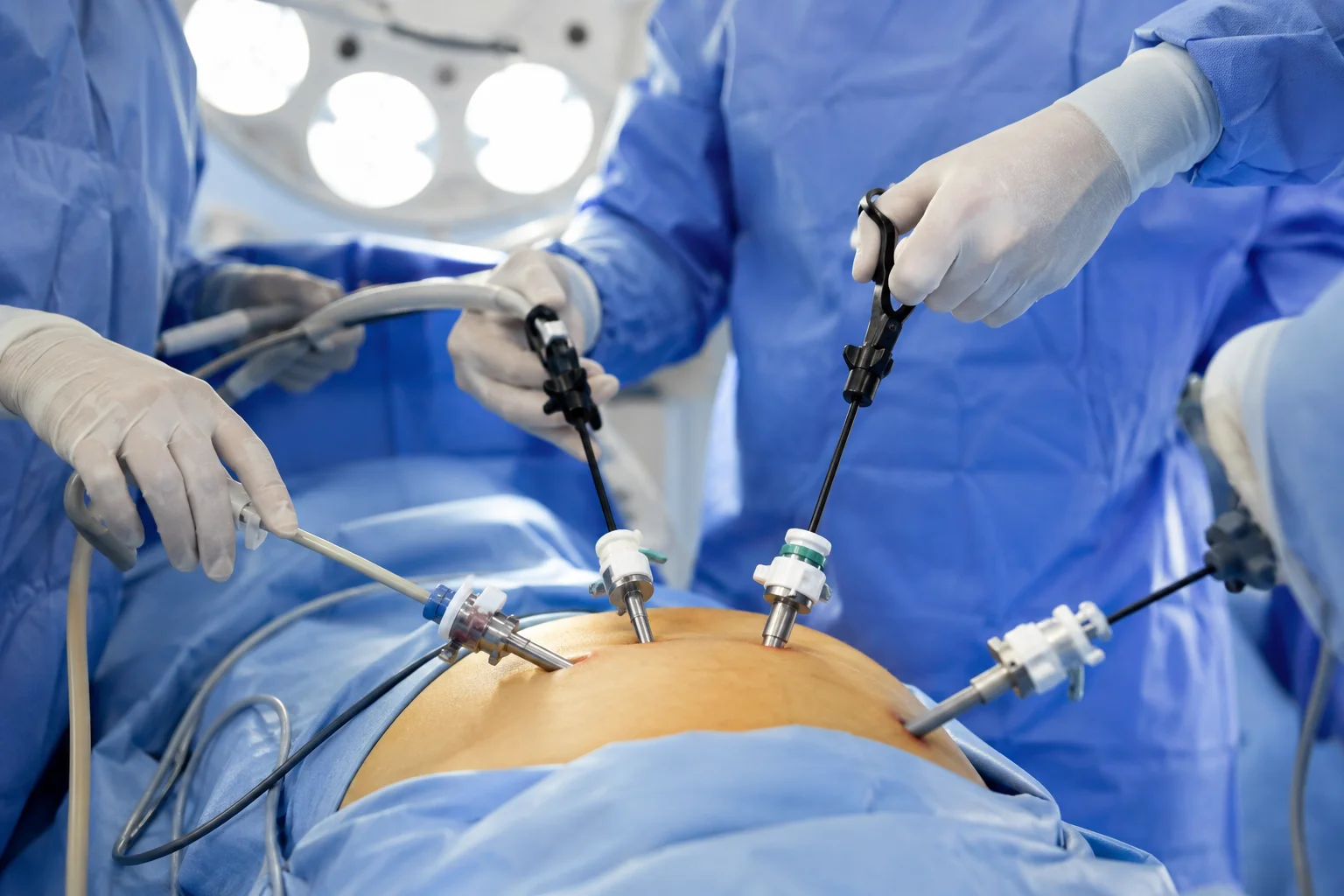
Laparoscopic hernia repair is a minimally invasive surgical technique that uses a small camera and specialized instruments inserted through small incisions. The camera provides images that help the surgeon examine the affected area and repair the defect.
Although the exact technique varies according to the hernia type, the procedure generally involves the following stages.
1. Preoperative assessment
The medical team reviews the patient's medical history, current medications, allergies, and diagnostic findings. Instructions about fasting and medication adjustments are provided when required.
2. Anesthesia
Laparoscopic hernia repair is commonly performed under general anesthesia. The appropriate anesthetic approach depends on the procedure and the patient's clinical circumstances.
3. Small incisions
The surgeon creates small openings to introduce the camera and surgical instruments. The abdomen may be gently inflated with carbon dioxide to create working space during certain laparoscopic procedures.
4. Hernia repair
The surgeon returns the protruding tissue to its appropriate position and repairs the weakened area. Depending on the type of hernia and the chosen technique, surgical mesh may be used to reinforce the repair.
5. Recovery and monitoring
After surgery, the patient is monitored as the effects of anesthesia wear off. The healthcare team provides instructions about pain management, wound care, movement, and follow-up appointments.
Not every hernia is suitable for laparoscopic repair. The decision depends on the hernia's characteristics, previous surgical history, overall health, and the surgeon's assessment.
What Are the Benefits of a Minimally Invasive Approach?
For suitable patients, laparoscopic surgery may offer several advantages compared with certain open surgical techniques. These can include smaller incisions, less wound discomfort, and a shorter recovery period in some circumstances.
Potential benefits include:
- Smaller surgical incisions.
- Reduced wound-related discomfort for some patients.
- Earlier return to routine activities in suitable cases.
- The ability to assess and repair certain hernias on both sides during the same operation.
- Potentially improved cosmetic results because the incisions are smaller.
However, outcomes vary according to the procedure, the patient's health, and the type of hernia. Laparoscopic surgery is not automatically the best choice for every patient.
Potential risks include bleeding, infection, injury to surrounding structures, blood clots, recurrence, and complications associated with anesthesia or surgical mesh when used. Patients should discuss these risks, expected outcomes, and alternative techniques with their surgeon before proceeding.
How Can Patients Prepare for Hernia Surgery?
Preparation can help patients understand the procedure and support a smoother recovery. Before surgery, the medical team may review existing conditions, medications, allergies, and previous operations.
Patients should follow the hospital's instructions about fasting and medication use. They should also arrange transportation home if required and ensure they understand the postoperative care plan.
Before the procedure, consider asking the surgeon:
- Which surgical technique is suitable for my hernia?
- Will surgical mesh be required?
- What are the potential risks and benefits?
- How long might recovery take?
- When can I return to work, exercise, and lifting?
- What symptoms should prompt urgent medical attention?
Having these questions answered can help patients set realistic expectations and participate more confidently in treatment decisions.
What Should You Expect During Recovery?
Recovery depends on the type of hernia, the surgical technique, and the patient's general health. Some patients return to light activities relatively quickly, while others need more time before resuming work or strenuous exercise.
Following surgery, patients should keep the incision sites clean according to the instructions provided, take prescribed medicines as directed, and gradually increase activity within the recommended limits. Walking may be encouraged as part of recovery, but heavy lifting and strenuous exercise should be avoided until the surgeon confirms they are safe.
Follow-up appointments allow the medical team to assess healing and address any concerns. Increasing pain, fever, redness, wound discharge, or persistent vomiting should be reported promptly. Severe abdominal pain or signs of an obstructed or strangulated hernia require emergency evaluation.
Why Consult Bone Care One Day Surgery Center in Abu Dhabi?
Choosing the right healthcare provider involves understanding the available services, the surgeon's expertise, and the treatment options appropriate for your condition. Bone Care One Day Surgery Center in Abu Dhabi is a facility patients can contact to enquire about consultations and available medical services.
If you are considering Laparoscopic hernia treatment and surgery in Abu Dhabi, arrange a consultation with a qualified surgeon to discuss your symptoms, diagnosis, surgical options, and expected recovery. Confirm the center's current availability of the relevant specialist and procedure before scheduling your visit.
Timely evaluation and an individualized treatment plan can help patients understand their condition and make informed decisions about hernia care. By seeking appropriate medical guidance, patients can take practical steps toward safer treatment and a confident recovery.