Sign up with Google
 Sign in with Zoho

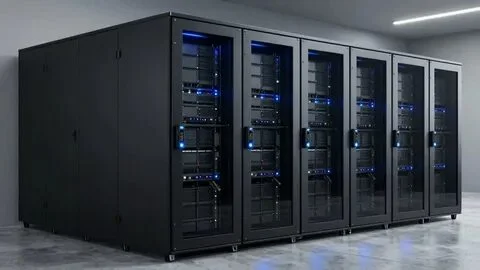
AI is changing how businesses use computing power. At the same time, virtualization helps companies run more applications on fewer physical machines. Both workloads need strong processing power, fast memory, flexible storage, and room to grow. That is where rack servers can make a real difference.
Gartner estimates worldwide server spending will reach $466 billion in 2026, with strong investment in AI-optimized systems driving much of that growth.
As AI models become larger and virtual machines handle more business tasks, companies need infrastructure that can keep up. Rack servers provide a compact and scalable way to bring these resources together. They can support demanding workloads while making better use of valuable data center space.
Read on to learn how rack servers support AI and virtualized workloads.
Why Is a Rack Server Ideal for AI and Virtualization?
A rack server is designed to fit into a standard data center rack. This lets businesses place multiple servers in an organized space while keeping computing resources easy to manage.
AI workloads often require powerful processors, large amounts of memory, GPUs, fast storage, and high-speed networking. Virtualized workloads also need strong resources because several virtual machines can run on the same physical server.
According to Red Hat's State of Virtualization report, 71% of organizations state that more than half of their IT infrastructure is virtualized, including servers, storage, networks, desktops, and GPUs. That number keeps climbing every year.
Modern rack servers can support these requirements through flexible hardware options. Businesses can select the processor, memory, storage, networking, and accelerator options that match their workloads.
More Power in Less Space
Data center space can be expensive. These servers help businesses use that space more efficiently because multiple systems can fit into a single rack.
This design becomes especially useful for AI workloads. Businesses can deploy GPU-enabled rack systems for machine learning, AI inference, analytics, and other demanding tasks without filling large areas with standalone equipment.
For virtualization, higher server density also allows organizations to run more applications within a structured infrastructure.
Flexible Hardware Supports Changing Needs
AI projects often grow over time. A business may start with basic AI applications and later need more computing power for larger models or data sets.
Rack servers make upgrades easier by supporting components such as:
- High-performance CPUs
- Large memory configurations
- NVMe, SAS, and SATA storage
- GPUs and accelerator cards
- High-speed network adapters
- PCIe expansion cards
This flexibility allows businesses to build systems around their actual workload instead of buying more hardware than they need.
How Do Servers Support Virtualized Workloads?
Virtualization allows one physical server to run multiple virtual machines. Each machine can support different operating systems, applications, or business services.
This approach can help businesses use their hardware more efficiently. For example, one physical server could host application servers, databases, testing environments, and internal business applications.
A capable rack server provides the CPU, memory, storage, and network resources needed to keep these virtual machines running.
Memory Matters for Virtual Machines
Memory is especially important when a server runs several virtual machines. Each virtual machine needs enough memory to operate without slowing down other workloads.
Modern rack systems can support high-capacity DDR5 memory. This gives businesses more room to run multiple virtual machines and memory-heavy applications on the same physical server.
Fast Storage Helps AI and Virtualization
Storage also affects performance. AI workloads may process large datasets, while virtual machines regularly read and write application data.
NVMe storage can provide fast data access for workloads that need quick response times. At the same time, SAS and SATA drives can provide additional storage capacity for other business needs.
This combination allows companies to balance speed, capacity, and cost based on their applications.
Why Do Rack Servers Work Well for AI Growth?
AI workloads can increase quickly as businesses move from testing to production. A system that works for a small AI project may not be enough when the number of users, models, or datasets increases.
Servers provide room for this growth. Organizations can add memory, storage, GPUs, networking components, or additional servers as their requirements change.
For example, Lenovo’s AI servers are designed to support demanding artificial intelligence workloads, including machine learning, deep learning, AI inference, and other accelerated computing tasks. These systems can combine high-performance processors, GPUs, memory, storage, and high-speed networking to handle the intensive demands of AI applications.
This type of server infrastructure gives organizations a way to support growing AI workloads while building a scalable foundation for future computing needs.
What Should You Look for in the Best Rack Server?
Choosing the best rack servers depends on the workload rather than simply choosing the most powerful system.
Consider these factors:
- CPU performance: Choose enough processing power for applications and virtual machines.
- GPU support: Important for AI training, inference, and accelerated computing.
- Memory: More memory helps support larger datasets and multiple virtual machines.
- Storage: Select NVMe, SAS, or SATA based on speed and capacity needs.
- Expansion: PCIe slots allow future upgrades for networking, storage, and accelerators.
- Management: Remote monitoring and management can make large server environments easier to operate.
- Reliability: Enterprise features can help reduce downtime and support continuous workloads.
The right choice depends on the size and type of your environment. A small business may need a simpler configuration, while an AI-focused enterprise may require several GPU-enabled systems.
How Rack Servers Improve Data Center Efficiency
Performance is only one part of the decision. Businesses also need to manage space, power, upgrades, and maintenance.
Rack servers provide a structured way to organize computing resources. IT teams can install multiple systems in standard racks and expand the environment as demand increases.
Modern server management platforms can also simplify monitoring and maintenance. This becomes more valuable as businesses operate larger virtualized and AI environments.
The Bottom Line
AI and virtualization both require computing infrastructure that can deliver strong performance and scale with business needs. Rack servers meet these requirements through compact designs, flexible configurations, high memory capacity, fast storage, and support for GPUs.
They also give businesses a practical way to expand their infrastructure without redesigning the entire data center. Whether the goal is running virtual machines, processing AI models, or supporting both workloads together, a well-configured rack server can provide a strong foundation for modern computing.