Sign up with Google
 Sign in with Zoho

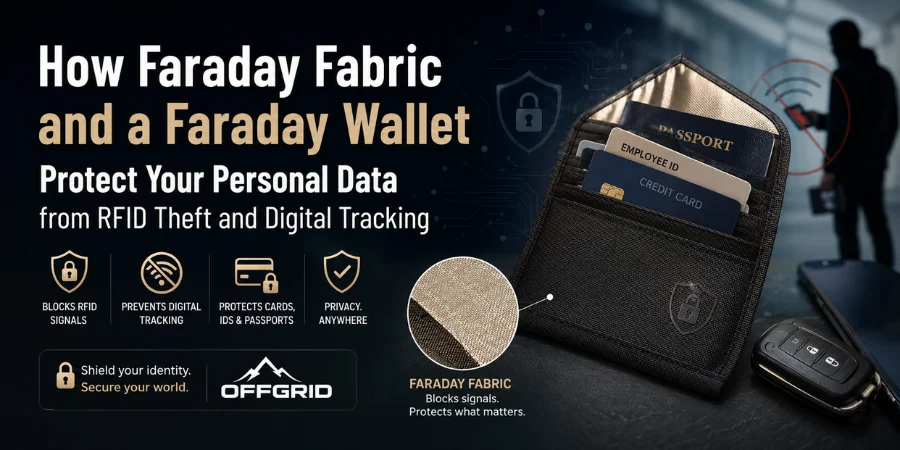
Modern life depends on connected devices, contactless payment cards, digital IDs, and wireless communication. While these technologies offer convenience, they also introduce new privacy and security risks. Criminals increasingly rely on RFID skimming, wireless interception, and digital tracking techniques to collect sensitive information without physical access to a person's belongings. This is why faraday fabric has become an essential material for people who value digital privacy. Whether it is built into a protective bag, pouch, or faraday wallet, this specialized shielding material helps block unwanted radio frequency signals and protects personal information from unauthorized access. At Offgrid, we believe digital security should be simple, practical, and reliable, making Faraday-based protection an important part of everyday life.
Quick Answer: Faraday fabric is a conductive material that blocks electromagnetic and radio frequency signals, preventing unauthorized communication between electronic devices and external scanners. A faraday wallet uses this shielding technology to protect RFID-enabled credit cards, passports, access cards, and other contactless items from digital theft and unauthorized scanning. Together, they help reduce the risk of RFID skimming, digital tracking, and wireless data interception while providing an additional layer of privacy.
What Is Faraday Fabric?
Faraday fabric is a specially engineered textile woven with highly conductive metals such as silver, nickel, copper, or stainless steel fibers. These conductive threads create a protective shield that reflects or absorbs electromagnetic signals before they reach the protected device or card. The technology is based on the Faraday Cage principle, discovered by scientist Michael Faraday, which demonstrates that conductive materials can block external electromagnetic fields.
Unlike ordinary fabric, Faraday fabric is specifically designed for signal shielding applications. It is used in products ranging from military equipment and cybersecurity solutions to consumer privacy products such as Faraday bags, Faraday sleeves, and Faraday wallets. As wireless technology becomes more common, Faraday fabric continues to play an important role in protecting sensitive electronic devices and personal information.
Why RFID Theft Is Becoming More Common
Most modern debit cards, credit cards, hotel keys, employee ID badges, and passports contain RFID or NFC chips that communicate wirelessly over short distances. While these technologies improve convenience by enabling tap-to-pay transactions and contactless identification, they can also be exploited if adequate protection is not used.
Cybercriminals can use portable RFID readers to scan unsecured cards from surprisingly close distances in crowded places such as airports, shopping malls, train stations, conferences, or public transportation. Although payment systems include multiple security features, unauthorized scanning may still expose card information or personal identification details depending on the technology involved. As digital payment adoption continues to grow worldwide, protecting these wireless signals has become increasingly important for both individuals and businesses.
How Faraday Fabric Blocks Digital Tracking
The effectiveness of faraday fabric comes from its ability to interrupt radio frequency communication. When a device or RFID-enabled card is enclosed within conductive shielding, radio waves cannot easily enter or leave the protected area. Without a wireless connection, scanners cannot establish communication with the protected item.
This same principle helps reduce various forms of digital tracking. Smartphones, key fobs, GPS devices, access cards, and RFID-enabled identification cards all communicate using different wireless frequencies. A properly designed Faraday product blocks these signals while the protected item remains fully enclosed. This prevents unauthorized devices from detecting, locating, or communicating with the protected electronics until they are removed from the shielding material.
How a Faraday Wallet Protects Your Everyday Essentials
A faraday wallet is specifically designed to protect contactless cards and digital identification documents from unauthorized wireless communication. Unlike traditional wallets that simply organize cards and cash, a Faraday wallet incorporates multiple layers of signal-blocking material to prevent RFID readers from accessing protected information.
When your cards remain inside a properly constructed Faraday wallet, their RFID or NFC signals are isolated from nearby scanners. This makes it much more difficult for unauthorized individuals to perform RFID skimming attempts in crowded public environments. In addition to protecting payment cards, many Faraday wallets also shield passports, employee access badges, transit cards, and digital identification documents.
For travelers, business professionals, journalists, government employees, and privacy-conscious individuals, carrying a Faraday wallet provides an extra layer of confidence when moving through airports, hotels, conferences, and other busy public spaces.
Everyday Situations Where Faraday Protection Matters
Many people assume digital theft only affects large organizations, but personal information is increasingly targeted during everyday activities. Imagine standing in a busy airport security line with your passport and payment cards exposed inside an ordinary wallet. In another situation, you may attend a trade show where hundreds of people carry wireless devices within close proximity. Even daily commuting on crowded trains or buses creates environments where unauthorized RFID scanning attempts become easier.
Faraday protection helps reduce these risks by limiting wireless communication between your sensitive items and nearby scanning equipment. Although no security solution should replace safe digital habits, adding physical signal protection creates another valuable defense against evolving privacy threats.
Choosing High-Quality Faraday Fabric Products
Not every product marketed as RFID blocking or signal shielding delivers the same level of protection. Quality depends on the conductive materials used, manufacturing precision, shielding coverage, and overall product design. A well-designed Faraday product should fully enclose the protected item to prevent signal leakage.
When selecting products made with faraday fabric, look for durable construction, verified shielding performance, high-quality conductive materials, secure closures, and practical everyday usability. Reliable manufacturers perform signal-blocking tests across multiple frequency ranges to ensure consistent performance under real-world conditions. Investing in quality products from trusted brands like Offgrid helps ensure dependable protection without sacrificing convenience.
Best Practices for Maximizing Protection
Using Faraday products correctly significantly improves their effectiveness. Always ensure the protected item is completely enclosed inside the shielding material before expecting signals to be blocked. Keep the wallet or pouch properly closed during storage or travel to minimize signal leakage. Periodically inspect the product for wear, especially around seams and closures, as physical damage may reduce shielding performance over time.
Faraday protection works best when combined with other cybersecurity habits. Enable two-factor authentication on important accounts, monitor bank statements regularly, use strong passwords, keep devices updated with the latest security patches, and avoid connecting to unsecured public Wi-Fi networks whenever possible. Digital privacy is strongest when physical and digital security measures work together.
Common Mistakes People Make
One common misconception is believing that any metal-lined wallet provides complete RFID protection. In reality, effective shielding depends on specialized conductive materials and proper construction. Another mistake is assuming Faraday products permanently disable RFID chips. They do not damage or deactivate cards—they simply block wireless communication while the item remains inside the protective enclosure.
Some users also expect partial coverage to provide full protection. However, exposed openings or improperly closed wallets may allow signals to escape. Finally, many people purchase the cheapest available products without verifying their signal-blocking performance. Choosing tested, high-quality Faraday products offers significantly greater reliability than generic alternatives.
Expert Insights
As wireless technology continues expanding through contactless payments, digital identity systems, smart devices, and connected vehicles, protecting personal information requires more than software alone. Cybersecurity professionals increasingly recommend layered security strategies that combine encryption, authentication, secure browsing practices, and physical signal shielding where appropriate.
Faraday fabric represents one practical layer in this broader approach to digital privacy. While it cannot prevent every type of cyberattack, it effectively reduces exposure to wireless scanning, RFID skimming, and certain forms of digital tracking. For individuals who frequently travel, carry multiple RFID-enabled cards, or simply value personal privacy, a Faraday wallet offers a convenient and proactive security solution.
Conclusion
As contactless technology becomes a standard part of everyday life, protecting your personal information requires both awareness and the right tools. Faraday fabric provides an effective barrier against RFID theft, wireless scanning, and certain forms of digital tracking, while a high-quality faraday wallet offers convenient everyday protection for your payment cards, passports, and digital identification. By combining trusted Faraday products from Offgrid with smart cybersecurity habits, you can significantly strengthen your personal privacy and reduce the risks associated with today's increasingly connected world.
Frequently Asked Questions
What is faraday fabric used for?
Faraday fabric is used to block electromagnetic and radio frequency signals. It is commonly found in Faraday bags, wallets, pouches, device sleeves, and security equipment designed to protect electronic devices and RFID-enabled cards.
Does a faraday wallet block RFID signals?
Yes. A properly designed faraday wallet blocks RFID and NFC communication while your cards remain fully enclosed inside the protective shielding.
Can a faraday wallet protect credit cards?
Yes. It helps prevent unauthorized RFID scanning attempts against contactless credit and debit cards by blocking wireless communication.
Does Faraday protection stop GPS tracking?
If a GPS-enabled device is fully enclosed within a properly designed Faraday enclosure, GPS signals can be blocked while the device remains inside.
Is Faraday fabric safe?
Yes. Faraday fabric is safe for everyday use. It works by shielding radio signals and does not damage electronic devices, payment cards, or identification documents.
How do I know if a Faraday wallet works?
A quality Faraday wallet should successfully prevent contactless readers from detecting RFID-enabled cards while they remain inside. Products from reputable brands typically undergo shielding performance testing.









.webp)