Sign up with Google
 Sign in with Zoho

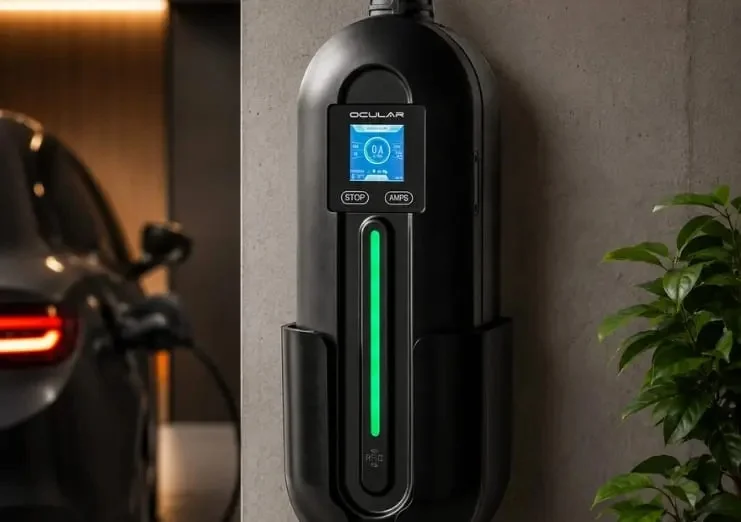
Your EV doesn't always need a dedicated charging station to gain some extra range. In the right circumstances, you can charge it at a property that doesn't have an EV wall charger at all.
That's where portable EV chargers come into the picture.
Rather than being fixed to a building, this type of charging equipment travels with the vehicle. You can take it on a road trip, keep it in the boot for emergencies, or use it when staying somewhere that has a suitable electrical connection.
The important part is understanding what the equipment can actually do. A portable charger offers flexibility, but it isn't a substitute for having access to appropriate electrical infrastructure.
Think of It as Charging Equipment You Can Take With You
A home wall charger has a permanent address. A portable unit doesn't.
Most portable charging equipment has a vehicle connector, a cable, a mains connection and a control unit positioned along the cable. You connect the vehicle end to the EV and the other end to a compatible electrical supply.
Once connected, the charging equipment and vehicle establish communication before electricity is delivered. The vehicle then manages the charging process according to its own limits and the conditions available.
The electricity supplied from the property is generally AC. Your EV's onboard charger converts it into the form needed by the battery.
So there isn't one single component doing all the work. The electrical supply, charging equipment and vehicle all have a role.
A Real-World Example
Imagine you've driven from Brisbane to a holiday property in northern New South Wales.
The house has a driveway and somewhere convenient to park, but there's no wall-mounted EV charger. You plan to stay for two nights.
If the property has an appropriate electrical connection and the owner is happy for you to charge there, portable equipment could allow you to add energy while the vehicle is parked.
You aren't expecting it to recharge the battery in half an hour. Instead, you're making use of the several hours the car would otherwise spend sitting unused.
That's one of the situations where portable charging can make practical sense.
The Power Point Matters More Than You Might Think
It can be tempting to think that if a plug fits, the job is done.
It isn't.
EV charging can place a sustained load on an electrical circuit, so the condition and capacity of the electrical installation matter.
A newer property with suitable electrical infrastructure may present fewer concerns than an older building with an ageing circuit. You also don't necessarily know how heavily a particular circuit is already being used.
If you're charging somewhere unfamiliar, don't assume the nearest outlet is suitable simply because it's convenient.
The Australian Government recommends checking that the charging arrangement is safe and appropriate and seeking professional electrical advice when required.
Why Portable Charging Is Usually Slower
There is a trade-off for having equipment that can be carried around.
A standard household outlet isn't designed to deliver the same charging power as many dedicated EV charging installations. As a result, adding a meaningful amount of range can take considerably longer.
That isn't necessarily a problem.
If your car is parked from 7 pm until 7 am, you have a twelve-hour window. A slower charge can still be useful when the vehicle isn't going anywhere overnight.
But if you're stopping for 30 minutes before continuing a long journey, portable charging from a household outlet is unlikely to be the most effective solution.
For short stops, a suitable public fast charger will generally make more sense.
Your EV Has a Say in Charging Speed
Buying a higher-output charging unit doesn't automatically mean your vehicle will charge at that rate.
Every EV has its own charging capabilities. The vehicle's onboard AC charger determines how much AC power it can accept.
The electrical supply can impose another limit.
For example, you could have charging equipment capable of handling more power than a particular household circuit can safely provide. In that situation, the electrical installation becomes the limiting factor.
This is why matching the charger to the vehicle and intended power supply is more useful than choosing equipment based purely on the largest number on the specification sheet.
What Is the Box on the Cable?
If you've seen a portable charging cable, you've probably noticed the small control box attached to it.
It has a purpose beyond simply housing electronics.
The control equipment manages the charging connection and communicates with the vehicle. Depending on the product, it can also provide protection and monitoring functions designed for EV charging.
This is one reason a purpose-built charging product should be used rather than attempting to improvise a connection with ordinary electrical accessories.
The manufacturer's instructions should determine how the equipment is connected and operated.
Where Does a Portable Charger Fit in Your Routine?
It doesn't have to be your main charging method.
For many drivers, a sensible setup might look something like this:
You charge at home during normal weekdays. You use public chargers when travelling longer distances. The portable unit stays in the vehicle until you arrive somewhere without a dedicated charging facility.
That approach makes its limitations less important.
You're not asking a relatively slow charging method to handle every situation. You're using it for the situations where portability is more valuable than speed.
What Should You Look For?
Start with compatibility.
Your vehicle's charging connector needs to match the equipment, and you should understand how much AC power your vehicle can accept.
Then think about how you'll actually carry and use the unit.
If it will live in the boot, size and weight matter. If you'll use it at holiday properties, cable length may be important. If you travel frequently, durability becomes more significant.
Also check the manufacturer's information about electrical protection, operating conditions, plug type and warranty support.
A charger that looks impressive on paper isn't necessarily the most suitable choice for your particular driving habits.
Don't Overlook Safety
Portable charging is convenient, but convenience shouldn't mean taking shortcuts.
Before connecting your vehicle, inspect the cable, plug and outlet. Don't use equipment that is damaged or shows signs of overheating.
Avoid improvised electrical arrangements and be particularly careful with extension leads and power boards. The Australian Government advises against using extension cords or power boards for EV charging.
If a property needs electrical work before it can support EV charging safely, get a licensed electrician involved.
That's especially important when you're dealing with an older property or an electrical circuit you're unfamiliar with.
Is Portable Charging Useful for Australian Road Trips?
It can be, particularly when your destination has limited charging infrastructure.
Australia's long distances mean that planning ahead remains important. Before leaving, check the charging locations along your route and consider where you'll be able to recharge at your destination.
A portable unit shouldn't be your excuse to skip that planning.
Instead, think of it as another tool. If the public charger at your destination is unavailable, or your accommodation doesn't have a dedicated charging station, you may have another way to add some energy while parked.
That extra option can be particularly useful outside major metropolitan areas.
Who Is Most Likely to Benefit?
Someone who drives locally, charges at home every night and rarely travels may have little reason to buy portable equipment.
The situation is different for an EV owner who regularly takes weekend trips, visits regional properties, stays at holiday accommodation or travels to locations where dedicated charging isn't guaranteed.
In those cases, the value isn't necessarily about charging faster.
It's about not being completely dependent on one type of charging infrastructure.
Conclusion
Portable EV chargers make the most sense when flexibility matters more than charging speed. They can be useful when you're staying somewhere without a dedicated charger, travelling through regional areas or simply want another charging option available in the vehicle.
They do have limits. Charging from a household supply can take time, and the electrical connection must be suitable for the job. For everyday home charging, a dedicated charger will often be more convenient.
At Ocular Charging, we help Australian EV drivers choose charging equipment based on their vehicle, property and real-world driving requirements, so the solution works for the way they actually use their EV.