Sign up with Google
 Sign in with Zoho

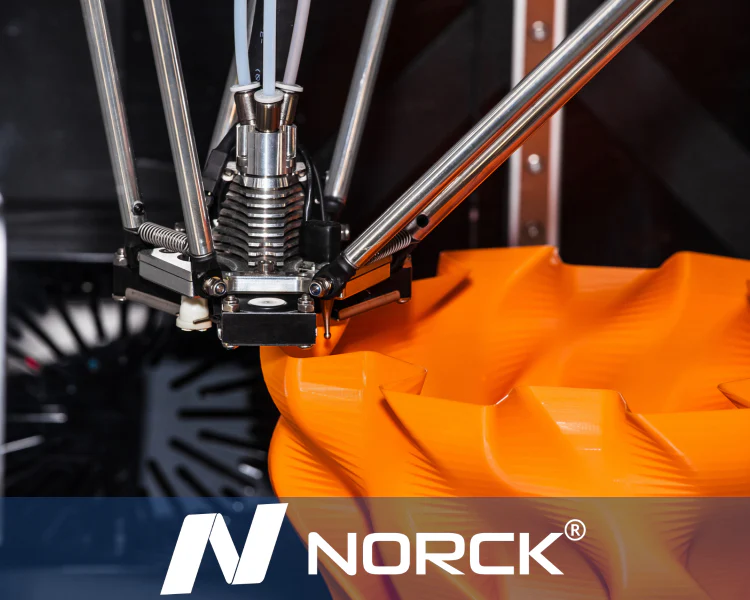
FDM 3D printing is one of the most widely used additive manufacturing technologies for industrial prototyping, tooling, and low-volume production. Such industries including automotive, aerospace, medical, and consumer products manufacturers are all taking advantage of fused deposition modeling services in order to decrease product development cost, shorten product design validation cycles, and provide customized rigid thermoplastic parts with better adaptability.
In this article we take a look at the top industrial applications, commonly used FDM 3D printing materials, and the reasons behind the continuous investment of the businesses in industrial 3D printing technologies, specifically in fast prototyping, tooling, and production assistance applications.
What is FDM 3D Printing?
Fused Deposition Modeling (FDM) is an additive manufacturing process that involves the layering of a thermoplastic filament material such as ABS, PLA, PETG, Nylon or TPU. During the printing process, thermoplastic filament is heated & extruded through a nozzle onto a build platform based on a CAD design. This process, as described above, is more economical and less wasteful of the material.
Companies and organizations are choosing the professional FDM 3D printing services because:
- Faster prototyping and product development
- Lower tooling and manufacturing costs
- High design flexibility for complex geometries
- Reduced material waste compared to conventional manufacturing methods
- Customizable for low-volume production
Industrial Applications of FDM 3D Printing
1. FDM 3D printing in Rapid prototyping and Product Development
Rapid prototyping is one of the most important industrial applications of FDM 3D printing technology. In the manufacturing industry companies use FDM printers for rapidly producing prototypes of CAD models to carry out functional testing, design verification, engineering analysis, before proceeding with the full-scale production.
Advantages of FDM Rapid Prototyping:
- Increased speed in design validation and engineering analysis
- Decreased cost of product development
- Simplified modification of the design and iteration
- Functional prototyping of product before production
- Reduced development time to market
2. FDM 3D Printing applications in Automotive Industry
Automotive companies use industrial FDM 3D printing to prototype vehicle's dashboard, air ducts, assembly jigs and fixtures, lightweight housings, functional test components etc.
Most popular uses in automotive industry:
- Prototyping of car's internal dashboard
- Air ducts, Lightweight housings
- Making of functional test pieces
- Manufacturing jigs and fixtures
- Workholding and Assembly Jigs/Fixtures
Today most of the automotive companies are using the industrial FDM 3D printing services to minimize the tooling costs and reduce the manufacturing time, also enhancing the flexibility in production.
3. Aerospace and Aviation Components
Aerospace manufacturers require lightweight structures and dimensional accuracy,while using high-performance thermoplastic materials for component manufacturing. Aerospace parts includes:
- Fabrication of cabin interior parts
- Rapid manufacturing of light structures prototype
- Rapid prototyping of tooling and assembly aids
- Engineering design and fabrication of ventilation ducts
- Rapid prototyping of engineering test models
Engineering grade materials such as ABS, Nylon, Carbon Fiber Nylon and ULTEM offer high heat resistance and mechanical properties for Aerospace and industrial usages.
4. Industrial Tooling and Manufacturing Aids
FDM 3D printing is widely used to manufacture jigs, fixtures, robotic end-effectors, and custom assembly tooling for industrial production. Those customized tooling and jigs reduce cost of production by allowing accurate part fabrication at a very low manufacturing cost. Manufacturing application includes:
- Checking gauges
- Robotic End-Effectors
- Ergonomically shaped handheld tools
- Assembly fixtures
- Packaging templates
5. Healthcare and Medical Industry Solutions
In the healthcare sector, FDM 3D printing is being applied to manufacture anatomical models, prosthetics, pre-operative surgical planning models and prototypes of medical devices. Healthcare providers and medical device manufacturers use FDM 3D printing to produce patient-specific anatomical models, prosthetics, and medical device prototypes.
Some widely used applications of FDM 3D printing in the healthcare sector are:
- Pre-operative anatomical model for surgical planning
- Orthopedic prototype
- Prosthetic device prototypes
- Enclosures of medical devices
- Training and education model
Why Industries Prefer FDM Technology
Companies are continuing to invest in fused deposition modeling services at industrial level because the technology lowers manufacturing costs and shortens the production time and also increases flexibility.
- Cost-Efficient Manufacturing: FDM 3D printing does not result in wastage of materials and the expensive tooling need is eliminated, making it appropriate for prototypes and small batch production.
- Faster Production Cycles: Industrial FDM printers result in quicker design iteration times and reduce manufacturing lead times. With a very little set-up time required the industrial FDM prints at a very rapid rate.
- Design Flexibility: With a CAD based FDM, complicated geometries are manufacturable, which can be applied to industrial parts with increased flexibility.
Final Thoughts
The industrial utilization of FDM 3D printing is continuously increasing, as companies seek to benefit from faster, adaptable and less expensive manufacturing processes. Ranging across various industries, including automotive and aerospace engineering, healthcare, and consumer goods production, FDM has been helping companies enhance their productivity, fast-track new product development and launch products to market, quickly, with reliable fused deposition modeling services. Contact Norck for personalized solutions in additive manufacturing.
FAQs (Frequently Asked Questions)
1. Which industries use FDM 3D Printing?
Automotive, aerospace, health, consumer products and industrial manufacturing uses FDM 3D printing for prototypes, tools, and low-volume end-use parts.
2. Is FDM suitable for industrial manufacturing?
Yes, in the field of industrial 3D printing, FDM is typically applied for the prototyping of functional parts and manufacture of low volume parts for final use, tooling, jig and fixture.
3. Which kind of materials are applicable for FDM?
In FDM, the commonly used materials are ABS, PLA, PETG, Nylon, TPU, Carbon Fiber Nylon, and ULTEM for industrial end use.