Sign up with Google
 Sign in with Zoho

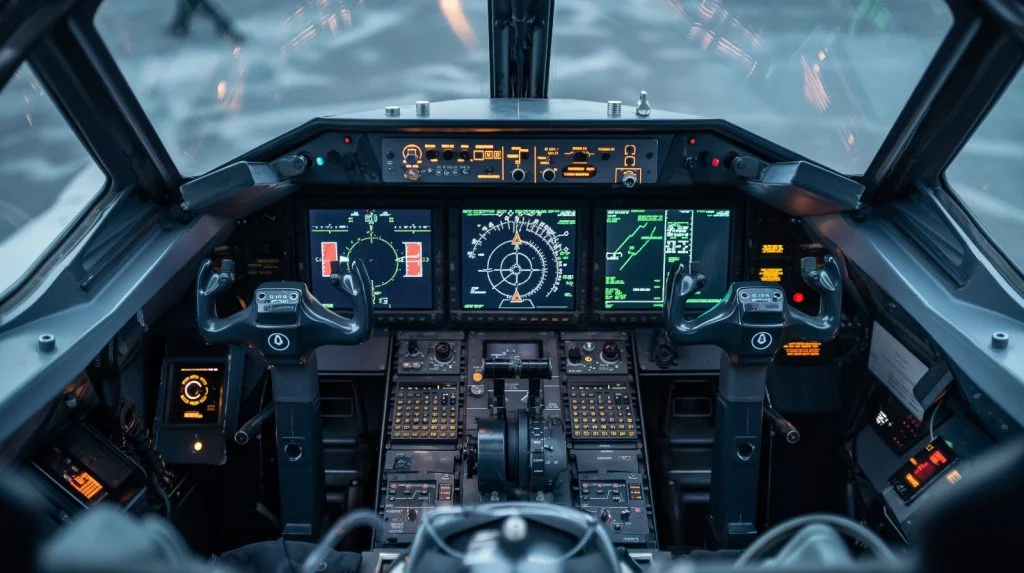
Modern flight decks get a lot of attention for their software. Smart cockpit technology brings adaptive formats and data fusion to the crew, and a rugged touch screen display can relabel its soft keys for each phase of flight. Yet behind and around those screens are thousands of labels that must never change: switch legends, panel identifiers, part numbers, and serial numbers. Engraving and related marking methods keep that information readable for decades, and they deserve more engineering attention than they typically receive.
Two jobs, one panel
Markings on aircraft panels serve two audiences. The crew reads functional legends, often under stress and in poor light. Maintenance technicians, inspectors, and supply personnel read identification data, such as part number, serial number, manufacturer code, and modification status. A failure on either side has consequences. A worn legend can contribute to an operating error, while an illegible part number can ground an aircraft until its configuration is confirmed.
How the markings are made
Several processes are used, each with its own strengths:
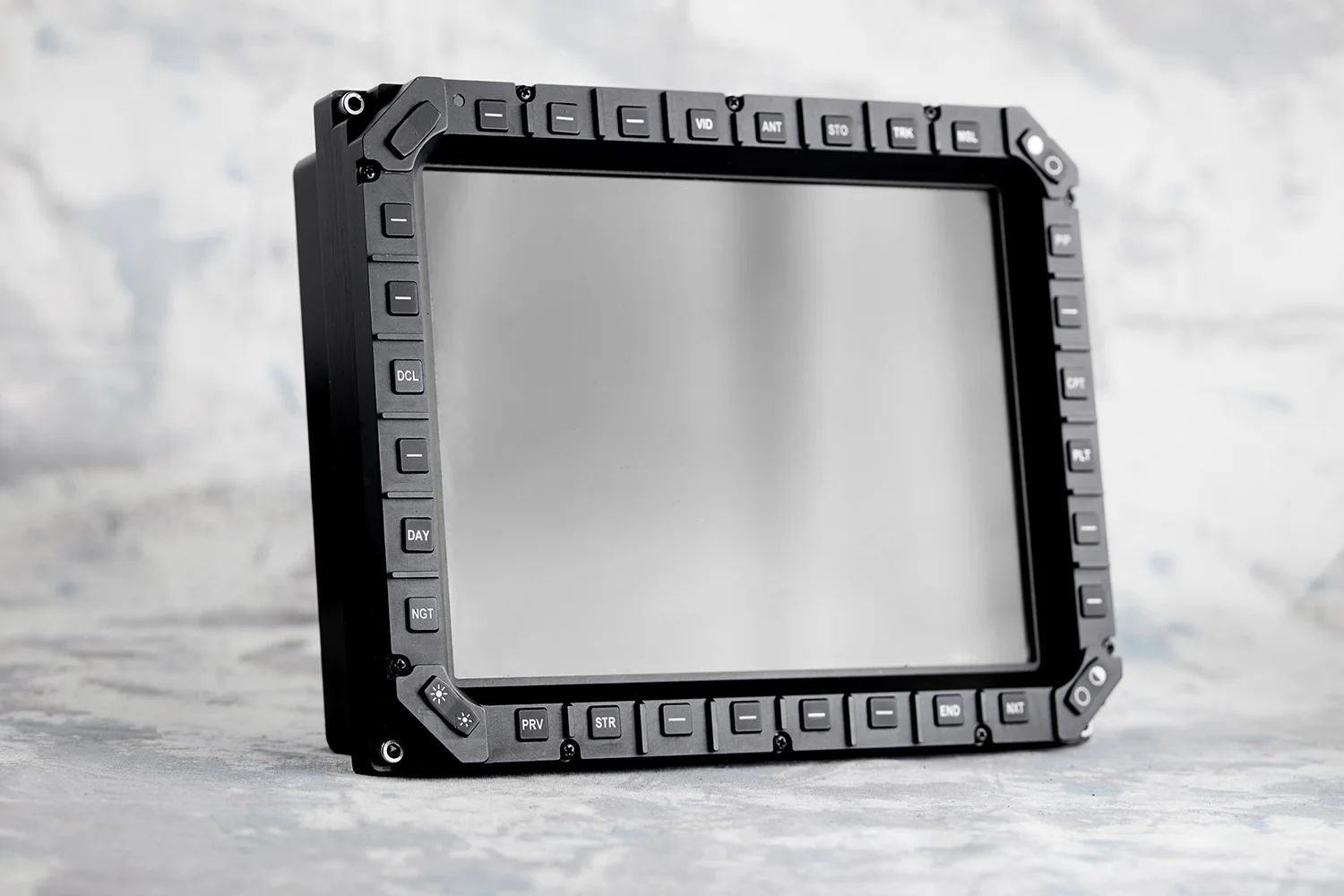
• CNC engraving physically cuts characters into the surface, creating markings with depth that resist wear and can be filled with paint.
• Laser etching removes coatings with high precision. On integrally illuminated panels, it exposes the translucent layer beneath the paint so that the characters glow when lit.
• Silk screening deposits ink for non-illuminated markings and color fields, and suits areas that see little abrasion.
• Dot peen, laser, or label methods are commonly used for identification plates and machine-readable codes on enclosures.
The right selection depends on the substrate, the environment, and how many years the marking must last. Illuminated legends have an added requirement, because stroke width and coating opacity influence how light leaks and how uniformly the characters appear.
Designing markings to last
A marking has to survive what the aircraft does to it. Repeated contact from gloved hands, cleaning agents, hydraulic fluids, deicing chemicals, ultraviolet exposure, and temperature cycling all attack coatings and fill materials. Qualification programs often include abrasion and fluid resistance testing, along with verification that legends stay legible after environmental exposure.
Typography matters as well. Standard fonts, adequate character height, and stroke widths suited to the viewing distance have a direct effect on legibility. MIL-STD-1472 and related human factors guidance give useful direction, and many airframers impose their own legend standards. Abbreviations should match those in the flight manual, so that the crew never has to translate between documents.
Identification across the life cycle
A panel installed today may be overhauled several times and might outlast the company records of some of its original suppliers. Permanent identification links the physical part to its history: the production lot, first article, repair actions, and service bulletins.
For U.S. defense programs, MIL-STD-130 establishes requirements for identification marking, including machine-readable Item Unique Identification codes in 2D Data Matrix format. Scanning a code greatly reduces transcription errors and speeds inventory and maintenance tasks. These marks also support counterfeit prevention by making it easier to verify a part's provenance.
Why fixed labels still matter on software-driven flight decks
Reconfigurable screens reduce the number of fixed legends, but they do not remove them. Dedicated push button switches, circuit breaker panels, emergency controls, and reversionary hardware remain labeled physically. Those are often the controls a crew relies on when a display has failed, so the legend must be correct and readable regardless of the state of the avionics.
Part marking also supports the software side. Configuration control depends on knowing which hardware revision is installed, as well as which software load it can accept.
Practical guidance for specifiers
When writing a panel specification, define the marking method, font and height, color, luminance requirements, durability tests, and the content and location of identification data. Include any requirements for repaint or relegending, because a marking system that cannot be restored may force the replacement of an otherwise serviceable part.
Long-term support in practice
AEROMAOZ has manufactured rugged, mission-critical HMI solutions for more than 45 years. Its quality system maintains documentation and traceability throughout production, supporting aircraft that will remain in service for decades.