Sign up with Google
 Sign in with Zoho

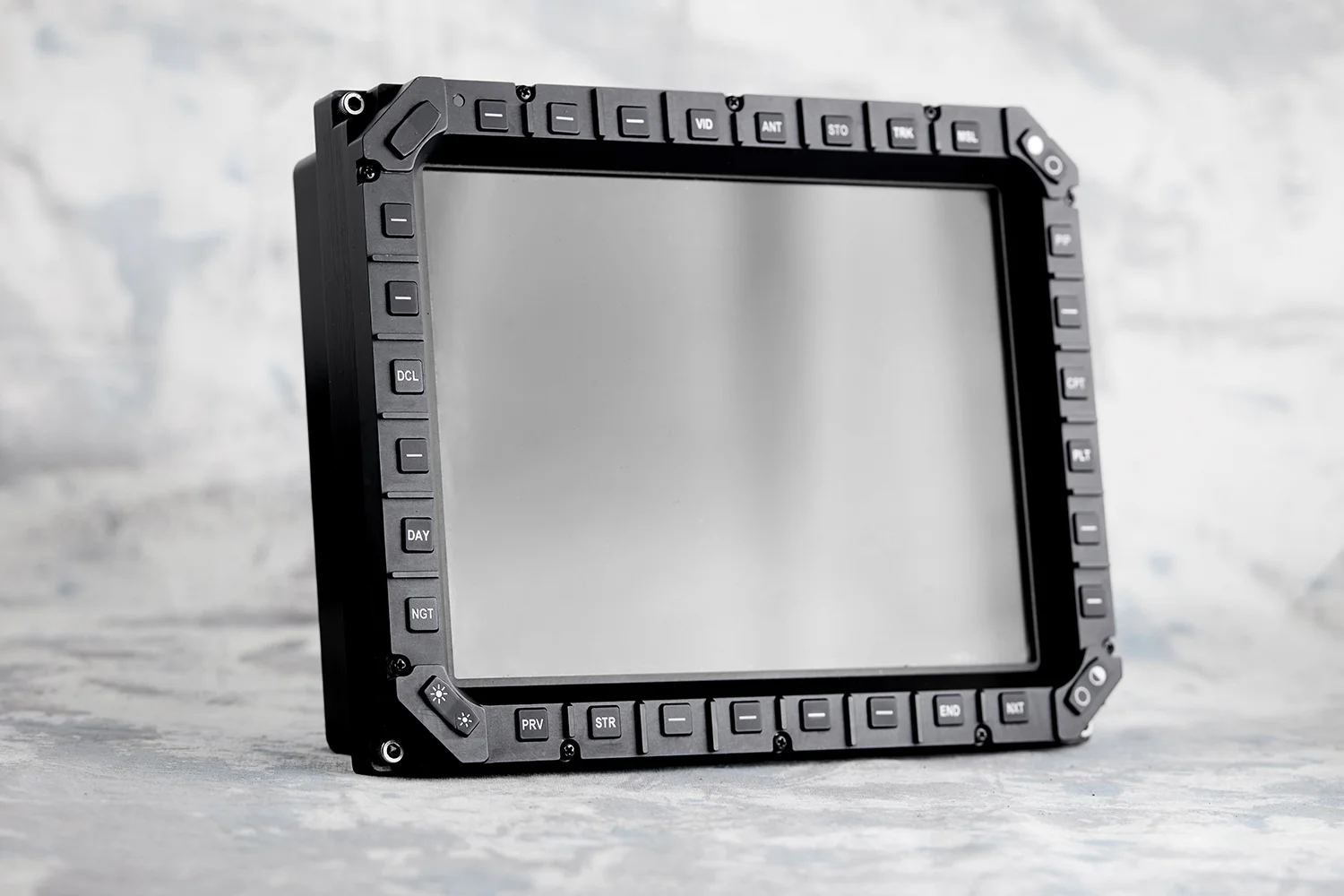
Rugged HMI Layouts Optimized for Gloved Pilot Operations
A control panel that performs flawlessly on an engineering bench can become a liability at 30,000 feet. The reason is simple: pilots rarely fly with bare hands. Flame-resistant flight gloves, cold-weather gear, and chemical protection equipment all change the way a crew member interacts with every switch, knob, and screen in the cockpit. For system integrators and platform manufacturers, designing a rugged HMI (Human-Machine Interface) around the gloved hand is not a styling decision - it is a flight safety requirement.
Why Gloves Change Everything in Cockpit Design
A gloved fingertip is wider, less sensitive, and less precise than a bare one. Studies of pilot performance consistently show that touch targets, button spacing, and actuation forces that feel comfortable without gloves produce error rates that are unacceptable in flight when gloves are worn. Effective layouts compensate with larger contact areas, generous spacing between adjacent controls, raised bezels that guide the finger, and distinct tactile feedback that confirms actuation even when the pilot cannot feel the surface directly.
Tactile differentiation matters just as much. When a pilot cannot rely on fingertip sensitivity, shape coding becomes the primary channel of confirmation. Push button switches with positive snap action, concave versus convex caps, and guarded switches for critical functions all allow the crew to operate by feel, keeping eyes on the mission rather than on the panel.
How Cockpit Display Systems Integrate with Mission Computers
Glove-friendly design does not stop at the mechanical layer. Understanding how cockpit display systems integrate with mission computers is essential, because the bezel keys and line-select buttons surrounding a display are the physical gateway to the aircraft’s digital brain. In a typical architecture, the mission computer generates symbology and system pages, while the cockpit display system renders that information and returns pilot inputs over deterministic buses such as MIL-STD-1553, ARINC 429, or Ethernet-based protocols.
Every bezel key press must be debounced, encoded, and delivered to the mission computer with predictable latency. A gloved hand that double-strikes a key, or misses it entirely, corrupts this dialogue between pilot and processor. That is why leading avionics programs treat key geometry, actuation force, travel distance, and backlighting as integration parameters, defined alongside the electrical interface control document rather than after it.
Design Principles That Work Under Pressure
Several principles have proven themselves across military and commercial platforms. First, size targets for the worst case: an aircrew member wearing thick gloves in turbulence at night. Second, preserve consistency, so that the same function sits in the same location across multifunction displays and control panels. Third, integrate NVIS-compatible lighting so that legends remain readable under night vision goggles without blooming. Fourth, validate the layout with human factors testing that includes gloved trials, vibration, and full mission scenarios, not just static usability reviews.
These principles apply equally to fixed-wing aircraft, helicopters, UAV ground control stations, and armored vehicles, where operators frequently wear even heavier protective gear. A cross-platform approach to control geometry reduces training time and allows integrators to reuse qualified designs across programs.
A Partner with 45 Years of Gloved-Hand Experience
Aeromaoz is a world-known provider of rugged, mission-critical HMI solutions for military and commercial aviation, armored vehicles, UAVs, flight simulators, and naval platforms. For over 45 years, the company has designed illuminated panels, bezels, displays, and control assemblies that Tier 1 integrators trust in the most demanding environments. Its engineering team combines electro-optic, mechanical, and electrical expertise to deliver layouts optimized for gloved operation from the first prototype.
When the mission depends on a pilot’s ability to act instantly, with gloves on and eyes forward, the quality of the HMI layout is the difference between a good cockpit and a great one. Designing for the gloved hand from day one ensures that every press, twist, and glance delivers exactly the response the mission computer - and the mission - expects.