Sign up with Google
 Sign in with Zoho
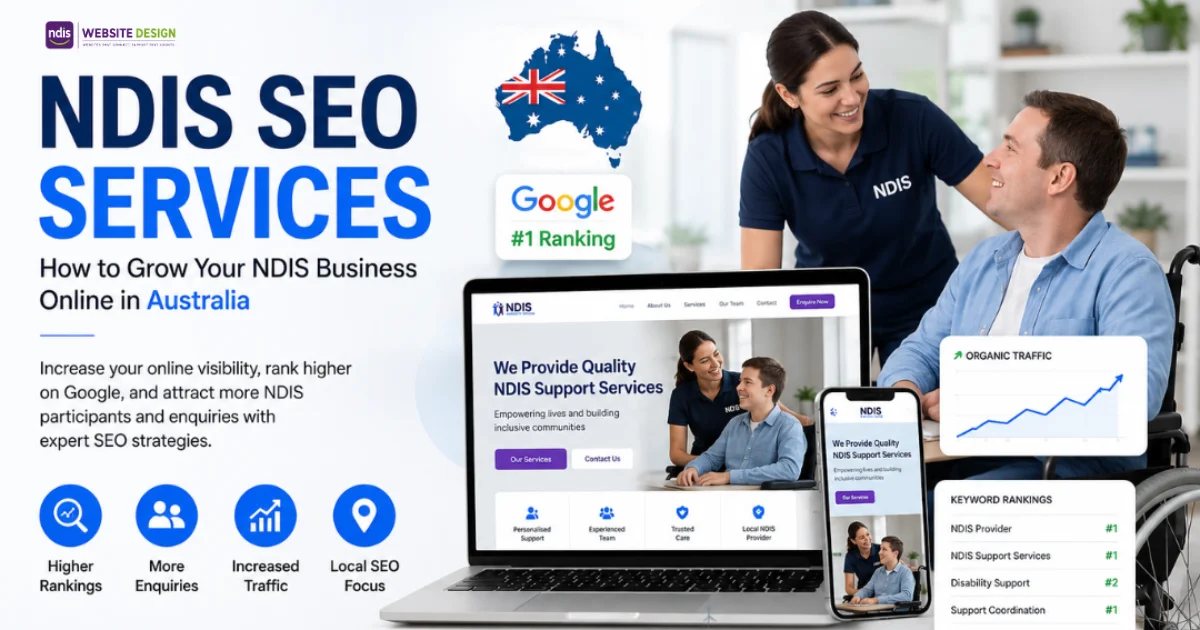
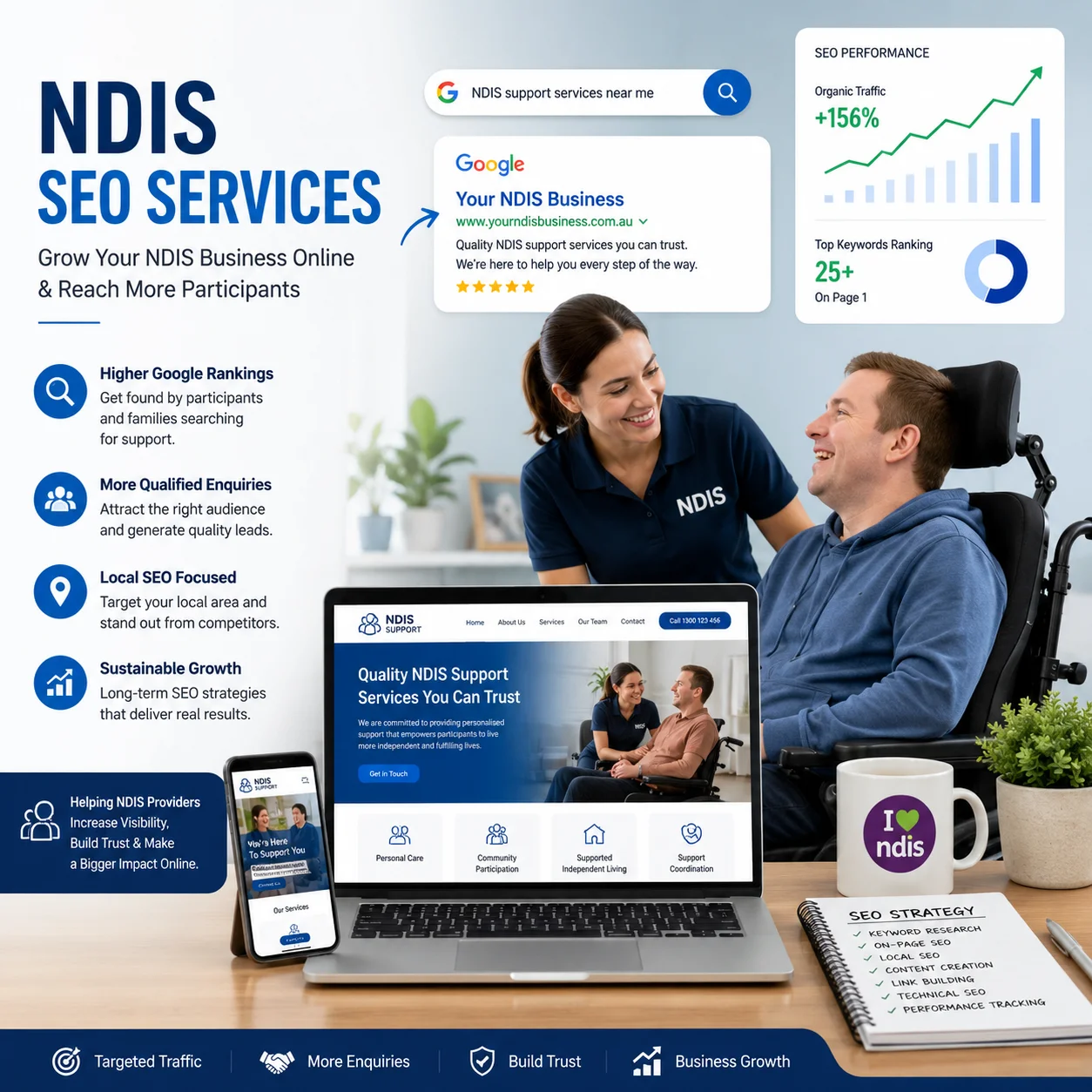
For NDIS providers, having a professional website is only the beginning. Your website also needs to be visible when participants, families, carers and support coordinators search online for disability support services.
In 2026, search behaviour continues to evolve, making a well-planned SEO strategy increasingly important. From helpful website content and local search optimisation to technical performance and trust signals, several factors can influence how easily potential clients discover your business.
This guide explores practical NDIS SEO Services strategies that Australian providers can use to improve online visibility and generate more relevant enquiries.
1. Create Helpful, Participant-Focused Content
One of the most important SEO priorities is creating content that genuinely answers the questions your audience is asking.
Instead of writing pages simply to include keywords, focus on providing clear and useful information about your services.
Your website could include:
- Detailed service pages
- Participant FAQs
- Locations and service areas
- Information about your team
- Eligibility and referral information
- Helpful disability support resources
- Clear explanations of your approach
Content should be easy to understand and written for real people first.
For example, rather than creating a generic page titled "Disability Services," explain exactly what support you provide, who it is suitable for and which areas you serve.
2. Optimise Your Website for Local Searches
Most NDIS providers serve specific geographic areas. This makes NDIS local SEO particularly valuable.
People may search for terms such as:
- NDIS provider near me
- disability support services in Sydney
- NDIS support workers in Melbourne
- supported independent living in Brisbane
Your website should clearly communicate where you operate.
Create useful location pages where appropriate and include your service areas naturally throughout your website. Your Google Business Profile should also contain accurate business information and remain consistent with your website.
Avoid creating dozens of almost identical location pages simply to target different suburbs. Each page should provide genuinely useful local information.
3. Build Strong Service Pages
Every important service should have its own well-structured page.
A strong service page should explain:
- What the service involves
- Who it is designed for
- How your organisation delivers the service
- Where the service is available
- What makes your approach different
- How someone can enquire
For example, if you provide personal care, community participation and supported accommodation, each service deserves content that addresses the specific needs and questions of potential clients.
This helps both visitors and search engines understand exactly what your organisation offers.
4. Improve Technical SEO
Good content can struggle to perform if a website has technical problems.
Technical SEO for NDIS providers should include attention to areas such as:
- Mobile responsiveness
- Page loading speed
- HTTPS security
- Clean URLs
- XML sitemap
- Internal linking
- Image optimisation
- Broken links
- Indexing issues
- Structured data where appropriate
Your website should also provide a smooth experience across smartphones, tablets and computers.
Since many people research services from mobile devices, a website that loads slowly or is difficult to navigate can potentially lose enquiries.
5. Make Accessibility a Priority
Accessibility should not be treated as an afterthought for an NDIS website.
A more accessible website can make information easier to understand and navigate for a wider audience.
Consider:
- Clear heading structures
- Readable font sizes
- Sufficient colour contrast
- Descriptive link text
- Alternative text for meaningful images
- Keyboard-friendly navigation
- Simple and understandable language
- Captions or transcripts for relevant video content
Accessibility and SEO often work well together because both encourage websites to provide clearer, more usable experiences.
6. Demonstrate Experience and Trust
Trust is especially important when someone is researching disability support services.
Your website should help visitors understand who is behind the organisation and why they can feel confident making an enquiry.
Useful trust signals can include:
- An informative About Us page
- Real team profiles
- Relevant qualifications and experience
- Clear contact information
- Genuine testimonials where appropriate
- Information about your services
- Transparent business details
Avoid making exaggerated claims that cannot be supported.
Instead, provide accurate information that helps potential participants and families make informed decisions.
7. Strengthen Your Google Business Profile
For providers targeting specific locations, Google Business Profile can complement your broader SEO strategy.
Keep important details accurate, including:
- Business name
- Address or service-area information
- Phone number
- Website
- Opening hours
- Business category
- Services
Encourage genuine customers to leave reviews where appropriate and respond professionally to feedback.
Your website and business profile should present consistent information.
8. Use Keywords Naturally
Keyword research remains useful, but keyword stuffing is not.
For example, an article about improving online visibility could naturally use terms such as NDIS provider SEO, NDIS website SEO, and SEO for NDIS service providers where they genuinely fit.
There is no need to repeat the same phrase in every heading or paragraph.
Instead, cover the topic comprehensively and use related terms that reflect the way people actually search.
9. Build a Useful Internal Linking Structure
Internal links help visitors discover related information and help search engines understand the relationship between your pages.
For example, a blog post about local SEO could link to:
- Your SEO service page
- Relevant location pages
- NDIS service pages
- Contact or enquiry page
- Related educational articles
Use descriptive anchor text rather than repeatedly using phrases such as "click here."
A logical internal linking structure can also make it easier for visitors to move from informational content towards relevant services.
10. Track Results and Improve Over Time
SEO is not a one-time activity.
Monitor important performance indicators such as:
- Organic search traffic
- Search impressions
- Keyword visibility
- Click-through rates
- Enquiry conversions
- Top-performing pages
- Pages losing traffic
- Local search visibility
These insights can show you which topics and pages are attracting potential customers and where improvements may be needed.
SEO strategies should be reviewed regularly rather than relying on a website that was optimised once and then left unchanged.
What Makes an Effective NDIS SEO Strategy in 2026?
A strong strategy combines several elements rather than relying on one SEO tactic.
The key areas include:
Helpful content + Local visibility + Technical performance + Accessibility + Trust + Continuous improvement
This approach creates a website that is useful to visitors while giving search engines clearer information about your organisation, services and locations.
Final Thoughts
Search visibility can play an important role in helping NDIS providers connect with people looking for support services online.
The most effective approach is not simply adding more keywords. It is about creating a trustworthy, accessible and technically sound website that answers real questions and clearly communicates your services.
By combining useful content, local optimisation, strong service pages, technical improvements and ongoing measurement, Australian providers can build a stronger foundation for organic search visibility throughout 2026.