Sign up with Google
 Sign in with Zoho

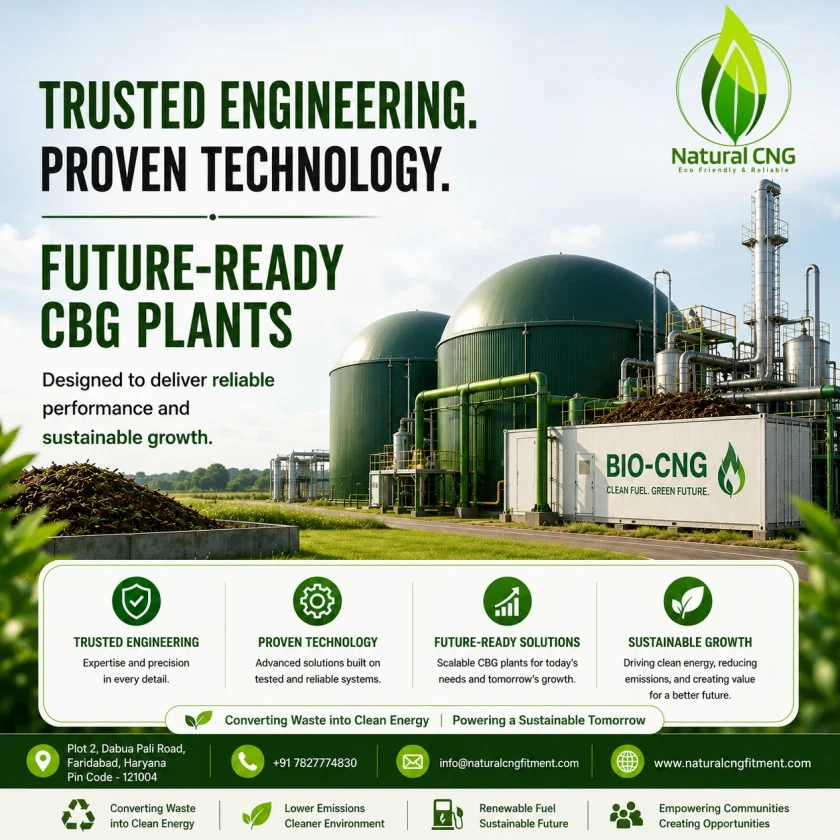
Biogas is a renewable gaseous fuel generated through the biological breakdown of organic waste in an oxygen-free (anaerobic) environment.
Composition of Biogas
- Methane (CH₄): 45%–65% — the combustible component responsible for energy output
- Carbon Dioxide (CO₂): 30%–45%
Trace Gases: Minor quantities of hydrogen sulfide (H₂S), water vapor, and nitrogen
What is Compressed Biogas (CBG)?
Compressed Biogas is a purified and compressed form of raw biogas with a high methane content (over 90%), making it chemically and functionally comparable to Compressed Natural Gas (CNG).
BIO CBG Project Setup Cost
Setting up a Bio CNG plant in India involves costs that vary considerably, shaped by factors such as plant capacity, feedstock type, technology used, land requirements, civil works, the gas purification system, compression equipment, and the degree of automation. These are indicative figures and can vary considerably by technology, feedstock and project scope.
Major Factors of a Biogas CBG Plant
Feedstock Availability & Quality
- Type and quantity of raw material available — cattle dung, press mud, paddy straw, agricultural waste, food waste, MSW, etc.
- Consistent, year-round supply is essential.
- Feedstock quality like Total solids (TS), Volatile solids (VS), Moisture content and Organic matter and biodegradability
CBG Production Potential
- Biogas yield from the selected feedstock
- Methane content in raw biogas
- Expected CBG recovery after purification
- Plant capacity — e.g., 1, 5, 10, or 20 TPD
Digester Technology
- Digester type and operating conditions
- Hydraulic retention time (HRT)
- Organic loading rate (OLR)
- Temperature and pH control
- Mixing efficiency
Biogas Upgradation Technology: The selected purification technology directly influences both CAPEX and gas quality. Common technologies include:
- PSA
- Membrane separation ( This is best for Indian Market)
- Water scrubbing
- Amine scrubbing
CBG Compression & Storage
- Compressor capacity
- Required operating pressure
- Cascade storage capacity
- Dispensing or transportation requirements
Land & Site Conditions
- Land availability
- Soil condition
- Accessibility for feedstock transportation
- Water and electricity availability
- Distance from the CBG offtake point
Utilities & Infrastructure
- Electricity & Water
- Internal roads & Drainage
- Fire and safety systems
- Feedstock and digestate handling infrastructure
Regulatory & Safety Requirements
- PESO requirements
- Pollution-control permissions
- Factory and fire-safety requirements
- Applicable environmental and gas-handling regulations
- Requirements tied to the intended CBG offtake arrangement
Project Economics
- Land cost
- Equipment and civil construction cost
- Feedstock transportation cost
- Electricity and operating expenses
- Manpower
- CBG selling price/offtake arrangement
- Digestate/FOM revenue
- Financing cost
- Applicable government incentives or subsidies
In simple words: Feedstock → Biogas Yield → Methane Yield → Upgradation Efficiency → CBG Production → CAPEX/OPEX → Revenue