Sign up with Google
 Sign in with Zoho

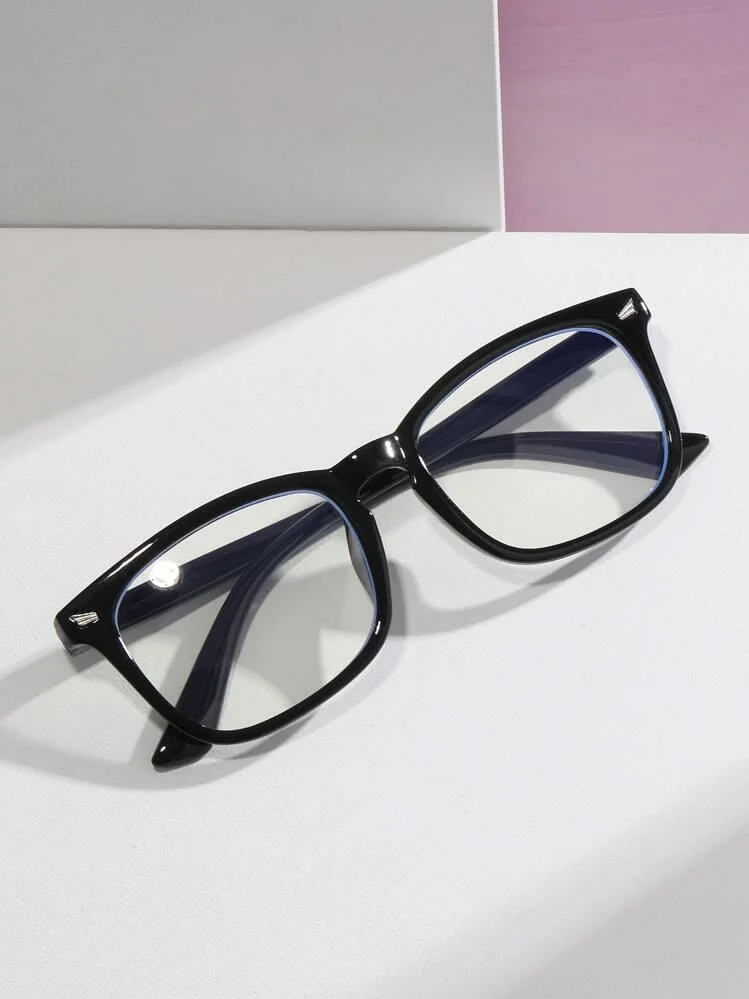
It is a milestone that catches most adults by surprise somewhere in their early to mid-forties. You find yourself holding a restaurant menu just a little bit farther away, squinting at the text message on your smartphone, or needing brighter overhead light to read a book. This progressive loss of up-close focusing power is a completely natural, biological aging process known as presbyopia.
When these symptoms start interfering with your daily routine, the easiest and most affordable fix seems to be a quick trip to the local pharmacy or supermarket to pick up a pair of over-the-counter magnifying specs. While cheap reading glasses offer undeniable convenience and immediate, low-cost accessibility, understanding the optical compromises built into mass-produced eyewear is essential for managing your everyday eye comfort and preserving your visual health.
The Biological Shift Behind the Need for Magnification
To understand how reading glasses help, it helps to examine the internal optics of the eye. When you look at an object up close, a tiny circular muscle inside your eye (the ciliary muscle) contracts. This contraction alters the shape of your clear, flexible natural lens, making it thicker so it can bend incoming light rays sharply enough to focus them directly onto your retina.
As we age, the proteins inside our natural crystalline lens gradually stiffen, making the lens less elastic. When the ciliary muscle contracts, the stiffened lens can no longer change shape effectively. As a result, the point of focus drifts behind the retina, causing nearby objects and text to appear blurred.
Over-the-counter readers solve this issue by placing a basic convex magnifying lens, measured in units called diopters, directly in front of the eye. This extra layer bends light before it enters the cornea, shifting the focus back onto the retina so you can read clearly at a comfortable distance without relying on your eye's internal focusing mechanism.
The Anatomy of Over-the-Counter Readers
The primary reason cheap reading glasses are so affordable is that they are mass-produced using a single, symmetric manufacturing formula. While they are a quick and cost-effective fix for simple focus changes, they introduce a few major compromises that differ significantly from custom prescription eyewear:
- Uniform Symmetrical Power: Mass-produced reading glasses feature the exact same magnification power in both the left and right lenses. However, the vast majority of human beings have at least a slight prescription difference between their two eyes.
- Zero Astigmatism Correction: Astigmatism is a very common condition caused by an irregular, football-like curvature of the cornea or internal lens, which distorts light at all distances. Cheap reading glasses are completely spherical and cannot correct this distortion, which often leaves text looking slightly shadowed or smeared.
- Standard Population Centerings: Every pair of custom glasses is crafted based on your unique pupillary distance (PD)—the exact millimeter spacing between the centers of your pupils. Ready-made readers utilize a fixed population average. If your eyes are slightly closer together or farther apart than this average, you will be forced to look through the distorted edges of the lens rather than the optical center.
Debunking the Vision Damage Myth
A very common myth surrounding inexpensive over-the-counter reading lenses is that wearing them can permanently ruin your baseline eyesight or accelerate your presbyopia. According to optometric and ophthalmological studies, this is biologically false. Wearing a pair of generic readers will not cause structural damage to your eyes or change your underlying prescription.
Instead, the true risk of relying entirely on cheap reading glasses comes from the subtle physical side effects of an unmatched prescription. If you wear an incorrect lens power or use lenses with standard population centerings for extended periods, your extraocular muscles have to strain intensely to keep your vision aligned. This constant overwork can trigger frequent headaches, severe eye fatigue, a pulling sensation behind the eyes, and mild dizziness.
Furthermore, using generic readers as a complete substitute for a professional eye exam means you miss out on critical screenings for asymptomatic, sight-threatening conditions like glaucoma, macular degeneration, and diabetic retinopathy—issues that a simple magnifying lens can easily mask but never treat.
Best Practices for Selecting and Using Non-Prescription Lenses
If your eyes are relatively well-balanced and you choose to utilize over-the-counter readers for brief daily tasks, following a few practical guidelines can help minimize your risk of eye strain:
1. Test Drive with the Lowest Power First
When browsing an eyewear display, always test the lowest magnification power (+1.00 or +1.25) that allows you to read text comfortably at your natural reading distance. Choosing a power that is too strong forces you to hold reading material unnaturally close to your face, which rapidly accelerates muscle fatigue.
2. Limit Use to Short-Term Tasks
Generic readers are excellent "backup" utilities. They are perfect to keep in your car glove box, your kitchen drawer, or your purse for quick, short-term tasks like checking a price tag, scanning a restaurant menu, or reading a medication bottle label.
3. Upgrade for Extended Desk Work
If your daily routine involves spending multiple consecutive hours reading documents, reviewing spreadsheets, or working at a computer station, investing in custom prescription reading lenses or task-specific computer glasses is highly recommended. Tailored lenses distribute the visual workload evenly between your eyes, keeping your focus completely relaxed throughout the workday.
The Power Progression Fact: Presbyopia is a progressive condition. Between the ages of 45 and 65, the natural lens inside your eye will continue to lose flexibility. This means that a magnification power that feels perfectly comfortable today will likely need to be stepped up every two to three years to maintain the same level of clarity.
Schedule Your Comprehensive Optical Assessment
Do not let persistent eye strain, afternoon headaches, or blurry text slow down your daily productivity. While over-the-counter readers have their place for quick tasks, true long-term comfort and optimal clarity require a customized solution built precisely for your unique facial geometry and eye anatomy.
The advanced diagnostic team at Mt Baker Vision Clinic provides comprehensive vision examinations and tailored lens prescriptions to keep your vision effortless and healthy. Reach out to our team today to secure your personalized consultation.
Mt Baker Vision Clinic
720 Birchwood Ave, Bellingham, WA 98225, USA
Phone: (360) 733-1720