Sign up with Google
 Sign in with Zoho

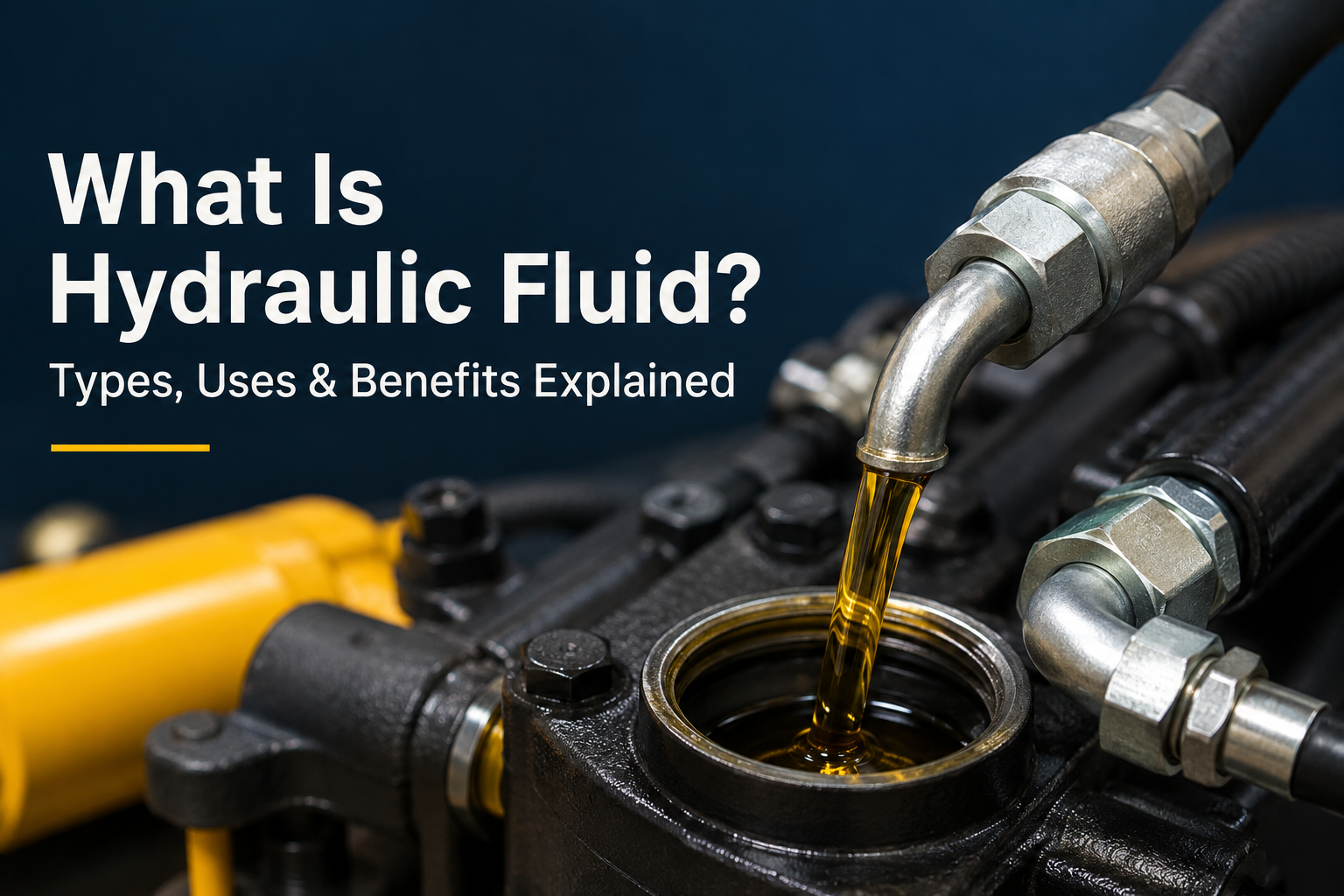
Hydraulic fluid is a specially formulated liquid used to transfer power within hydraulic systems. It plays a crucial role in operating heavy machinery, industrial equipment, construction vehicles, manufacturing systems, and many other hydraulic-powered applications. Without hydraulic fluids, hydraulic systems would not be able to generate the force required to lift, move, press, or control equipment efficiently.
Quick Answer
Hydraulic fluid is a power-transmitting liquid that transfers energy within hydraulic machinery while also providing lubrication, cooling, sealing, and protection against corrosion.
Why Is Hydraulic Fluid Important?
Hydraulic systems rely on fluid pressure to create motion and force. Hydraulic fluid acts as the medium that carries this pressure throughout the system. In addition to power transmission, hydraulic fluid performs several critical functions:
- Transfers hydraulic power efficiently
- Lubricates moving components
- Reduces friction and wear
- Dissipates heat generated during operation
- Prevents rust and corrosion
- Seals internal system components
- Helps remove contaminants from the system
These functions help extend equipment life, improve efficiency, and reduce maintenance costs.
How Does Hydraulic Fluid Work?
Hydraulic systems operate based on Pascal's Law, which states that pressure applied to a confined fluid is transmitted equally in all directions.
When a hydraulic pump pushes hydraulic fluid through hoses and valves, pressure is created. This pressure moves hydraulic cylinders or motors, generating the force needed to perform work such as lifting loads, operating machinery, or controlling industrial equipment.
Common applications include:
- Construction equipment
- Hydraulic presses
- Agricultural machinery
- Manufacturing equipment
- Aircraft systems
- Mining machinery
- Material handling systems
Types of Hydraulic Fluid
Different hydraulic applications require different types of hydraulic fluids.
1. Mineral Oil-Based Hydraulic Fluid
This is the most commonly used hydraulic fluid in industrial and mobile equipment.
Benefits include:
- Cost-effective
- Good lubrication properties
- Reliable performance
- Widely available
2. Synthetic Hydraulic Fluid
Synthetic fluids are designed for extreme operating conditions.
Advantages include:
- High-temperature stability
- Longer service life
- Improved oxidation resistance
- Better cold-weather performance
3. Water-Glycol Hydraulic Fluid
These fluids are commonly used where fire resistance is important.
Applications include:
- Steel mills
- Foundries
- High-temperature manufacturing environments
4. Biodegradable Hydraulic Fluid
Environmentally friendly hydraulic fluids are becoming increasingly popular.
Benefits include:
- Reduced environmental impact
- Improved biodegradability
- Suitable for environmentally sensitive areas
Characteristics of High-Quality Hydraulic Fluid
A quality hydraulic fluid should provide:
Excellent Viscosity Stability
The fluid must maintain proper thickness across varying temperatures.
Oxidation Resistance
Helps prevent sludge formation and fluid degradation.
Anti-Wear Protection
Protects pumps, valves, and hydraulic components from premature wear.
Thermal Stability
Performs consistently under high operating temperatures.
Corrosion Protection
Protects metal surfaces from rust and oxidation.
Foam Resistance
Prevents air bubbles that can reduce hydraulic efficiency.
Signs Hydraulic Fluid Needs Replacement
Over time, hydraulic fluid degrades and becomes contaminated. Common warning signs include:
- Dark or cloudy fluid appearance
- Increased equipment temperature
- Slow hydraulic response
- Unusual system noise
- Reduced operating efficiency
- Presence of water or contaminants
Regular fluid analysis can help identify problems before major equipment failures occur.
Benefits of Proper Hydraulic Fluid Maintenance
Maintaining clean hydraulic fluid offers several advantages:
- Extended equipment lifespan
- Reduced downtime
- Lower maintenance costs
- Improved system efficiency
- Better equipment reliability
- Enhanced operational safety
Many hydraulic failures are caused by fluid contamination, making routine filtration and fluid monitoring essential.
Frequently Asked Questions
What is hydraulic fluid made of?
Hydraulic fluid is typically made from mineral oils, synthetic oils, water-glycol blends, or biodegradable base stocks combined with performance-enhancing additives.
Can hydraulic fluid be reused?
Hydraulic fluid can sometimes be reclaimed through advanced filtration and purification processes if contamination levels are manageable.
How often should hydraulic fluid be changed?
Replacement intervals depend on operating conditions, equipment type, and manufacturer recommendations. Fluid analysis is the most accurate method for determining service life.
What happens if hydraulic fluid becomes contaminated?
Contaminated hydraulic fluid can cause component wear, reduced efficiency, overheating, system failures, and costly downtime.
Conclusion
Hydraulic fluid is the lifeblood of any hydraulic system. It not only transfers power but also lubricates components, controls temperature, prevents corrosion, and enhances overall system performance. Selecting the right hydraulic fluid and maintaining its cleanliness are essential for maximizing equipment reliability and operational efficiency. Whether used in industrial machinery, construction equipment, manufacturing systems, or mobile hydraulic applications, high-quality hydraulic fluid is a critical factor in achieving long-term performance and reducing maintenance costs.