Sign up with Google
 Sign in with Zoho

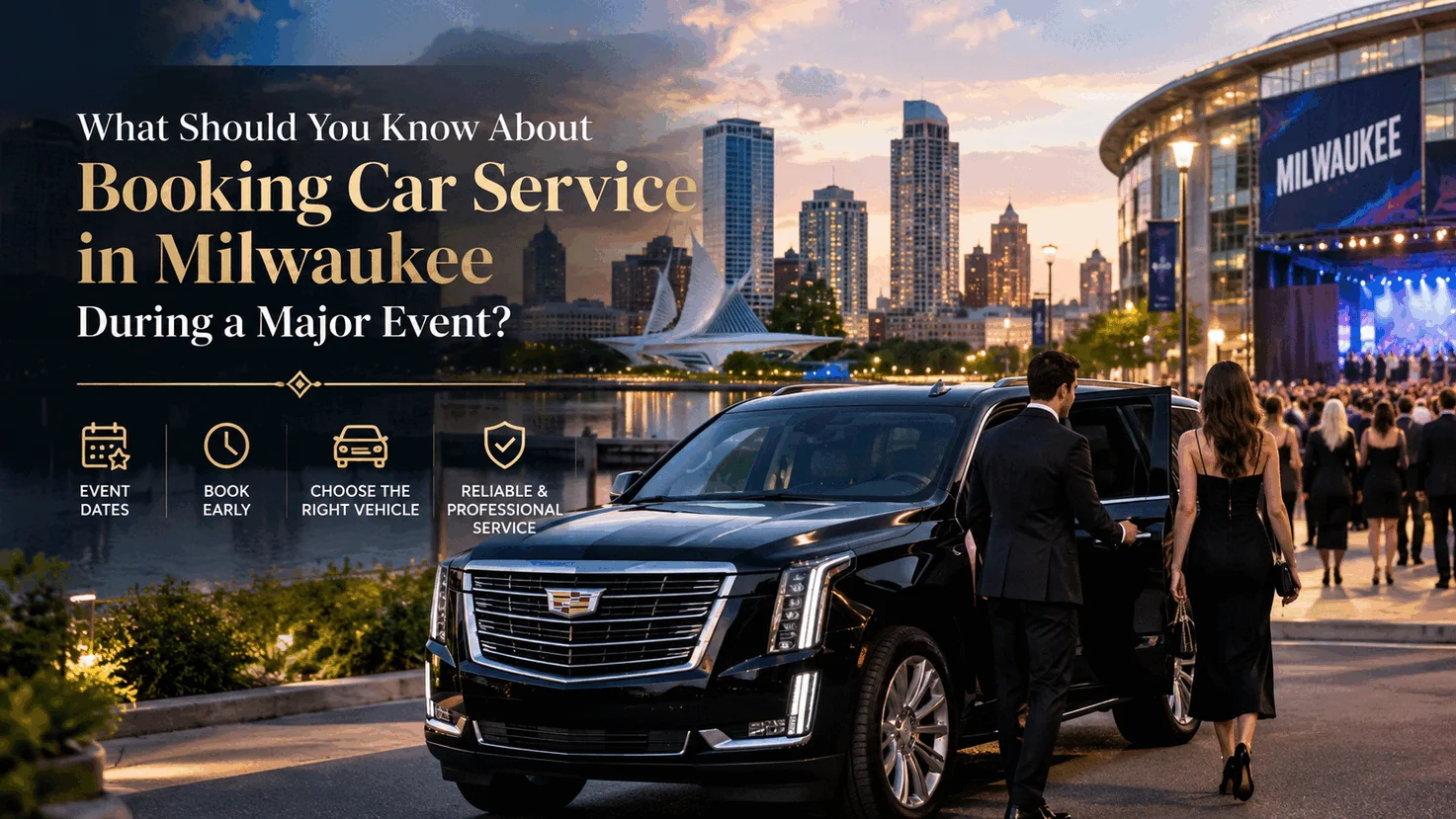
A night out in Milwaukee can start smoothly and become complicated before you even reach the venue. Imagine driving downtown for a concert, only to discover that the street you planned to use is closed and the nearest parking garage has a long line. After the show, thousands of people leave at once, and the pickup spot you had in mind is packed.
These situations are why transportation deserves a place on your event checklist. Whether you are attending a Bucks game, a concert, a convention, or a summer festival, a little planning can save time and make the trip easier.
Start With the Details That Can Change Your Trip
Before arranging a ride, check the event's start time, location, and any arrival instructions published by the venue. The listed start time is not always the time you should aim to arrive. You may need to collect tickets, meet friends, pass through security, or find your seat.
Consider a simple example: if an event begins at 7:30 p.m., planning to arrive at the venue at exactly 7:30 leaves little room for traffic or delays at the entrance. Choosing an earlier arrival target gives you flexibility if the roads are busy.
Also check whether another large event is taking place nearby. When multiple venues attract crowds on the same evening, traffic and parking demand can be heavier than expected.
Do Not Leave Transportation Until the Last Minute
For a popular event, it is sensible to arrange transportation as soon as your plans are firm. Waiting until the afternoon of the event may leave you with fewer available options, especially if you need a particular vehicle or are traveling with several people.
When booking, provide the date, pickup address, venue, number of passengers, and approximate return time. If you are planning dinner before a game or drinks after a concert, explain that as part of your itinerary.
A reservation should not be treated as a blank cheque for unlimited changes. Ask whether extra stops, extended waiting, or a later return could affect the price. Understanding these details in advance is easier than trying to resolve them when the streets are crowded.
Choose a Pickup Point You Can Actually Reach
It is tempting to request pickup directly outside the main entrance. During a major event, however, the closest curb may be restricted to authorized vehicles, blocked by traffic, or filled with pedestrians.
Check the venue's official transportation guidance and follow any instructions from event staff. If the venue identifies a passenger loading zone, use that information when arranging your pickup.
It also helps to agree on a precise meeting point. “Outside the arena” may mean several different places when a crowd is leaving. A designated entrance or permitted pickup area is much clearer.
For example, if your group plans to meet after a concert, decide on the location before entering the venue. Mobile service can be unreliable in a dense crowd, and it is easy for people to exit through different doors.
Allow More Time Than Your Navigation App Suggests
A navigation app provides a useful estimate, but it cannot guarantee how long the journey will take. Traffic may build near the venue, road restrictions may change, and a sudden rainstorm can slow both traffic and pedestrians.
Check the route before leaving and allow a reasonable buffer. If arriving late would mean missing the opening act, the start of a game, or an important business session, build in more time than you would for an ordinary trip across town.
The return journey needs the same consideration. When an event ends, a large number of people may try to leave at once. Even if your vehicle is ready, reaching the pickup point may take longer than expected.
Decide How the Return Trip Will Work
One of the easiest mistakes is arranging the ride to the event but leaving the journey home undecided.
Before the event, establish whether your return pickup will happen at a fixed time or whether you need to contact the provider when you are ready. Ask how delays are handled and whether waiting beyond the agreed time creates an additional charge.
If the event has an uncertain finish time, such as a sports game that may go into overtime, discuss that possibility before booking. Do not assume the original pickup time can automatically be moved.
Traveling with friends? Choose one person to coordinate the return plan. Make sure everyone knows the meeting point and has the contact information they need.
Match the Transportation to Your Plans
The right option depends on the size of your group, the location, and what you want to do before or after the event. Someone attending a concert alone may need a straightforward trip, while a group might require more passenger space and coordinated pickup arrangements.
If you are comparing prearranged transportation options, Milwaukee Car Service is one service category to consider for travel to a venue, restaurant, hotel, or another destination in the area.
Before confirming a ride, make sure the vehicle can accommodate everyone and any bags you expect to bring. If you have accessibility needs or require a child seat, raise those requirements early rather than assuming they will be available.
Questions Worth Asking Before You Confirm
A short conversation before booking can prevent misunderstandings later. Ask what the quoted price covers, whether waiting time is included, how cancellations work, and what happens if your schedule changes.
Confirm the exact pickup address and destination rather than relying on a general neighborhood name. Save the reservation details somewhere accessible and review them a day before the event.
Finally, check the venue's website again for updated traffic instructions. A plan made when tickets were purchased may need a small adjustment as the event approaches.
Make the Journey Part of the Plan
A good event experience does not begin when the show starts. It begins with knowing how you will get there, where you will meet your ride, and what you will do when the crowd heads home.
Book when your plans are clear, give yourself enough time, and confirm the details that matter most. These simple steps will not eliminate every delay, but they can make a busy Milwaukee event much easier to navigate.

.webp)