Sign up with Google
 Sign in with Zoho

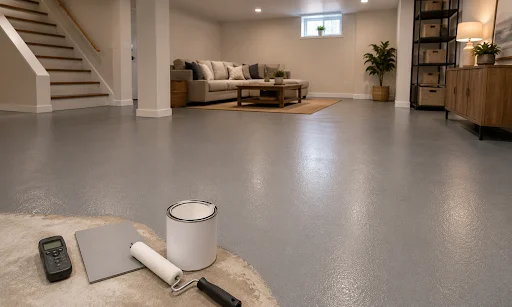
A basement floor has different demands from most other surfaces in a home. It sits directly over concrete, may experience changes in humidity, and often needs to support storage, furniture, exercise equipment, or regular family activity. Because of these conditions, homeowners should think carefully about the flooring system they choose.
For homeowners in Woodland Park, NJ, basement flooring decisions may also be influenced by seasonal moisture and changing temperatures. Epoxy can provide a clean, seamless finish over suitable concrete, but successful installation depends on much more than selecting a color or decorative style.
Before starting a project, it is important to evaluate moisture, concrete condition, surface preparation, intended room use, traction, maintenance, and overall budget. Looking at these factors early can help homeowners choose a basement floor that fits both practical needs and design goals.
Begin With the Condition of the Basement Concrete
The existing concrete should always be evaluated before a coating system is selected. Basement floors may contain hairline cracks, pitting, old paint, adhesive residue, uneven areas, or previous sealers. Some slabs may also show signs of moisture or mineral deposits. These conditions matter because epoxy must bond to a stable, properly prepared surface.
Homeowners considering basement epoxy flooring services should ask how the slab will be inspected before installation. A contractor should identify visible damage, old coatings, moisture concerns, and areas that may need repair before recommending a specific system.
Small cracks may often be repaired during preparation. Larger cracks or areas showing continued movement may require closer evaluation. The goal should be to understand the condition of the concrete before covering it.
Moisture Should Be Checked Before Installation
Moisture is one of the most important considerations in a basement.
Concrete can appear dry on the surface while still allowing vapor to move through the slab. Signs that may deserve further investigation include:
- White mineral deposits
- Dark or damp areas
- Musty odors
- Peeling floor paint
- Bubbles beneath an older coating
- Recurring moisture near walls or joints
A professional installer may recommend moisture testing when the condition of the slab is uncertain. If an active leak, drainage problem, or water-entry issue exists, it should be addressed before the coating project begins. Epoxy should not be treated as a substitute for repairing a plumbing leak or correcting exterior drainage.
Once the moisture conditions are understood, the installer can determine whether additional preparation or a moisture-control product is appropriate.
Think About How the Basement Will Be Used
Not every basement serves the same purpose.
Some homeowners use the space mainly for storage. Others create family rooms, home gyms, offices, workshops, game rooms, or entertainment areas.
The way the basement is used should influence the flooring system.
A storage basement may prioritize durability and easy cleaning. A finished entertainment room may place greater emphasis on appearance. A home gym may need additional traction and protection beneath heavy equipment.
Before selecting epoxy, homeowners should consider:
- Expected foot traffic
- Furniture
- Storage systems
- Exercise equipment
- Children and pets
- Cleaning frequency
- Moisture exposure
- Desired appearance
A flooring system should support the actual function of the room instead of being selected only because a sample looks attractive.
Understand Why Surface Preparation Matters
Surface preparation has a major effect on how well an epoxy system performs. Professional preparation may involve mechanical grinding to remove weak surface material and create a suitable profile for the coating to bond with. Old paint, sealers, adhesives, dirt, and other contaminants may also need to be removed.
Preparation can include:
- Grinding the concrete
- Repairing cracks
- Filling pitted areas
- Removing old coatings
- Treating stains
- Cleaning dust and debris
- Evaluating moisture
This work may not be visible after the project is completed, but it is one of the most important stages. A coating applied over poorly prepared concrete may not bond evenly. That is why homeowners should ask contractors to explain their preparation process before comparing project estimates.
Compare Different Epoxy Styles
Basement epoxy does not have to look the same in every home. Several finish options can be considered depending on use, budget, and design preferences.
Solid-Color Epoxy
Solid-color systems create a clean and consistent appearance. They may work well in storage rooms, utility spaces, workshops, or basements where homeowners prefer a simple finish.
Decorative Flake Epoxy
Flake systems add colored vinyl flakes to the coating. The multi-colored pattern can make everyday dust, small marks, and light wear less noticeable. Flake finishes can work well in home gyms, recreation rooms, utility spaces, and active family basements.
Metallic Epoxy
Metallic epoxy creates flowing patterns and visual depth. Depending on the pigment colors and application technique, the surface may resemble marble, polished stone, or abstract movement. This style can be considered for finished basements, home theaters, entertainment rooms, or home bars where appearance is a major part of the renovation.
Quartz Epoxy
Quartz systems use aggregate to create a more textured finish. They may be useful in basements where homeowners want additional traction or a surface designed for heavier use. The right option depends on how the room will function rather than which finish appears most dramatic.
Consider Traction and Daily Comfort
Basement flooring should also be comfortable and practical for everyday use. A highly glossy finish may look attractive, but a smooth surface can become slippery when wet. If the basement is near an exterior entrance, laundry area, or other moisture-prone space, additional traction may be useful. Slip-resistant additives or textured systems can improve grip.
However, a heavier texture can make sweeping and mopping more difficult. Homeowners should aim for a balance between traction and easy maintenance. Area rugs may also be used in seating areas or play spaces to add warmth and comfort. Any rug pad used over the coating should be suitable for the finished surface.
Plan the Design Around Lighting
Basements often receive less natural light than upper floors. For this reason, color and gloss can influence how open or bright the space feels. Light gray, cream, beige, or soft neutral finishes may reflect more available light. Darker colors can create a stronger visual effect but may make a smaller basement feel heavier. Metallic finishes can interact with artificial lighting and create more visual depth. Decorative flakes can add interest without becoming the main feature of the room.
Homeowners should consider:
- Window size
- Ceiling height
- Wall colors
- Artificial lighting
- Furniture
- Room dimensions
A small sample may look different when the same finish covers an entire basement floor, so physical samples and completed project photos can be useful during planning.
Understand What Affects Basement Epoxy Flooring Cost
The price of a basement epoxy project cannot be determined by square footage alone. Homeowners researching epoxy basement floor cost should also consider concrete condition, moisture, preparation work, coating style, decorative options, and the number of layers included in the system. Epoxy Shine's current basement cost guide notes that professional installation can vary according to basement size, floor preparation, epoxy type, and design choices.
The following factors commonly influence a project estimate:
Two basements with the same square footage can therefore have very different project costs. A clean concrete slab with minimal damage may require standard preparation. Another basement may have peeling paint, multiple cracks, adhesive residue, or moisture concerns that need to be handled before coating begins.
Compare Quotes Based on What Is Included
Homeowners should avoid selecting a contractor based only on the lowest final number.
A detailed estimate should explain whether the project includes:
- Concrete grinding
- Crack repair
- Moisture testing
- Old-coating removal
- Primer
- Epoxy base coat
- Decorative material
- Protective topcoat
- Slip-resistant additives
- Labor
- Cleanup
- Curing instructions
- Warranty coverage
One contractor may provide a lower quote because the system is simpler. Another may include more preparation and additional protective layers. Understanding these differences makes it easier to compare actual value.
DIY Installation May Require More Than a Coating Kit
DIY epoxy kits are widely available, but the kit itself is only one part of the project. Homeowners may also need a grinder, crack-repair products, cleaning materials, mixing equipment, application tools, and protective equipment. Moisture evaluation can be another challenge in basements.
Common DIY problems may include:
- Inadequate concrete preparation
- Uneven coating thickness
- Incorrect mixing
- Missed moisture concerns
- Visible roller marks
- Poor crack repairs
- Uneven decorative coverage
An experienced homeowner may be comfortable working with a straightforward slab. However, basements with moisture issues, old coatings, or significant concrete damage may require more specialized preparation.
Plan for Installation and Curing Time
The basement should be cleared before installation begins. Furniture, storage boxes, exercise equipment, rugs, shelving, and other movable items may need to be relocated. The installation process can include preparation, repairs, primer, epoxy application, decorative material, topcoat, and curing.
Homeowners should ask when the floor can safely support:
- Light foot traffic
- Furniture
- Storage cabinets
- Exercise equipment
- Area rugs
A floor may feel dry before the coating has reached the stage recommended for full use. Returning heavy items too soon can affect the finished surface.
Consider Long-Term Maintenance
One advantage of a coated basement floor is that routine cleaning can be relatively straightforward. Loose dirt and grit should be removed regularly because abrasive particles can gradually affect the protective finish. Spills should be cleaned promptly, and harsh abrasive tools should be avoided unless the installer confirms they are suitable for the coating. Furniture pads can help reduce scratches beneath chairs, tables, storage units, and exercise equipment. Homeowners should also ask whether the protective topcoat can be renewed if high-traffic areas begin showing wear over time.
Local Basement Considerations in Woodland Park, NJ
Basements in Woodland Park, NJ, may experience seasonal humidity, groundwater conditions, and temperature changes that make moisture evaluation especially important before coating. Epoxy Shine's basement service page specifically emphasizes moisture and concrete conditions as part of basement-floor planning in the local area. A local inspection can help identify cracks, old coatings, moisture signs, and areas requiring additional preparation. Epoxy Shine is one local option homeowners can consider when comparing basement flooring systems. Regardless of which contractor is selected, homeowners should expect a clear explanation of preparation, materials, curing requirements, maintenance, and warranty terms.
Final Thoughts
Epoxy can help turn unfinished basement concrete into a cleaner, more finished, and easier-to-maintain surface. However, the best results depend on what happens before the coating is applied. Homeowners should evaluate moisture, concrete damage, room use, surface preparation, traction, decorative options, installation time, and budget before selecting a flooring system. A finished basement used for entertainment may need a different floor from a storage room, workshop, or home gym. Likewise, a dry and stable slab may require less preparation than one affected by moisture or previous coatings. For homeowners in Woodland Park, NJ, taking the time to inspect the basement and compare complete flooring systems can help create a space that better supports everyday use while fitting the overall home design.