Sign up with Google
 Sign in with Zoho

Every reader comes to a website with a different question, goal, or problem to solve. Some people want a quick answer, while others need a detailed explanation before making a decision. When content treats every reader the same way, it can miss opportunities to provide genuinely useful information.
Content personalization offers a different approach. Instead of writing only about a subject, writers consider who is reading, what that person may need, and which details will make the information more relevant.
This does not mean creating a separate article for every visitor. It means understanding your audience well enough to make your writing more useful, relatable, and practical.
What Does Content Personalization Mean?
Content personalization means adapting information to suit the interests, needs, knowledge, or circumstances of a particular audience.
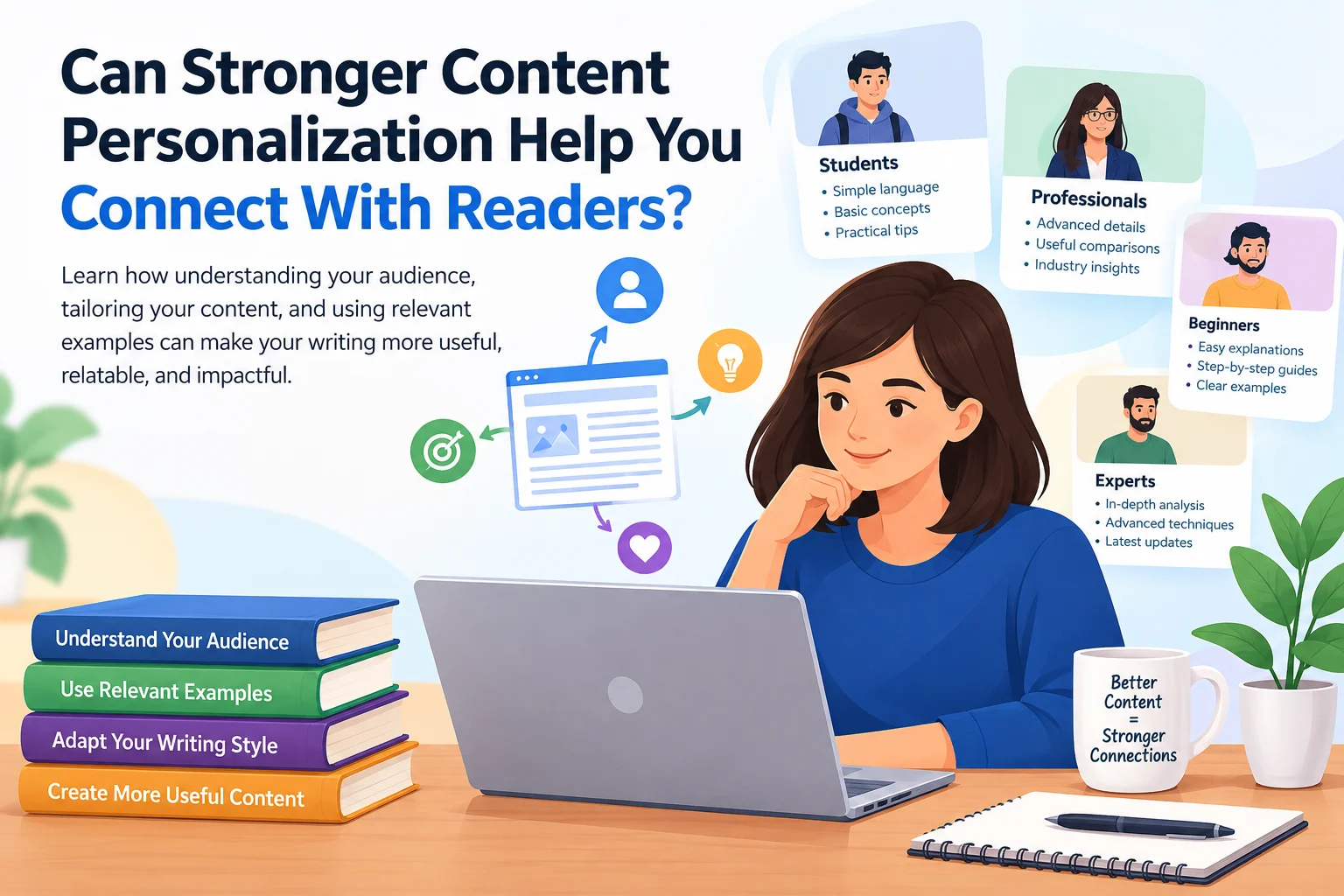
For example, a beginner learning about website design may need simple explanations of basic terms. An experienced designer may prefer advanced techniques, practical comparisons, or information about recent developments. Both readers are interested in the same subject, but their expectations are different.
A useful article recognizes these differences. It explains essential concepts when necessary and provides enough depth to help readers move forward.
Personalization can involve the examples you choose, the questions you answer, the level of detail you provide, and the tone you use. Even small adjustments can make content feel more relevant without changing its central message.
Why Is Understanding Your Audience Important?
Writers sometimes begin with a topic and immediately start drafting paragraphs. Although this approach can work, it may lead to an article that discusses the subject generally without addressing the reader's actual concerns.
Understanding your audience helps prevent this problem. When you know what readers are trying to accomplish, you can focus on information that supports their goals.
Imagine writing a guide about choosing a laptop. A student might care about affordability, battery life, and portability. A video editor may be more concerned about processing power, memory, and display quality.
A broad article that ignores these differences might provide useful facts but fail to help either reader make a confident decision.
Before writing, consider what your audience already knows, what they are trying to learn, and which obstacles they may face. These questions can help you create content that answers real needs instead of simply covering a topic.
How Can You Discover What Readers Actually Need?
You do not have to guess what your audience wants. Several everyday research methods can help you identify common questions and concerns.
Customer support conversations can reveal problems people repeatedly encounter. Comments on existing articles may show which explanations readers find confusing. Reviews and community discussions can also highlight the details people consider important when comparing options.
Search queries provide another useful starting point. Someone searching for basic definitions probably needs a different explanation from someone comparing advanced solutions.
Look for patterns rather than relying on one person's opinion. If several readers ask similar questions, those questions may deserve attention in your content.
You can then use these insights to choose article topics, improve existing pages, and create explanations that address the concerns your audience is most likely to have.
Can Personalized Examples Make Articles More Useful?
Examples become more powerful when readers can connect them to their own experiences.
Consider an article explaining how to manage time effectively. General advice about planning tasks may be helpful, but an example involving a student balancing assignments and part-time work could make the advice easier to apply.
For a business audience, the same principle might be demonstrated through managing customer requests or organizing project deadlines.
The key is to choose examples that fit the intended audience. An example should make the main point easier to understand rather than distract readers with unnecessary details.
You should also avoid assuming that every reader has the same background, budget, location, or level of experience. Inclusive examples give more people an opportunity to recognize their situation in the information.
How Can You Make Content Personal Without Making It Too Narrow?
Personalized content should feel relevant without excluding readers who have different circumstances.
One way to achieve this balance is to begin with a shared problem and then explain how different situations may affect the solution.
For instance, an article about improving productivity might discuss simple planning techniques that work for many people before exploring approaches for remote workers, students, and small business owners.
This structure gives readers a common starting point while allowing them to find advice that fits their circumstances.
Clear headings also help. When sections describe specific needs or situations, readers can move directly to the information that matters most to them.
Avoid adding personal details simply to make an article appear tailored. Every example, recommendation, and explanation should serve a clear purpose.
What Role Does Writing Style Play in Personalization?
The way you communicate can be just as important as the information you provide.
A technical audience may appreciate precise terminology and detailed explanations. Someone encountering a subject for the first time may need everyday language, short paragraphs, and practical examples.
The goal is not to make every article casual or overly simple. It is to choose a style that helps the intended audience understand the subject comfortably.
Natural writing also benefits from variety. Sentences should not all have the same structure, and paragraphs should not repeat identical patterns throughout the article.
When reviewing a draft, look for wording that sounds generic or fails to address the reader's concern. Revising these passages can make your content feel more direct and meaningful.
If you use an AI Writing Humanizer, you can include it in your editing process to explore more natural phrasing. Still, review every change carefully to ensure that the final article remains accurate, clear, and appropriate for its audience.
Can Personalization Improve Website Content?
Website content often performs an important practical role. It helps visitors understand a service, compare choices, learn how something works, or decide what to do next.
When the information reflects visitors' needs, it becomes easier for them to find relevant answers.
For example, a service page can explain who the service is suitable for, which problems it addresses, and what customers should expect. A helpful guide can answer beginner questions before introducing more advanced information.
Personalization should not mean making unsupported promises or changing facts to persuade different readers. Trust depends on accurate descriptions, transparent limitations, and information that genuinely helps people make decisions.
Tools such as can support the process of refining written drafts, but the writer must still ensure the content meets the audience's real needs.
How Can You Tell Whether Personalized Content Is Working?
The effectiveness of personalized content can be evaluated by looking at how well it serves readers.
For example, you might review feedback, examine the questions people continue to ask, or check whether visitors can find important information without unnecessary difficulty.
For educational articles, useful signs include readers understanding the explanation and being able to apply the advice. For service pages, you might examine whether visitors understand the offering and know what steps to take next.
Website analytics can provide additional context, but numbers should not be interpreted in isolation. A shorter visit does not always mean an article failed; the reader may have found the answer quickly.
Use feedback and performance data together. If readers repeatedly misunderstand a section, revise it. If an example helps explain a difficult concept, consider using the same approach in related content.
Personalization works best as an ongoing process of learning, testing, and improving.
Frequently Asked Questions
What is personalized content writing?
Personalized content writing adapts information, examples, language, and explanations to the needs and interests of a specific audience. Its purpose is to make content more relevant and useful.
Does content personalization require advanced technology?
No. You can personalize content through audience research, thoughtful topic selection, relevant examples, and clear language. Technology may help, but it is not essential.
How can beginners personalize their blog posts?
Start by identifying the intended reader and the main question the article should answer. Use familiar examples, explain unfamiliar terms, and include practical information that helps readers take the next step.
Can AI help create personalized content?
AI can help brainstorm audience-specific examples, suggest different explanations, and organize information for different experience levels. Writers should review the output to avoid incorrect assumptions and generic advice.
Is personalized content always better?
Not necessarily. Personalization is useful when it improves relevance. If it makes an article unnecessarily narrow, repetitive, or intrusive, a broader explanation may serve readers better.
How often should website content be updated?
Review content when audience needs change, information becomes outdated, or feedback reveals missing details. Important pages may need more frequent checks than evergreen articles that remain accurate over time.
Does personalization mean using a reader's personal information?
No. Many forms of personalization rely on general audience needs and common questions. When personal data is involved, it should be handled responsibly and in accordance with applicable privacy requirements.
Final Thoughts
Personalized content begins with a simple idea: readers want information that helps them with their own questions and circumstances.
By understanding your audience, choosing relevant examples, adapting your writing style, and responding to real feedback, you can create articles that feel more useful without becoming overly narrow or promotional.
The best approach is to focus on relevance rather than trying to make every sentence sound personal. When your content respects readers' time, explains what matters, and helps them make progress, it has a better chance of building lasting trust.